Xi Jinping and Asif Ali Zardari Celebrate Joint Space Mission
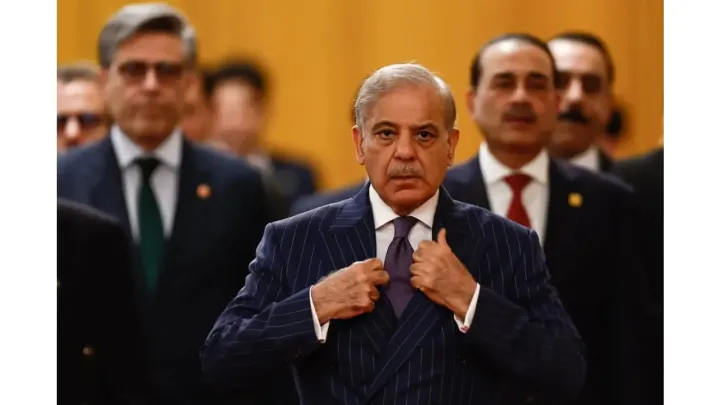
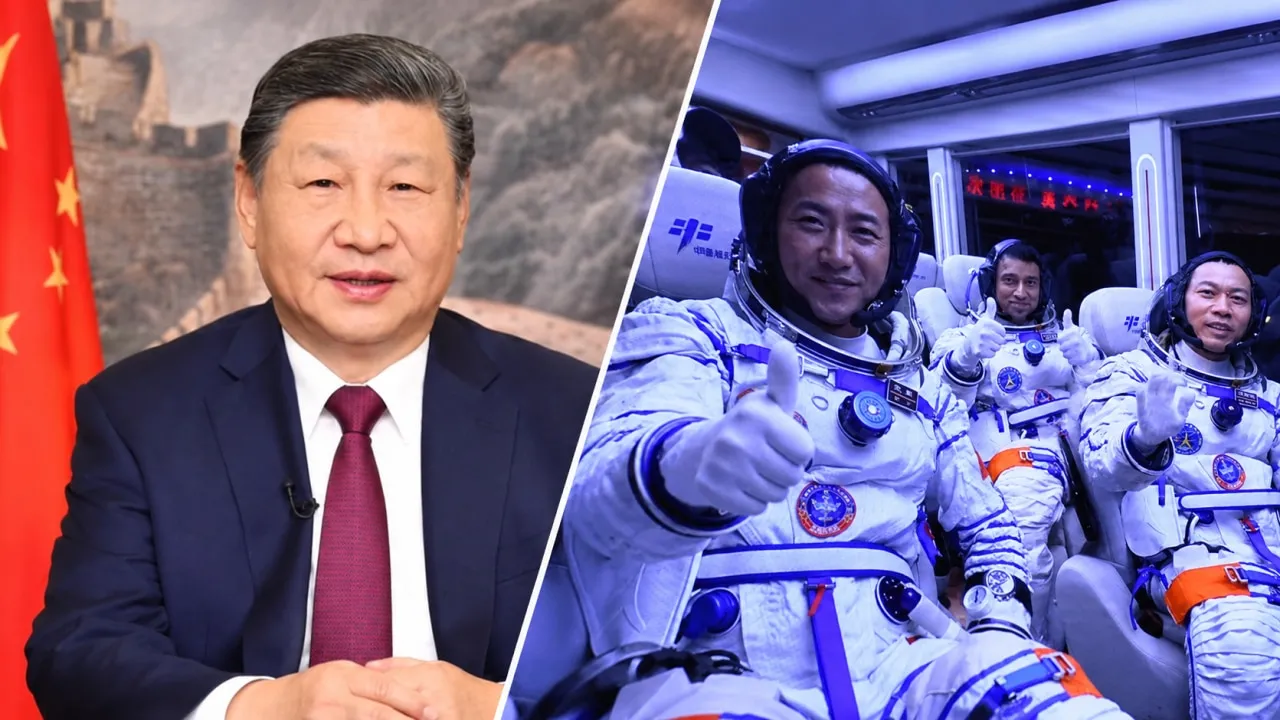
Chinese President Xi Jinping has described the joint space mission involving Chinese and Pakistani astronauts as a reflection of the two countries deep-rooted friendship, as Beijing and Islamabad exchanged congratulations over the historic flight. According to China state news agency Xinhua, Xi and Pakistani President Asif Ali Zardari exchanged messages on Wednesday following the launch of the Shenzhou-24 spacecraft carrying Pakistani astronaut Muhammad Zeeshan Ali alongside Chinese astronauts Tang Hongbo and Wu Yi.
The mission marks the first joint flight involving Chinese and foreign astronauts in the history of China crewed space program. Ali has also become the first foreign astronaut to visit China Tiangong space station. This milestone highlights the expanding technological partnership between the two nations, stretching beyond terrestrial infrastructure projects into orbit.
Xi said the joint space exploration was another important achievement in bilateral cooperation. He also reaffirmed China commitment to working with Pakistan and other countries to promote the peaceful use of outer space and strengthen international space cooperation.
Background of Pakistan and China Bilateral Cooperation
The relationship between Beijing and Islamabad spans decades of diplomatic, economic, and military collaboration. Historically known as an all-weather strategic cooperative partnership, the alliance has seen massive investments through initiatives like the China-Pakistan Economic Corridor. Infrastructure projects, energy plants, and trade routes have formed the backbone of this relationship for many years.
In recent years, bilateral ties have expanded into advanced technological sectors, including telecommunications, artificial intelligence, and now aerospace engineering. Training programs and scientific exchanges have gradually aligned the space agencies of both countries. This joint flight represents the culmination of years of technical preparation, astronaut training, and diplomatic coordination between the two governments.
Understanding the Shenzhou-24 Spacecraft and Tiangong Station
The Shenzhou program is the vehicle for China crewed spaceflight missions. Designed to carry taikonauts into low Earth orbit, these spacecraft dock with the Tiangong space station, a modular structure orbiting Earth that serves as a national laboratory in space. Tiangong allows researchers to conduct experiments in microgravity across various scientific disciplines.
Until now, crewed missions aboard Shenzhou spacecraft and operations inside Tiangong have involved exclusively Chinese personnel. The inclusion of Muhammad Zeeshan Ali breaks this precedent. By integrating a foreign astronaut into the Shenzhou-24 crew, the space program demonstrates the technical capability to host international crew members and coordinate complex multilingual orbital operations.
Impact on International Space Cooperation
The mission sets a new precedent for how national space agencies engage in cooperative ventures outside traditional Western-led coalitions like the International Space Station. While nations have long sent guest astronauts to the International Space Station under bilateral agreements with NASA or the European Space Agency, China independent space station now offers an alternative hub for international scientific collaboration.
For Pakistan, this mission elevates its scientific profile on the global stage. Having the first Pakistani citizen in orbit aboard a state-of-the-art space station inspires a new generation of engineers, scientists, and researchers in the country. It also signals to other nations that Beijing is open to deeper technological partnerships in orbital research.
What Comes Next for the Tiangong Space Station
Following the successful launch and docking of the Shenzhou-24 mission, observers will watch for the scientific output of the joint crew. Experiments conducted by Muhammad Zeeshan Ali, Tang Hongbo, and Wu Yi aboard the Tiangong space station will be closely studied by researchers in both countries. Future mission announcements will also reveal whether other foreign astronauts are scheduled to visit the orbiting laboratory.
As Beijing continues to expand the capabilities of its space station, international interest in cooperative agreements is expected to grow. The success of this flight provides a operational template for future joint missions, establishing standards for training, safety, and cross-cultural communication in high-stress orbital environments.