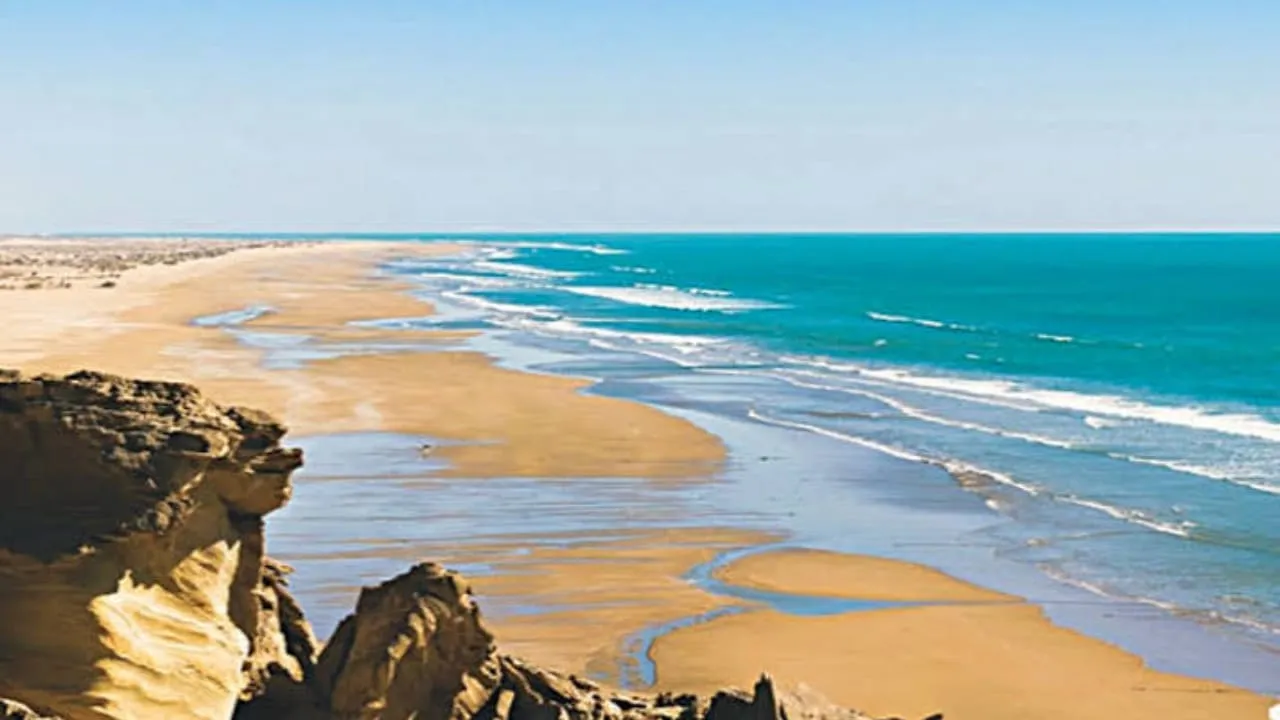
A blue whale estimated at 30 feet in length washed ashore on East Bay beach in Gwadar today, behind the Coast Guard office, after being sighted in local waters for two days.
The sudden death of the world's largest marine animal has triggered an immediate response from WWF-Pakistan, which has opened an investigation to determine the cause of the stranding and assess the impact on regional marine biodiversity.
What Happened on East Bay Beach?
According to local sources, the whale was observed swimming off Gwadar's coast for the past two days. On the third day, the animal entered shallow water near East Bay and became stranded. The carcass was found behind the Coast Guard office, where officials confirmed the animal's identity as a blue whale.
WWF-Pakistan Technical Advisor Muhammad Moazzam Khan explained that the whale likely lost its way after entering shallow waters, where its navigation may have been affected. He added that the death of such a large whale is a matter of concern for marine biodiversity.
Why Blue Whales Are Important to Marine Ecosystems
Blue whales (Balaenoptera musculus) are the largest animals ever known to have lived on Earth. Their size, feeding habits, and migratory patterns influence oceanic food webs. By filtering large volumes of krill, they help regulate plankton populations, which in turn affect carbon sequestration and overall ocean health.
When a blue whale dies, its massive body provides a sudden, nutrient-rich food source for a wide range of scavengers, from deep-sea fish to seabirds. While this can boost local biodiversity temporarily, the loss of a breeding adult can have longer-term repercussions for the species' regional population.
Historical Context of Whale Strandings in Pakistan
Incidents of blue whales becoming stranded have occurred in Pakistan's coastal areas in the past, according to Muhammad Moazzam Khan. WWF-Pakistan maintains a database of such events, documenting the locations, sizes, and presumed causes of each stranding.
Records show that most strandings along the Arabian Sea coast involve species such as humpback and Bryde's whales, but occasional blue whale sightings have been reported, highlighting the occasional presence of these giants in Pakistani waters.
How WWF-Pakistan Is Responding
WWF-Pakistan has launched an investigation to determine the causes of the whale's death. The agency plans to:
- Conduct a necropsy to identify any signs of disease, injury, or pollution.
- Analyze water quality and acoustic data from the area to assess whether human activity, such as shipping traffic or sonar, could have contributed.
- Coordinate with the Pakistan Coast Guard and local authorities to secure the site and prevent further environmental contamination.
The organization also intends to update its public records of stranded whales and use the incident to raise awareness about marine biodiversity conservation in the region.
Potential Causes of Whale Strandings
Scientists have identified several factors that can lead to whale strandings, including:
- Shallow coastal waters that confuse navigation, especially for deep-diving species.
- Acoustic disturbances from naval exercises, commercial shipping, or offshore construction.
- Entanglement in fishing gear, which can impair movement and cause exhaustion.
- Health issues such as infections, parasites, or age-related decline.
- Changes in prey distribution that force whales into unfamiliar or hazardous areas.
In this case, Muhammad Moazzam Khan suggested that shallow water entry was a primary factor, but the ongoing investigation will examine all possibilities.
Impact on Local Communities and the Fishing Industry
The presence of a massive carcass on a public beach can affect tourism, local sanitation, and the fishing industry. Fishermen may be concerned about potential contamination of fish stocks, while residents may worry about odor and health hazards.
Authorities typically coordinate with environmental agencies to remove the carcass safely, often using specialized equipment to transport the remains to a designated disposal site. In some regions, parts of the whale are processed for scientific study or even turned into fertilizer.
What Comes Next: Monitoring and Prevention
While the exact cause of this stranding remains under investigation, experts recommend several steps to reduce future incidents:
- Enhanced acoustic monitoring along the Arabian Sea coast to detect harmful noise levels.
- Improved reporting mechanisms for sightings, allowing rapid response before whales become stranded.
- Public education campaigns about the importance of marine megafauna and how to report unusual marine events.
- Collaboration between the Pakistan Navy, Coast Guard, and conservation NGOs to establish safe corridors for migratory whales.
Watch for updates from WWF-Pakistan and the Coast Guard as the necropsy results become available and as authorities decide on carcass removal procedures.
Practical Takeaways for Readers
If you are in the Gwadar area, avoid approaching the carcass directly. Report any unusual marine sightings to the local Coast Guard hotline. For those interested in marine conservation, consider supporting WWF-Pakistan's initiatives that focus on data collection, public awareness, and policy advocacy for protecting marine mammals.
The incident underscores the fragile balance of marine ecosystems and the need for coordinated efforts to safeguard the world's largest animals.