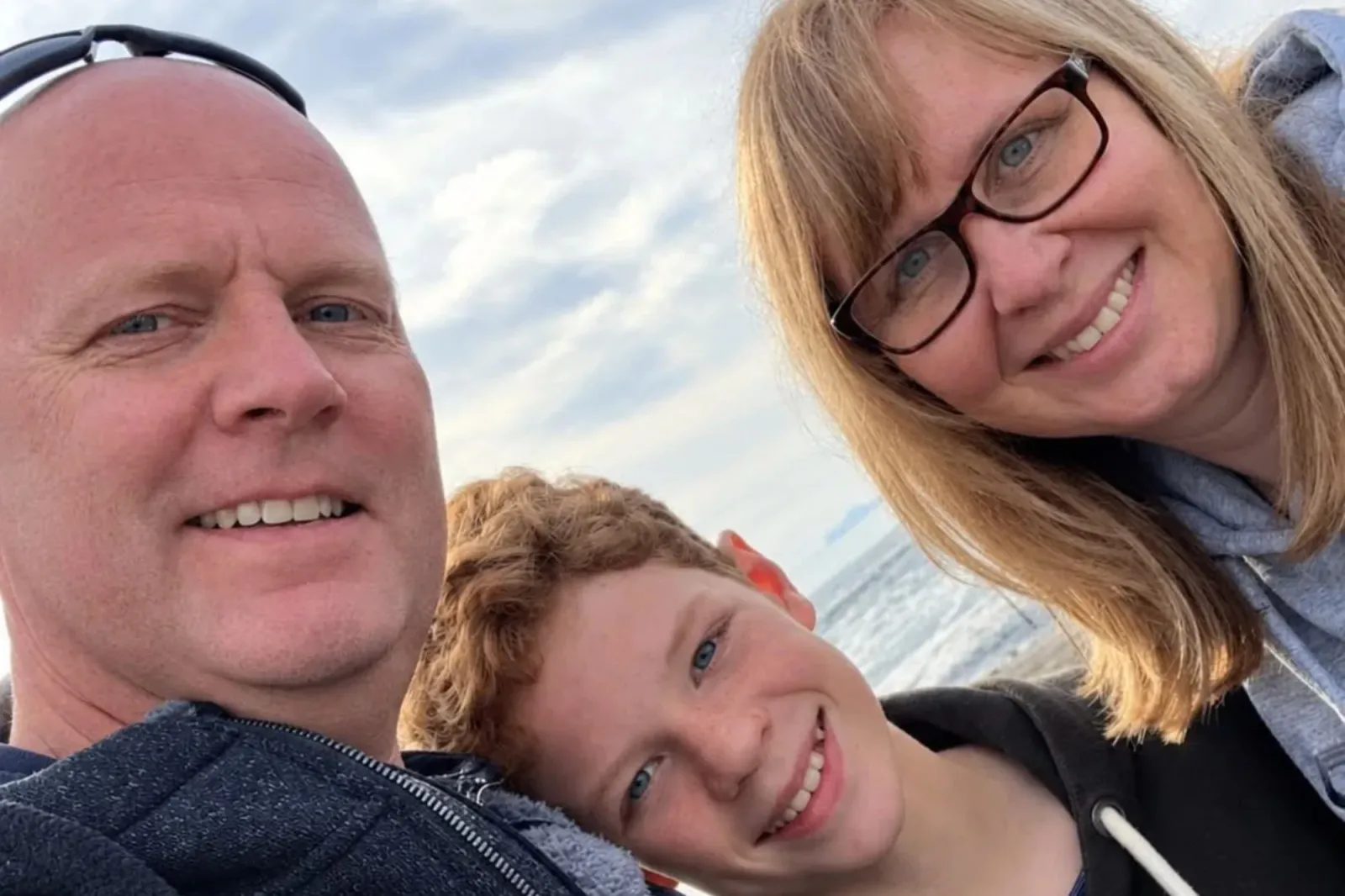
When busy dad Matt Wright was suddenly struck down with dizziness as he climbed a ladder in January, he brushed it off as exhaustion.
But the now 50-year-old was oblivious that this was the first warning sign of a deadly emergency that would see him become a different person.
Fit, healthy and active Matt had also been plagued with pain in his head and neck, bouts of dizziness and forgetfulness, which he put down to his age.
It was only after waking up one morning the following week that the kitchen and bathroom fitter realised something was seriously wrong.
Matt, from Chelmsford in Essex, woke to find no words were coming out when he tried to talk to his wife Louise in bed.
After being rushed to hospital, scans here revealed that he had suffered a deadly stroke.
Despite quick treatment, his recovery has been far from straightforward.
He also endured severe pain and significant psychological trauma during his hospital stay, and has since received therapy for PTSD.
Now, the dad-of-one is calling on people not to ignore key signs of a stroke and always get checked out if you feel something isn't right.
Recalling his terrifying ordeal, Matt said: "I was working as normal, going up and down the ladder, and I was finding that I was quite dizzy."
"I was painting a ceiling, and as I was leaning up and using the roller I found myself to be a little bit dizzy, and it wasn't anything in particular that I thought was particularly bad."
"I didn't fall off the ladder, it was just a small lack of being able to stand on top of the ladder."
"I put it down to just being old, I'm nearly 50, or tired, or something like that."
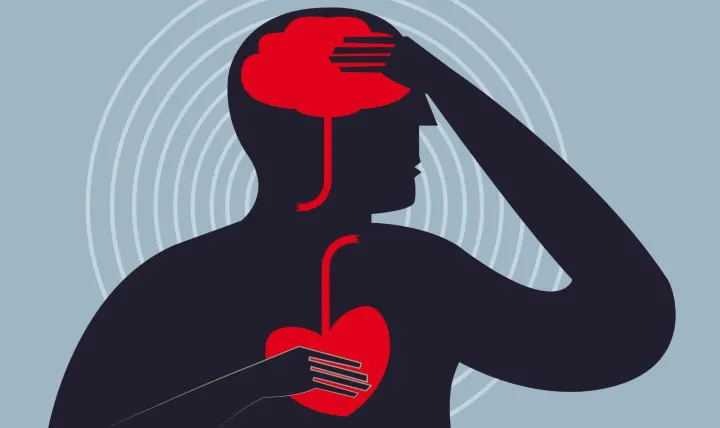
"And it turned out it was the first part of a blood clot that had left my neck and gone to my brain."
"I didn't unfortunately find out until the following week when the rest of that blood clot broke up, went into my brain, and caused all sorts of horrible mischief."
More than 100,000 strokes occur in Britain every year, killing almost 40,000 people, making it the UK's fourth biggest killer and a leading cause of disability.
An ischemic stroke, which accounts for 80 per cent of strokes, occurs when there is a blockage in a blood vessel that prevents blood from reaching part of the brain, as was the case with Matt.
Stroke symptoms are commonly remembered under the four-letter acronym, FAST, covering face, arms, speech and time.
Patients experiencing a stroke can often have their face drop on one side, struggle to lift both arms and have slurred speech, while time is essential.
Other signs can include a sudden numbness in one side of the body, loss of sight in one or both eyes, sudden vertigo and a severe, sudden headache.
Don't delay... if you spot signs of a stroke dial 999 immediately
A stroke is a medical emergency, that's why knowing the signs and symptoms is vital.
It happens when the blood supply to the brain is cut off, killing off cells. The damage caused can affect how the body works, and the effects depend on where in the brain a stroke strikes.
There are three different types of stroke:
- Ischaemic stroke, where a blockage, like a blood clot, cuts off the blood supply to the brain
- Haemorrhagic stroke, caused by a bleed in or around the brain
- Transient ischaemic attack, also known as a mini stroke, this is a big warning sign of a full-blown stroke. It's similar to a stroke but symptoms are shorter lived.
Every stroke is different but they can affect a patient's ability to speak, move, think and feel. They can cause behavioural changes as well as emotional challenges.
They can happen to any of us, regardless of our age. That's why it's important to educate yourself on the warning signs.
The faster you get medical help and treatment, the more likely it is that the damage caused can be reversed and stopped in its tracks.
There's a handy acronym that helps identify the symptoms of a stroke. If you spot these yourself, or in a loved one, do not delay, dial 999 immediately, and tell the call handler you suspect a stroke.
ACT Fast:
- Face weakness, can the person smile? Has their mouth or eye drooped?
- Arm weakness, can the person raise both arms?
- Speech problems, can the person speak clearly and understand what you're saying?
- Time to call 999, if you see any of these signs, get help.
This test helps spot three key signs, but there are other symptoms to be aware of too.
They include sudden weakness or numbness on one side of the body, difficulty speaking, sudden blurred vision or loss of sight, sudden confusion or memory loss, dizziness or a sudden fall and a sudden, severe headache.
When it comes to a stroke, the bottom line is take these symptoms seriously. It may well be something more minor, but it pays to be alert and act fast. Not only could it save your life, but it could save you, or a loved one, from long-term, devastating side effects.
For more information about stroke, visit the Stroke Association or the NHS website
When Matt woke up unable to speak, his wife Louise called 999, and he was taken to his local hospital.
He then spent a month recovering from the stroke, which doctors found had been caused by tears in both carotid arteries, which disrupted the blood supply to his brain.
Now, Matt continues to experience mobility problems, walks with a stick and has difficulties with his tongue and swallowing.
Returning home brought its own challenges, he says, as everyday sights and sounds felt overwhelming and adjusting to life after stroke proved much harder than he had expected.
The experience has also changed how Matt sees himself.
Despite appearing much the same to others, he says he feels like a different person, what he calls Matt version two.
He said: "I always say that I'm a different person now. It attacks who you are."
"It's a really lonely thing having a stroke."
"That's the thing that I get from a lot of people, they say to me, 'I have felt so isolated with my stroke.'"
"I think the mental side can often be harder for people to come to terms with."
The Stroke Association is currently running their Survival Is Not Enough campaign, backed by Matt, to highlight the long-lasting effects recovery can have on the survivor.
The charity is also working to change perceptions of the medical emergency, which occurs when the blood supply to part of the brain is cut off, causing brain cells to be damaged or die.
In a study, the charity found that a third of Brits aged 18-34, 34 per cent, and almost a quarter of 35-44-year-olds, 24 per cent, believe they are too young to have a stroke, despite one in four strokes happening to people of working age.
Age, high blood pressure, smoking, obesity, sedentary lifestyle and diabetes are all known to increase the risk of stroke.
ASK DR ZOE
THE SUN'S RESIDENT GP DR ZOE WILLIAMS SAYS...
Do you have a question you wish you could ask a doctor?
Whether you are worrying about a new symptom, stuck on a long NHS waiting list, or struggling to get a face-to-face appointment with your GP, I am here to help guide you through it.
Whatever is on your mind, send an email to health@thesun.co.uk.
Perhaps you have recently received a confusing new diagnosis, have questions about a newly prescribed medication, or are simply feeling anxious about a partner's declining health and don't know where to turn.
I will do my best to help answer your question anonymously.
I answer readers every week in the Sun on Sunday, and in Sun Health on a Tuesday. Find my previous answers online, here.
Get in touch!