Gold Rate in Pakistan Today 13 November 2026
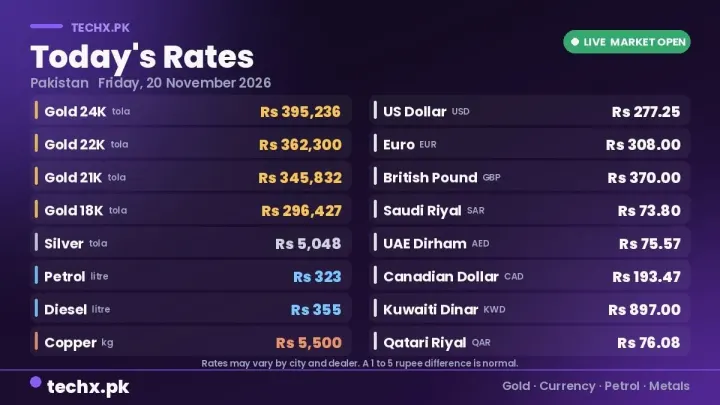
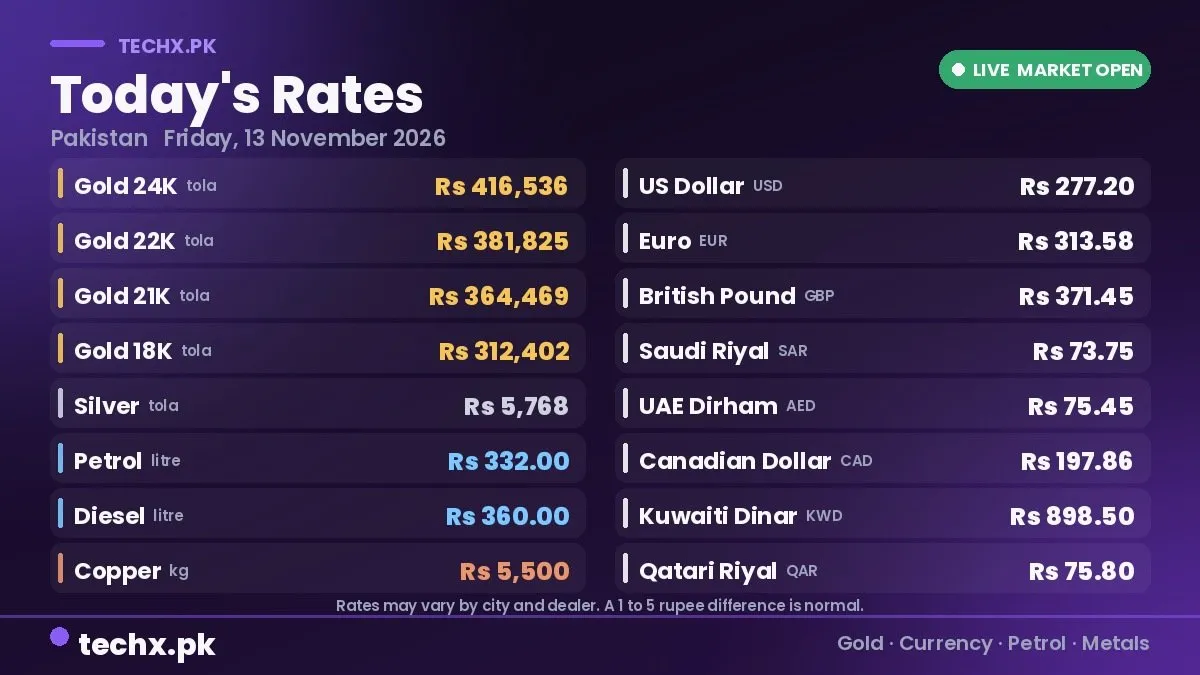
The gold rate in Pakistan today 13 November 2026 has recorded a massive downward correction across all purities. Today the 24k gold price per tola in Pakistan is Rs 416,536, which represents a sharp decrease of Rs 10,900 compared to the previous day. Silver rates, however, remained completely steady, with the silver rate today standing at Rs 5,768 per tola with no reported change.
Looking at other purities, 22K gold is now trading at Rs 381,825 per tola after losing Rs 9,991. The 21K gold stands at Rs 364,469 per tola following a drop of Rs 9,538, while 18K gold fell by Rs 8,175 to reach Rs 312,402 per tola. For smaller weights, 24K gold 10 grams is priced at Rs 357,112, down by Rs 9,445.
This steep decline offers a window of opportunity for buyers who were previously holding back due to soaring market values. Jewellery makers and investors often monitor these sudden dips to acquire physical assets at a more manageable entry point. Market analysts note that precious metal valuations remain highly sensitive to international spot markets, meaning evening sessions can introduce further shifts.
Dollar and Currency Rates in Pakistan Today
Foreign exchange markets in Pakistan show relative calm, with the US Dollar holding firm. Today the US Dollar is trading at Rs 277.20 in Pakistan open market, maintaining the exact same level as the prior session. While the greenback remains stable, certain Gulf currencies have experienced minor adjustments.
Among other major currencies, the Euro trades at Rs 313.58 and the British Pound stands at Rs 371.45, retaining its position as the highest valued Western currency in the open market. Regional currencies include the Saudi Riyal at Rs 73.75, the UAE Dirham at Rs 75.45, the Canadian Dollar at Rs 197.86, and the Australian Dollar at Rs 193.00. Meanwhile, the Kuwaiti Dinar dropped by Rs 4 to reach Rs 898.50, and the Omani Rial decreased by Rs 2 to Rs 719.50. The Qatari Riyal stayed flat at Rs 75.80.
The overall stability of the Pakistani rupee against the primary reserve currency provides a predictable environment for importers and regular citizens alike. Currency exchange dealers report normal trading volumes without panic buying or selling. The minor pullbacks in Gulf denominations reflect localized forex fluctuations rather than any broad domestic shock.
Petrol and Diesel Prices Today
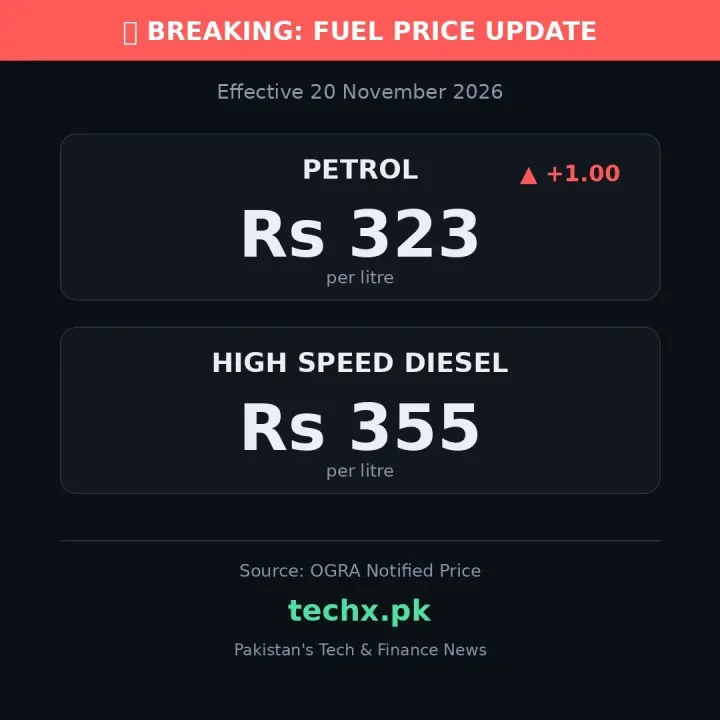
Commuters and transport operators received minor financial relief today as petroleum products registered downward revisions. Petrol price in Pakistan today is Rs 332.00 per litre, dropping by Rs 3 from yesterday levels. High Speed Diesel followed a similar trajectory, falling by Rs 4 to reach Rs 360.00 per litre.
These adjustments, though modest, carry meaningful implications for household budgets and commercial logistics. Transport expenses directly influence the cost of daily goods, vegetables, and manufactured items distributed across provincial boundaries. When fuel expenses ease even slightly, it helps temper broader inflationary pressures felt by everyday citizens.
Authorities determine these pump prices based on fortnightly calculations tied to international petroleum trends. If global crude benchmarks maintain their current softness, consumers might witness further downward revisions in upcoming pricing cycles. Fleet owners and individual vehicle users are advised to monitor official petroleum notifications closely.
Copper Rate Today
Industrial metals such as copper continue to play a vital role in manufacturing, construction, and electrical projects across the country. Copper rate in Pakistan today is established at Rs 5,500 per kg according to the latest market data feeds.
Because copper is foundational for wiring, plumbing installations, and heavy machinery production, its valuation directly impacts builders and hardware contractors. A stable industrial metal price assists project planners in estimating material budgets accurately without facing sudden cost overruns. Manufacturing firms factor this per-kilogram rate into their operational overheads to price finished commercial goods.
Suppliers in major commercial hubs report steady demand from urban development projects and local electrical manufacturers. Maintaining consistent material costs helps sustain small and medium enterprises operating within the construction ecosystem.
Why Did Rates Change Today?
The sharp correction in precious metal values stems directly from international bullion dynamics. Gold fell sharply today primarily because global spot prices moved downward overnight, forcing domestic Sarafa associations to adjust local rates downward. Because the USD-PKR exchange rate remained completely flat, the entire reduction originated from external market forces rather than domestic currency strengthening.
Simultaneously, the decrease in local fuel costs mirrors softening international crude oil benchmarks. Pakistan imports the vast majority of its energy requirements, making domestic pump rates vulnerable to shifts in overseas petroleum markets. The mild dips observed in specific Gulf currencies further indicate localized exchange adjustments while the core dollar rate remained anchored.
Citizens navigating these financial shifts can take comfort in a stable local currency paired with cheaper fuel and gold. Keeping track of daily economic indicators remains essential for anyone planning major expenditures or investments.