Google has launched its experimental AI app Dreambeans in India, its first market outside the United States, as the company looks to tap the world's second-largest internet market to bring personalized visual stories drawn from users' digital activity to a broader audience.
On Monday, Google expanded Dreambeans, available on Android and iOS, to India with support for 13 local languages, including Hindi, Punjabi, Tamil, Telugu, and Bengali, alongside English. The launch comes less than two months after Google made the app available to all eligible U.S. users aged 18 and older.
How Dreambeans Works and What Is New
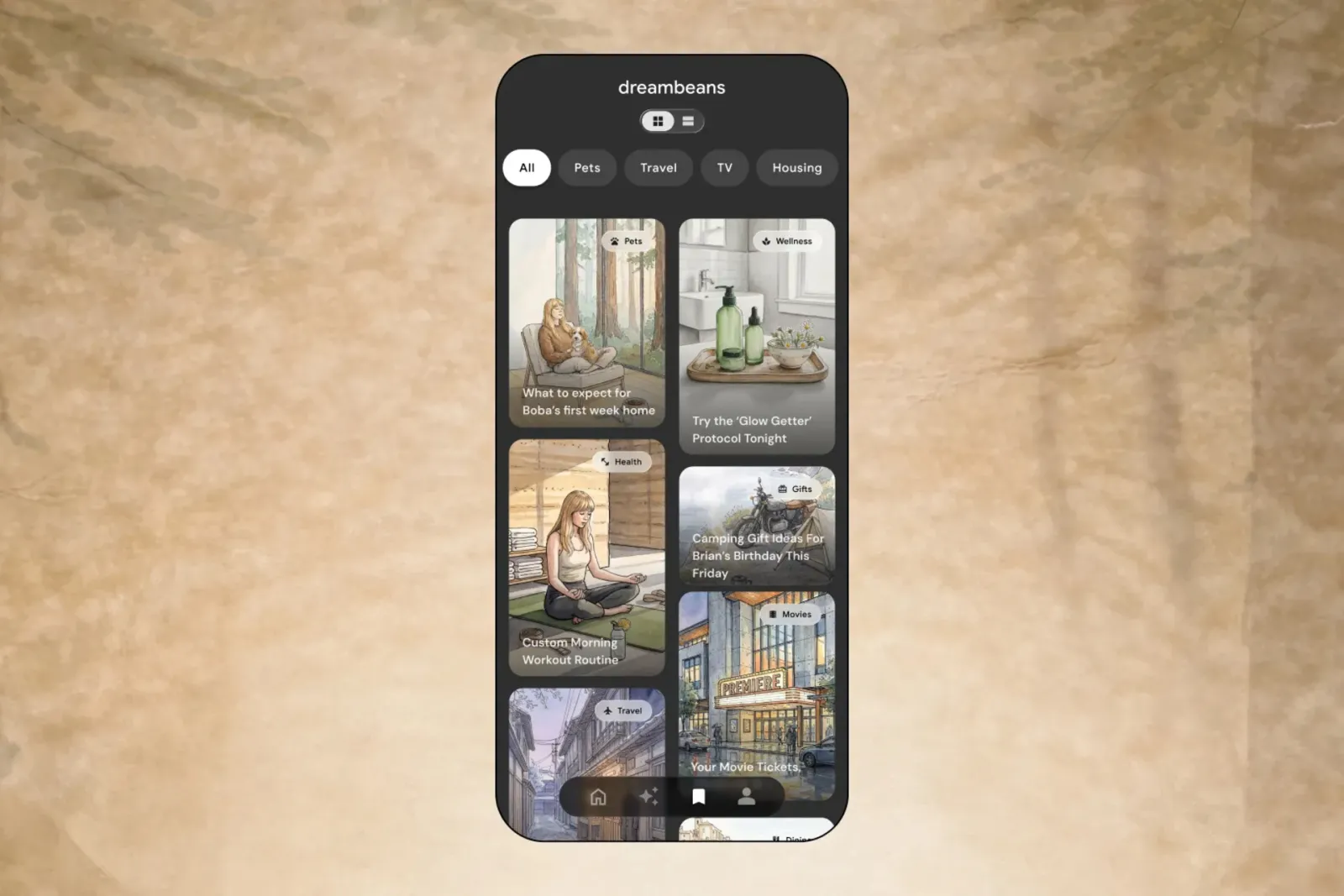
Introduced in June, Dreambeans uses information from connected Google services, such as Calendar, Gemini, Gmail, Photos, Search, and YouTube, to proactively generate illustrated stories about users' interests and everyday lives. The app does not require a prompt; instead it draws on recent activity to craft a narrative that is then illustrated by generative AI.
The original version displayed static AI-generated illustrations. Google recently added a feature that employs its Veo video-generation model, allowing select stories to include short animated clips. This upgrade is now live for Indian users as part of the launch.
Why India Was Chosen as the First International Market
Google product manager Gozde Oznur explained that India was selected because of strong interest from Indian users and the widespread use of Google services in the country. Data shows a high overlap of users across Gemini, Gmail, and Google Photos, making the ecosystem well-suited for Dreambeans' personalization engine.
India's internet user base is the world's second largest, and the country's multilingual environment aligns with Dreambeans' support for multiple languages, even though the app currently allows only one language per story.
Download Performance Compared With Competitors
Sensor Tower estimates that Dreambeans has recorded nearly 55,000 downloads in the United States since its June debut. About 63 % of those downloads occurred in September, when Google opened the app to all eligible U.S. users aged 18 and older. Downloads fell 84 % month-over-month to roughly 5,500 in October.
In the first 30 days after the U.S. rollout, Dreambeans logged an estimated 29,000 downloads. By contrast, Meta's Muse recorded 7.4 million, OpenAI's ChatGPT 2.8 million, Grok Bot 362,000, and Anthropic's Claude 155,000 during their respective first-month windows, according to Sensor Tower. The lower numbers reflect Dreambeans' narrower focus on personalized storytelling rather than a broad set of queries.
Language Options and Their Limits
Dreambeans now supports 13 Indian languages, but users can select only one language at a time for a given story. While the app can draw on data that exists in multiple languages, it cannot currently produce a single story that mixes languages. Oznur noted that this limitation could affect appeal in India, where many people regularly switch between Hindi, English, and regional tongues, a practice often called "Hinglish."
Privacy, Data Controls, and Content Sensitivity
Dreambeans relies on Google's Personal Intelligence technology to access information from connected services. Those services may contain sensitive personal data, prompting questions about privacy. Users can choose which services to connect, disconnect them at any time, and delete Dreambeans data from within the app. Oznur said that deletion of information from the underlying services also removes it from Dreambeans' personalization system.
The app also lets users flag subjects they wish to avoid, such as business-related details. Generated stories are visible only to the account holder and are limited to personal Gmail accounts; enterprise accounts are excluded.
Because the app proactively surfaces memories, there is a risk of presenting upsetting content, such as stories about deceased relatives. Oznur acknowledged this risk and said users can tell Dreambeans to stop showing certain subjects, likening the control to the "Hide from memories" feature in Google Photos.
Future Directions: From Stories to Actionable Suggestions
During the briefing, Oznur indicated that Google is exploring ways to make Dreambeans more actionable. The company is considering features that would move beyond storytelling to provide recommendations that users can act on directly from the app.
For now, Dreambeans remains an experimental service aimed at turning everyday digital footprints into visual narratives, a concept that blends personal data usage with generative AI in a way that is still new to most consumers.
What Users Should Know When Trying Dreambeans
To use Dreambeans in India, users need a personal Gmail account, an Android or iOS device, and must grant the app permission to access at least one of the supported Google services. They can select a single language for story generation, and they have the option to disconnect services or delete data at any time.
Because the app pulls from recent activity, users who keep their Google services active are more likely to receive frequent story updates. Those who limit data sharing will see fewer or less detailed narratives.
Overall, Dreambeans represents Google's experiment in turning personal data into creative content, and its performance in India will likely shape how the company expands the service to other markets.