Emergency Medical Transport Challenges in Karachi
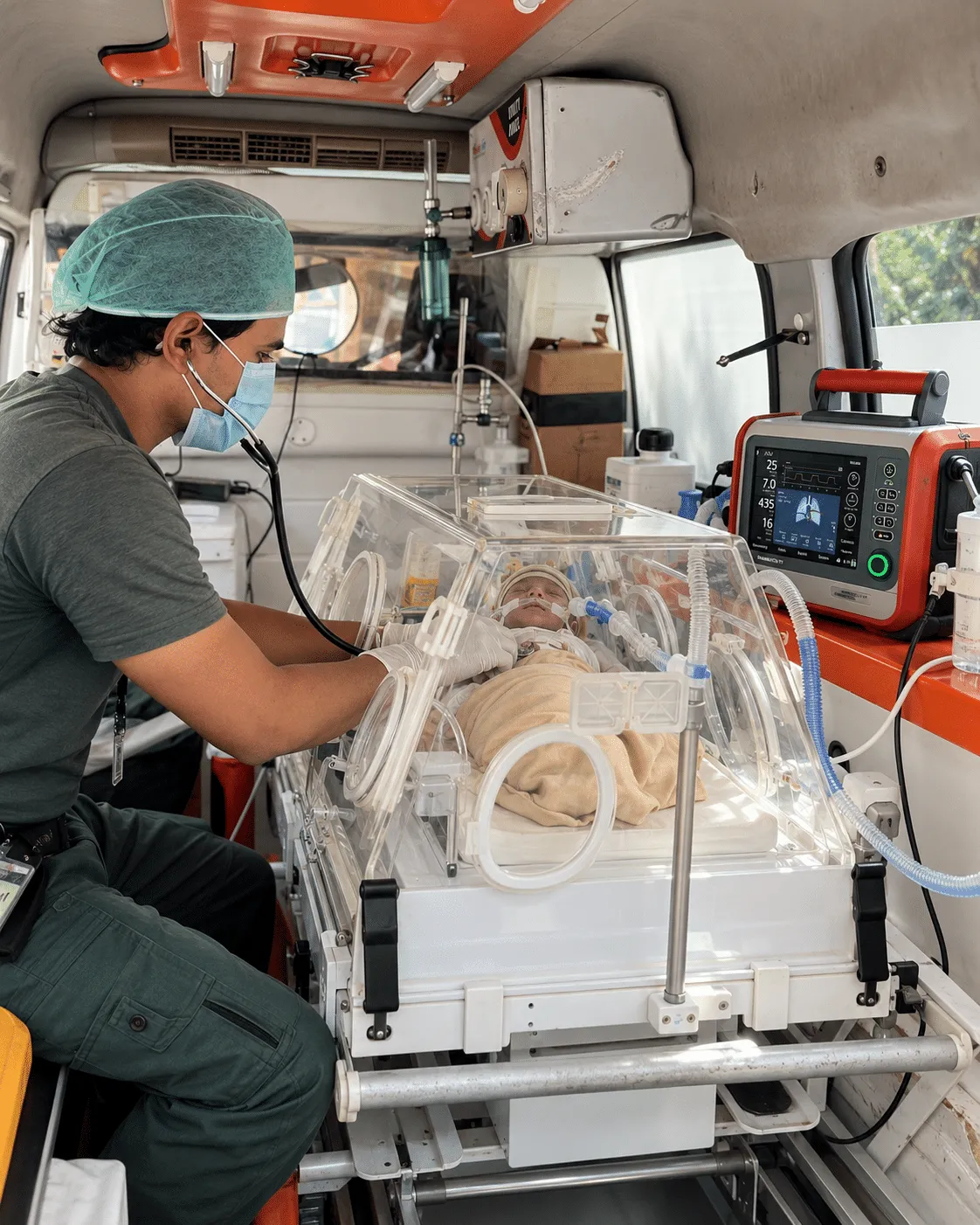
For nearly 11 hours, a 1122 ambulance crew in Karachi kept a premature baby alive inside their vehicle, as every hospital they approached refused admission because no incubator was available. The crew adjusted the baby's oxygen, monitored temperature and kept the newborn breathing throughout. Karachi faces a shortage of hospital incubators, and for a critically ill newborn, the time spent on the road between hospitals can decide the outcome.
Transporting a critically ill newborn requires specialized equipment and continuous monitoring by trained personnel. When medical facilities lack the necessary capacity to take in new patients, pre-hospital care providers must bridge the gap. This particular case highlights the severe strain on neonatal intensive care units across the region, where finding an available bed can take hours of transit and persistent coordination by emergency staff.
Understanding the ICU on Wheels Concept
ICU on Wheels is how SIEHS describes its 1122 ambulances, which are vehicles equipped and staffed to start intensive care before a patient reaches hospital. In a hospital ICU, the sickest patients are kept breathing, monitored and stable. According to SIEHS, each ambulance in its certified fleet carries 29 essential medical tools for the same job, including a ventilator, cardiac monitor, AED, suction machine, airway equipment and oxygen, and is staffed by trained emergency medical technicians.
These mobile units are designed to function as rolling treatment rooms rather than simple transport vans. By bringing advanced life support directly to the patient, emergency medical technicians can stabilize individuals who might otherwise deteriorate rapidly during transit. This capability is especially vital in densely populated urban centers where traffic congestion can delay arrival at a definitive care facility.
Specialized Incubator Ambulances for Newborns
For the smallest patients, 25 ambulances across Sindh, nine of them in Karachi, have been fitted with neonatal incubators. They keep premature and low-birth-weight babies warm and oxygenated, with breathing support, until a hospital bed is found. According to SIEHS, the incubator ambulances have handled more than 5,000 neonatal emergencies. For a newborn emergency, callers can ask specifically for an incubator ambulance.
Premature infants lack the body fat and regulatory systems needed to maintain a stable internal temperature, making hypothermia a constant danger. The integrated incubators inside these specialized vehicles protect vulnerable newborns from environmental temperature drops while delivering precise amounts of oxygen. Because hospital capacity fluctuates daily, these mobile units often serve as temporary care environments for hours at a time.
Ventilator Support During Emergency Transit
Yes, you can get an ambulance with a ventilator in Sindh. The ventilator is the most critical part of ICU on Wheels. When a patient in respiratory failure cannot breathe adequately on their own, it supports their breathing during transport, in Karachi as well as in districts such as Larkana and Thatta. Over the past five years, SIEHS ambulances have provided ventilator support in 2,821 cases.
Respiratory distress can strike suddenly due to trauma, cardiac events, severe infections, or premature birth complications. Having mechanical ventilation available inside an ambulance ensures that patients receiving life support do not experience interruptions in their care pathway. Emergency medical technicians undergo rigorous training to manage these complex devices while the vehicle is in motion.
Accessing Free Emergency Services Across Sindh
The emergency ambulance number in Sindh is 1122. The service is free, runs 24 hours a day, 7 days a week, and covers all 30 districts of Sindh, in cities, rural areas and on highways. It is run by Sindh Integrated Emergency and Health Services with a fleet of over 500 vehicles. Between August 2021 and September 2026, the service handled 44.7 million calls, responded to more than 135,600 road traffic accident cases, and more than 1,100 babies were delivered inside its ambulances.
Operating across such a diverse geographical area requires extensive logistical planning and a massive resource pool. From bustling metropolitan streets to remote rural highways, the network coordinates rapid responses for a wide variety of medical crises. SIEHS accepts Zakat, Sadaqah and general donations to support the service and maintain its extensive fleet.
The Broader Impact on Public Health
The reliance on pre-hospital care providers reflects deeper systemic pressures within the healthcare infrastructure. When tertiary care hospitals reach full capacity, emergency crews absorb the burden of patient stabilization. This dynamic places extraordinary demands on medical technicians who must manage complex clinical cases inside a confined space for extended periods.
Despite these hurdles, the availability of mobile intensive care units provides a vital safety net for vulnerable populations. Families facing acute emergencies rely on the round-the-clock availability of these vehicles when local clinics or hospitals turn them away. Continued community support and donations help sustain operations as the service expands to meet growing demand.