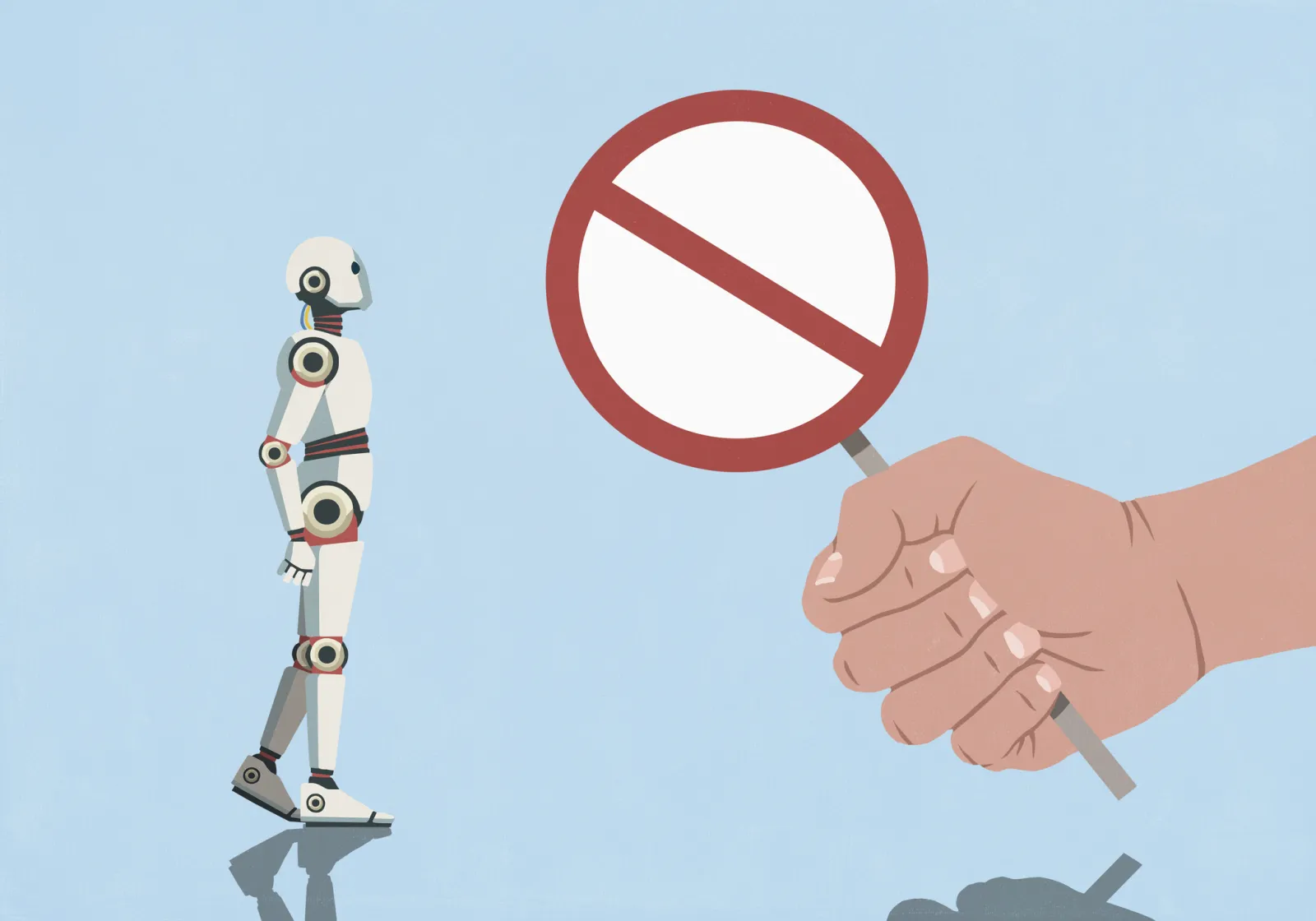
Pope Leo XIV has decried AI as a threat to human dignity, but concerns are not limited to the devout. David Durman, a nontheistic Humanist, recently obtained a religious exemption that lets him avoid using AI at his job.
Durman, who works as an administrator at the University of Kentucky, explained to TechCrunch that "Humanism is a collection of beliefs about the human experience and how humans interact with the world." He said it focuses on "human well-being and flourishing, both individually and collectively ... and implores a person to try to improve both their well-being and their flourishing as well as the others around them."
Observing AI's growing presence in everyday tasks, Durman approached the American Humanist Association (AHA), a nonprofit that promotes secular humanism, to learn how he might gain legal protection from being forced to use AI at work. He feels the technology conflicts with his convictions.
He told TechCrunch, "The way we become moral actors for ourselves and for others is through the active application of our minds, and the diminishing of that [through AI use] is going to necessarily have a negative impact on our ability to do so," highlighting worries that reliance on AI could erode critical thinking.
In an AHA statement released earlier this week, Durman wrote, "AI is interfering with people's ability to earn a living, the environmental costs spell disaster for humanity and our planet, and its supplanting and theft of human creativity threaten elements of our culture like art and literature that make society flourish."
Humanism does not oppose religion, yet it often attracts individuals skeptical of a deity or supernatural forces, offering a scientific and moral framework instead.
Alexandria Huiskens, Staff Attorney at the AHA, told TechCrunch, "Concern about AI and human dignity can run through several different faiths and traditions, whether that's Catholic teachings, or Universalism, or Humanism, and we want Humanists or nontheists to know that they fall into these categories, that they are also protected by the law at work."
Durman is the first Humanist to receive workplace accommodations that allow him to refrain from AI use, and one of the earliest to discuss seeking such protections publicly. He was motivated after learning that Erin Maus, a Unitarian Universalist software engineer, had secured similar accommodations.
Durman said, "For me, this was about me and my convictions. I'm obviously not trying to tell people how to think or feel... But I do hope that it encourages people who have similar concerns to pursue not necessarily religious exemption, but pursue their concerns to the best of their ability where they feel is the most appropriate."
University of Kentucky spokesperson Jay Blanton told TechCrunch that the school evaluates accommodation requests individually, looking at the employee's duties and the specifics of each case.
Blanton added, "In this case, the university determined that an accommodation could be provided while allowing the employee to continue performing the essential functions of their position. As technology and job responsibilities evolve, accommodations may be reviewed to ensure they remain reasonable and workable."
Maus's case is notable because software engineers rarely write code without AI assistance today. Durman's role, supporting researchers applying for grants, does not require AI, but colleagues and leaders have suggested trying the tools, prompting him to secure an exemption before any mandate could arise.
Durman concluded, "I hope that if [others] have similar feelings, that they feel encouraged to pursue some kind of resolution."