A Day That Belongs to Every Pakistani
Every year on 9 November, Pakistan pauses to remember one of the greatest minds the country has ever known, Allama Muhammad Iqbal. Schools hold special assemblies, universities organise seminars, and the flag flies high across the country. This is Iqbal Day, a public holiday, a moment of reflection, and an open invitation to every Pakistani to ask a simple but powerful question: What does Iqbal's message mean for me, right now, today?
For Pakistan's growing community of developers, startup founders, tech students, and digital creators, the answer turns out to be: everything.
Observing this national anniversary involves more than traditional ceremonies. It serves as an active bridge between historical intellectual heritage and modern digital ambition.
Who Was Allama Iqbal? A Background
Allama Muhammad Iqbal was born on 9 November 1877 in Sialkot, the city that is now proudly part of Pakistan. He was a poet, philosopher, lawyer, and political thinker who wrote in both Urdu and Persian, and whose ideas helped shape the intellectual foundation of the Pakistan Movement.
Iqbal studied in Lahore, then travelled to Europe where he earned a law degree from Lincoln's Inn in London and a doctorate in philosophy from Munich. That rare combination of Eastern wisdom and Western scholarship gave his work a unique depth that still resonates across generations.
He was knighted by the British Government in 1922 and is officially recognised as the National Poet of Pakistan. The Government of Pakistan also honours him with the title Shair-e-Mashriq, Poet of the East. His work includes landmark collections such as Bang-e-Dra, Asrar-e-Khudi, and Javid Nama.
Iqbal passed away in Lahore on 21 April 1938, nearly a decade before the creation of Pakistan, and was buried in front of the Badshahi Mosque. He never saw the country he helped dream into existence. Yet Pakistan would not have existed without him.
Why Do We Celebrate Iqbal Day on 9 November?
Iqbal Day is celebrated every year on 9 November as a tribute to Allama Iqbal, observed in all provinces of Pakistan, to honour his birth anniversary and to keep his vision alive in the hearts of the people. The very first Iqbal Day was observed during his own lifetime, on 9 January 1938, a remarkable honour for a living poet and thinker. After his passing, the day has since been anchored to his birth date and declared a national public holiday.
The purpose of Iqbal Day is not just remembrance, it is rededication. It is a national call to reconnect with the ideals of self-awareness, hard work, creative thinking, and service to the community that Iqbal spent his entire life promoting across society.
Educational institutions and civic bodies coordinate events to ensure younger demographics understand these foundational principles. Public addresses and scholarly debates explore how historical doctrines apply to contemporary societal challenges.
The Philosophy of Khudi and Young Generations
At the heart of everything Iqbal wrote is a single powerful concept: Khudi. The word is often translated as "selfhood" but it carries a much deeper meaning, a sense of identity, inner strength, divine mission, and the courage to depend on yourself rather than waiting for the world to hand you something.
Iqbal introduced the philosophy of Khudi in his 1915 Persian poetry collection Asrar-e-Khudi (Secrets of the Self). In it, he argued that understanding yourself is the beginning of all genuine progress. He believed that youth who truly grasp their own potential and take responsibility for their future can change the destiny of an entire nation.
His other beloved symbol was the Shaheen, the eagle. Iqbal used the Shaheen as a metaphor for the ideal young person: free, self-reliant, unafraid of heights, and unwilling to live off the scraps of others. The Shaheen does not wait for food to come to it. It soars high and hunts with its own strength. That was Iqbal's vision for Pakistan's youth.
He also warned against shortcuts. His message was clear: real achievement demands patience, honest effort, and continuous learning, not quick fixes or borrowed success.
Khudi in the Age of Code
You might ask, what does a 19th-century poet have to do with software development, artificial intelligence, or building a startup in Lahore or Karachi in 2024? The answer is: the spirit is exactly the same.
When a young developer from Faisalabad teaches herself Python from free online resources and builds a product that solves a real problem for Pakistani farmers, that is Khudi in action. When a university student in Islamabad refuses to copy someone else's solution and instead debugs his own code for three days straight, that is Khudi. When a designer from Peshawar launches her own creative studio instead of waiting for a safe government job, that is Iqbal's Shaheen, taking flight in the digital age.
Iqbal strongly believed that youth have the power to change the destiny of a nation. He encouraged young people to develop qualities like fearlessness, self-reliance, and determination. He also supported critical thinking, the very skill that every good programmer, product designer, and tech entrepreneur lives by every single day.
Rejecting Shortcuts in Modern Enterprise
In a world full of get-rich-quick schemes, viral fame, and the temptation to copy-paste your way through life, Iqbal's voice cuts through the noise. He warned the youth not to look for shortcuts to success. His message was that real success comes with patience and continuous effort, not overnight tricks.
For Pakistan's tech community, this is a reminder that building something real, a genuinely useful app, a sustainable startup, a world-class engineering team, takes time, honesty, and deep skill. There are no shortcuts in the terminal, and there are no shortcuts in life.
Founders and engineers across the nation face intense market pressures to scale rapidly without solid foundations. Embracing the patience advocated by the Poet of the East provides a philosophical counterweight to modern corporate impatience.
Pakistan's Digital Future and Historical Vision
Pakistan today has one of the youngest populations in the world. Millions of young Pakistanis are studying computer science, learning to code, freelancing on global platforms, and building products that compete internationally. The tech sector is growing, the startup ecosystem is maturing, and Pakistani engineers are making their mark from Silicon Valley to Dubai.
This is precisely the generation Iqbal was writing for. He envisioned youth as builders of a new world, people who do not look to others to define their limits, but who set their own horizons. His philosophy compels the individual to constantly adapt, embrace struggle, and strive for purposeful transformation.
On every Iqbal Day, the message is the same: know yourself, trust yourself, work hard, think freely, and serve something greater than your own comfort. Whether you are building the next fintech app or studying machine learning at 2am, that is the spirit Iqbal was calling for.
How Pakistan Observes Iqbal Day
- A public holiday is observed across all provinces in honour of Iqbal's birth anniversary.
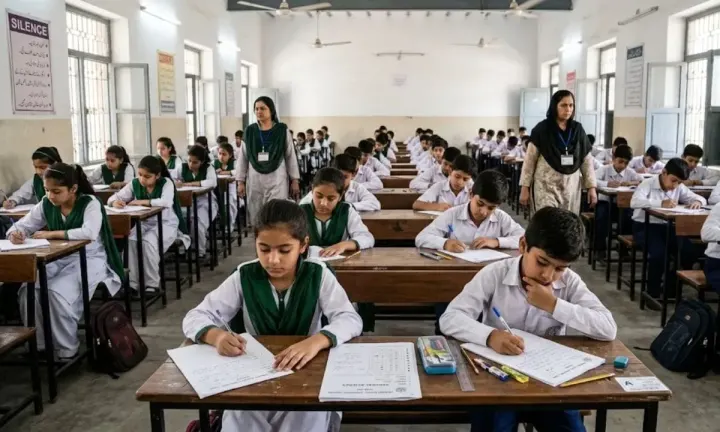
- Schools, colleges, and universities hold special programmes, poetry recitations, and debates.
- Government institutions and cultural organisations arrange seminars on Iqbal's philosophy and relevance.
- The national flag is flown at full mast, and tributes are paid by leaders across the country.
- Tech communities and youth organisations increasingly use the day to discuss Iqbal's ideas in a modern context, connecting his vision of Khudi with entrepreneurship, innovation, and self-determination.
These nationwide observances reinforce cultural unity and prompt citizens to evaluate their personal contributions to society. Public squares and academic halls alike become centres for philosophical discourse.
A Continuing Legacy for Future Generations
Allama Iqbal dreamed of a people who think for themselves, build with their own hands, and refuse to accept defeat. He passed away in 1938 without seeing Pakistan come into being, but his dream did not die with him. It was carried forward by Quaid-e-Azam Muhammad Ali Jinnah, by the people who built this nation, and today it is carried forward by every young Pakistani who opens a laptop, writes a line of code, or starts something new.
This Iqbal Day, wherever you are, in a university lab, a co-working space, your bedroom at midnight, or a government office, remember what the Poet of the East asked of you: know your Khudi, spread your wings like the Shaheen, and build something that lasts.
Pakistan Zindabad.