Every year on November 9, Pakistan comes alive with the spirit of one of its greatest figures. Schools, universities, government offices, and cultural centres across the country mark Iqbal Day, a national public holiday dedicated to the memory of Allama Sir Muhammad Iqbal, Pakistan's national poet and one of the most influential philosopher-poets of the modern Muslim world.
The date carries both personal and historical significance for the nation. Allama Iqbal was born on November 9, 1877, in Sialkot, in the Punjab province of British India, a city that is today proudly a part of Pakistan. His birthday has been declared a national public holiday by the Government of Pakistan, observed as Youm-e-Iqbal every year across all provinces.
What Is Iqbal Day and Why Does Pakistan Celebrate It?
The observance of Iqbal Day serves as a yearly reminder of the intellectual roots of the country. Citizens gather to reflect on the teachings of a man who used his pen to awaken an entire population. Cultural institutions, educational bodies, and government offices close their doors to public business while opening their doors to poetry readings, seminars, and historical retrospectives.
The State Bank of Pakistan and all commercial banks also observe the holiday, halting regular financial operations for the day. This widespread shutdown underscores the deep reverence the nation holds for its philosophical founder. Through speeches and academic conferences, the younger generation engages directly with the ideals of self-reliance and spiritual awakening that defined Iqbal's life.
A Brief Life and Everlasting Legacy
Allama Iqbal, who lived from November 9, 1877, to April 21, 1938, wore many hats in one remarkable lifetime as a poet, philosopher, barrister, and politician. He wrote in Urdu, Persian, and Arabic, and his poetry is widely regarded as among the greatest of the modern era. The word Allama itself means great scholar, a title he earned through decades of deep learning in both Eastern and Western traditions.
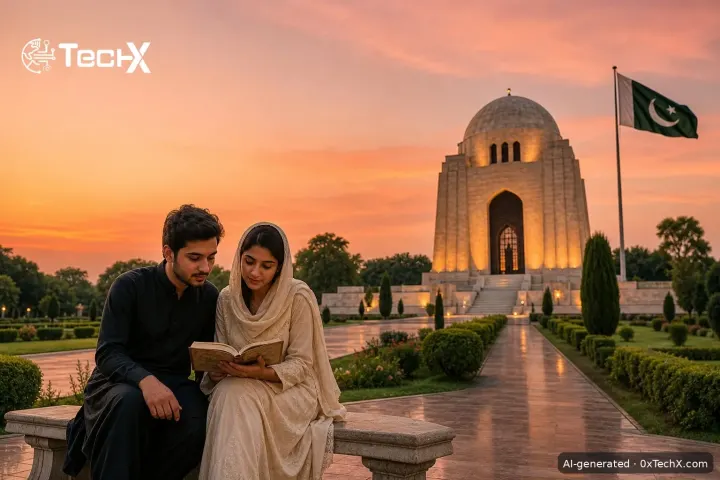
After completing his education in Lahore, he studied philosophy in Europe, at Cambridge and in Germany, before returning home in 1908 to practise law while dedicating his true energy to scholarly and literary work. He passed away on April 21, 1938, nearly a decade before the country he had dreamed of came into being. Yet Pakistan honoured him as its national poet, and his resting place, Mazar-e-Iqbal, stands with quiet dignity beside the Badshahi Mosque in Lahore.
In Pakistan, he is lovingly remembered by several titles: Mufakkir-e-Pakistan, meaning the Thinker of Pakistan, Hakeem-ul-Ummat, meaning the Sage of the Muslim Ummah, and above all, Shair-e-Mashriq, the Poet of the East.
How Allama Iqbal Shaped the Vision for Pakistan
Allama Iqbal was not simply a poet who wrote beautiful verses. He was a visionary who used words as a tool to awaken the conscience of an entire people, and his political and philosophical thought played a pivotal role in shaping the intellectual foundation for the creation of Pakistan.
The most defining moment of his political life came on December 29, 1930, when he delivered his Presidential Address to the All-India Muslim League session held at Allahabad. In that landmark speech, now known simply as the Allahabad Address, he articulated a clear vision for a consolidated, self-governing Muslim state in the northwestern regions of British India, uniting Punjab, Sindh, the North-West Frontier Province, and Balochistan. This address served as the formal intellectual foundation of the Pakistan Movement and laid the groundwork for the demand that would eventually lead to Pakistan's creation in 1947.
Iqbal's vision for Pakistan went far beyond drawing a line on a map. He believed that Muslims of the subcontinent formed a distinct civilisation, one with its own religion, history, culture, and philosophy, that deserved its own sovereign home. His ideas deeply influenced Quaid-e-Azam Muhammad Ali Jinnah, who later led the successful struggle for the establishment of Pakistan.
Exploring the Famous Works of Allama Iqbal
Iqbal's poetry remains a living part of the cultural fabric, echoing in school morning assemblies and in the hearts of students. His major published poetry collections and prose works have guided generations of readers across the globe.
- Asrar-e-Khudi (Secrets of the Self), 1915: Written in Persian, this was Iqbal's first major published poetry collection, introducing his defining philosophical concept of Khudi, or self-realisation.
- Bang-e-Dara (The Call of the Marching Bell), 1924: His first major Urdu poetry collection, written across three distinct phases of his life, bringing philosophical ideas directly to Urdu-speaking readers.
- Payam-e-Mashriq (The Message of the East), 1923: Written in Persian as a response to Goethe's West-Eastern Divan, highlighting engagement with both Eastern and Western thought.
- Bal-e-Jibril (Gabriel's Wing), 1935: Published just three years before his death, many critics consider this his finest Urdu poetry collection, inspired in part by a visit to Spain.
- Zarb-e-Kalim (The Rod of Moses), 1936: A powerful Urdu collection that challenged the Muslim world to wake up and reclaim its dignity and purpose.
- The Reconstruction of Religious Thought in Islam, 1930: His most important prose work, written in English as a series of lectures offering a framework for understanding Islam in a contemporary context.
Across all these works, Iqbal returned again and again to the call to be like the shaheen, or falcon, which is fearless, high-flying, independent, and self-reliant. This imagery became one of the most iconic metaphors in Pakistani literary and national consciousness.
How Iqbal Day Is Celebrated Across Pakistan
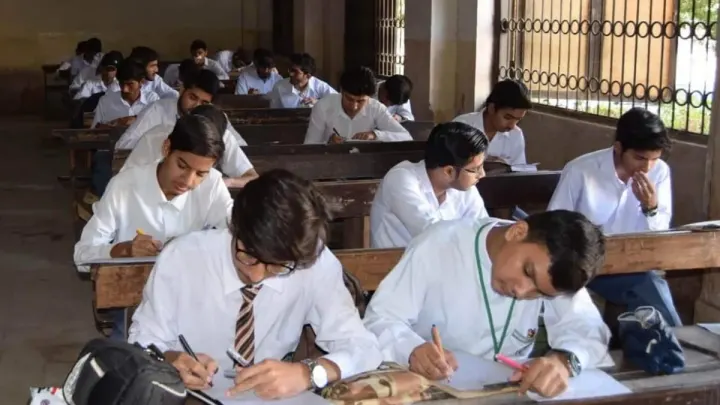
The observance of Iqbal Day brings together communities through structured events and public gatherings. Schools, colleges, and universities hold special programmes where students recite Iqbal's poetry, deliver speeches, and take part in debates about his philosophy. Cultural centres, literary societies, and government institutions organise seminars and mushairas in his honour.
The Iqbal Academy Pakistan, headquartered at Iqbal's former residence on McLeod Road, Lahore, serves as the country's leading institution dedicated to promoting and preserving Iqbal's works and teachings. It conducts research, publishes journals, and operates an online digital library called the Allama Iqbal Cyber Library, making his works accessible to readers around the world.
Carrying the Dream Forward Today
What makes Allama Iqbal truly timeless is that his message never grows old. He urged the Muslim youth to build their inner strength before they could build anything around them, a philosophy that resonates powerfully in the modern era of technology and entrepreneurship.
His vision was not just of a country with borders, but of a people who would stand tall, think independently, contribute to human knowledge, and lead with dignity. Today, as Pakistani engineers, coders, doctors, writers, and entrepreneurs make their mark at home and across the world, they carry forward precisely the spirit Iqbal spent his lifetime trying to ignite.