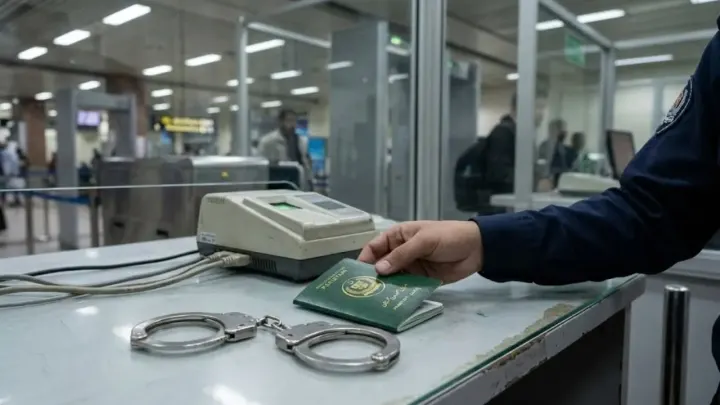
An Islamabad court has sentenced a man to 10 years in prison and fined him Rs1 million for running an illegal hundi/hawala network, the Federal Investigation Agency (FIA) said.
Who was convicted and what were the charges?
The convicted individual is Khan Bahadur Khan. He pleaded guilty before Additional District and Sessions Judge Rawalpindi Muhammad Irfan Anjum, who delivered the verdict in Case No. C-18/2026. The court found him guilty under Sections 5, 8 and 23 of the Foreign Exchange Regulation Act 1947, as amended in 2020. Those sections criminalise the operation of unauthorized foreign exchange channels, the receipt of foreign currency without approval, and the facilitation of illegal remittances.
How did the investigation uncover the illegal network?
The FIA Commercial Banking Circle Islamabad secured the conviction. Investigators traced more than Rs108 million deposited into Khan Bahadur Khan's bank accounts from multiple sources, including a corporate entity named M/s Shaheen Air International. The deposits did not correspond with his declared income or any legitimate business activity.
To build the case, the prosecution presented a combination of banking records, witness testimony and forensic financial evidence. The forensic analysis showed a pattern of rapid inflows and outflows typical of hundi-hawala operations, which rely on informal networks to move money across borders without using the formal banking system.
What is hundi-hawala and why is it illegal in Pakistan?
Hundi and hawala are informal value-transfer systems that have existed for centuries in South Asia and the Middle East. They operate outside regulated banking channels, allowing participants to send and receive funds based on trust and personal networks rather than documented contracts. While historically used for legitimate purposes, modern hundi-hawala is often exploited for money-laundering, financing of illicit activities and evasion of foreign-exchange controls.
Pakistan's Foreign Exchange Regulation Act 1947, last amended in 2020, requires all foreign-exchange transactions to be conducted through authorised banks and to be reported to the State Bank of Pakistan. Sections 5, 8 and 23 specifically prohibit the receipt, transfer or facilitation of foreign currency without a licence, making unregistered hundi-hawala networks a criminal offence.
What does the sentence mean for the accused?
Khan Bahadur Khan will serve a ten-year prison term and must pay a fine of Rs1 million. The fine is separate from any potential confiscation of assets that may be pursued in subsequent civil proceedings. Under Pakistani law, a conviction under the Foreign Exchange Regulation Act can also lead to the freezing of bank accounts and the seizure of property linked to the illegal activity.
How does this case fit into broader FIA efforts?
FIA Islamabad Zone officials said the agency will continue action against illegal remittance channels, unauthorized money transfers and illicit financial transactions. The FIA's Commercial Banking Circle has been tasked with monitoring suspicious banking activity, especially large deposits that do not match a customer's known source of income.
Since 2020, the FIA has reported a steady increase in cases involving informal money-transfer networks, prompting tighter coordination with the State Bank of Pakistan, the Financial Monitoring Unit and international partners such as INTERPOL. The agency's focus is on disrupting the financial lifelines of criminal enterprises, including terrorist financing and drug trafficking.
What impact does this have on the banking sector and ordinary citizens?
For banks, the case reinforces the importance of robust Know-Your-Customer (KYC) and anti-money-laundering (AML) compliance. Banks are required to flag and report suspicious transactions that exceed certain thresholds, typically Rs10 million, to the Financial Monitoring Unit. The detection of the Rs108 million inflow demonstrates that the reporting system can work when banks and regulators collaborate effectively.
For ordinary citizens, the conviction signals that the government is taking concrete steps to protect the integrity of Pakistan's foreign-exchange market. Illegal hundi-hawala channels can distort exchange rates, reduce tax revenue and expose users to fraud. By curbing these networks, the authorities aim to create a more transparent financial environment that benefits legitimate businesses and expatriates sending remittances home.
What are the next legal steps?
Following the sentencing, the court may order the seizure of assets that are suspected to be proceeds of the illegal network. The FIA can also pursue civil recovery actions to reclaim the Rs108 million and any additional gains. Appeals are possible; Khan Bahadur Khan may challenge the conviction in a higher court within the statutory period, which is typically 30 days from the judgment.
Meanwhile, the FIA has indicated that it will continue to monitor related accounts and will file new cases if further evidence of illegal transfers emerges. The agency's ongoing surveillance includes automated transaction monitoring tools and periodic audits of high-risk customers.
Practical takeaways for businesses and individuals
- Maintain accurate financial records and ensure all foreign-exchange transactions are processed through licensed banks.
- Implement strict internal AML policies, including regular staff training on detecting suspicious activity.
- Report any large, unexplained cash deposits or transfers to the Financial Monitoring Unit promptly.
- Seek legal counsel if approached to participate in informal money-transfer arrangements, as involvement can lead to severe criminal penalties.
The case of Khan Bahadur Khan serves as a clear reminder that Pakistan's authorities are intensifying enforcement against illegal financial channels. Continued vigilance by banks, businesses and the public will be essential to sustain the momentum of these enforcement actions.