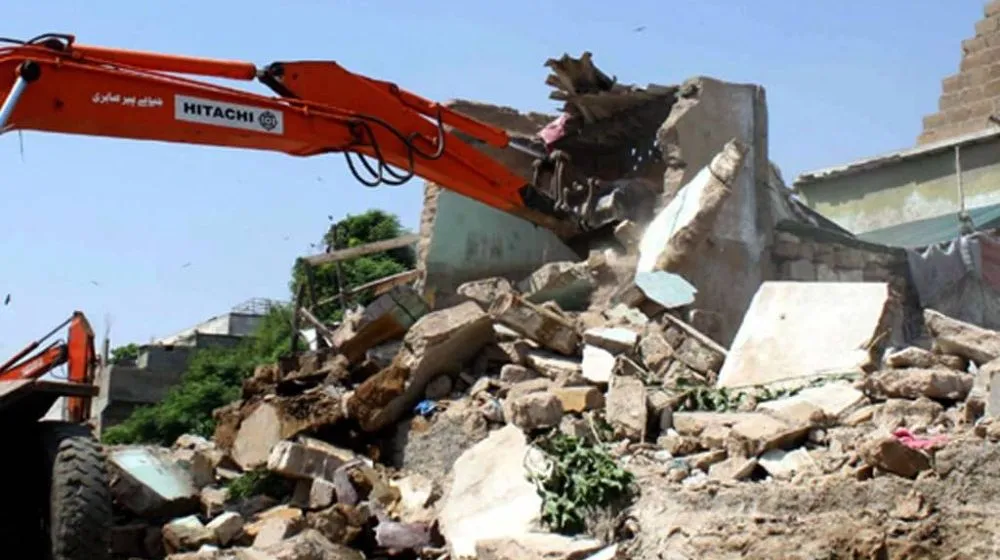
Karachi Development Authority officials initiated an anti-encroachment drive within the Lines Area on Sunday to clear public roads, footpaths, green belts, and government properties of unauthorized structures, with the goal of enhancing pedestrian mobility, traffic movement, sanitation, and the municipal environment.
A press release issued by the KDA on Sunday stated that the campaign operates under orders from KDA Director General Zain-ul-Abideen Ansari, overseen by Lines Area Project Director Muhammad Umar Farooq and Demolition In-charge Muhammad Ishtiaq.
Individuals responsible for placing obstructions on walkways, roads, and green spaces were instructed during the sweep to clear them voluntarily and abandon state property, while officials also cleared an illegal occupation from a specific plot.
Authorities announced that the campaign will persist into next week, cautioning that legal consequences await anyone who ignores orders to remove unauthorized structures and items from public areas.
This initiative addresses ongoing urban management issues in Karachi, where blocked roads and footpaths restrict traffic lanes, block pedestrians, and push individuals onto busy streets, raising their risk of traffic collisions.
Such conditions disproportionately impact children, elderly residents, and individuals with disabilities requiring safe, clear walking paths.
Maintaining unobstructed walkways and thoroughfares remains vital in densely populated Karachi to boost mobility and ensure public areas remain open to everyone, as unauthorized land use can hinder emergency responses, complicate traffic control, and disrupt urban infrastructure.
Clearing green belts carries equal weight for safeguarding municipal green areas, since occupying these zones for storage or unapproved uses limits tree planting, vegetation upkeep, and environmental enhancement.
Well-kept green belts offer shade, capture dust, and foster a more habitable city atmosphere.
Clearing public zones aids cleanliness by simplifying roadside and walkway maintenance, though sustained success relies on consistent supervision to stop structures from reappearing after the drive ends.
The KDA requested that citizens and participants support the initiative by avoiding private use of public property, emphasizing its dedication to guarding state land, upgrading civic amenities, and keeping walkways clear.