Sindh Government Announces Reopening of Karachi University Road U-Turn
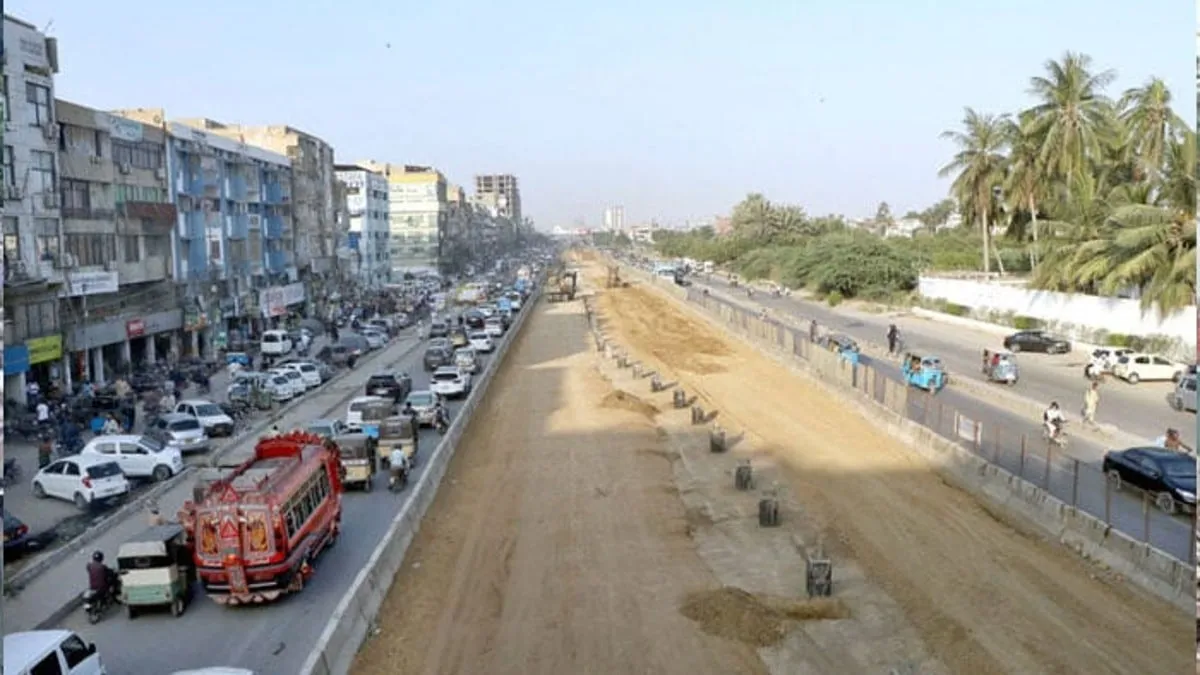
The Sindh government has decided to reopen a U-turn on Karachi's University Road to ease travel for commuters as work continues on the Red Line Bus Rapid Transit (BRT) project. This measure aims to reduce the daily traffic congestion experienced by motorists traveling along this vital urban corridor. University Road serves as a major artery for the metropolis, connecting numerous residential neighborhoods, educational institutions, and commercial hubs. The ongoing infrastructure development has created bottlenecks, making daily commutes challenging for thousands of residents. By restoring access at this specific junction, authorities hope to restore a degree of normalcy to local traffic patterns while heavy engineering work proceeds on the adjacent transit lines.
The decision came during a meeting chaired by Sindh Senior Minister Sharjeel Inam Memon, where officials reviewed arrangements for routes serving the recently arrived double-decker and electric buses. Senior provincial administrators and transport department personnel gathered to assess the current operational status of the new transport fleet. Transport planning in Karachi requires careful coordination between municipal agencies, transit authorities, and construction contractors. The integration of modern vehicles into existing road networks demands structural adjustments to accommodate wider turning radiuses and passenger boarding requirements. Officials at the high-level session scrutinized these technical parameters to prevent future logistical gridlocks.
Planning Routes for New Double-Decker and Electric Buses
During the meeting, Memon directed officials to finalize suitable routes for the new buses. He expressed hope that another batch of double-decker and electric buses would arrive in Karachi later this month. The introduction of electric and double-decker vehicles represents a modernization effort for the municipal transit network. These eco-friendly units are designed to reduce urban carbon emissions while increasing passenger capacity per trip. Transport planners must map out specific corridors that can support the physical dimensions and electrical charging needs of these modern additions. Finalizing these pathways before the arrival of the upcoming fleet shipment ensures that the vehicles can enter service without administrative delays.
He also called for comprehensive planning covering operations and services, stressing that the buses should serve areas where residents need public transportation the most. Equitable distribution of public transit resources remains a central priority for municipal authorities addressing the needs of underserved neighborhoods. Many outlying residential zones rely heavily on informal transport options, which can be costly and unregulated. Directing the new fleet toward high-demand corridors aims to provide reliable, affordable mobility options for daily wage earners, students, and office workers. Operational planning encompasses ticketing systems, maintenance schedules, and driver training protocols to maintain service reliability across all designated lines.
Progress on the Red Line Bus Rapid Transit Project
Memon said reopening the Red Line BRT U-turn on University Road would provide commuters with greater convenience. He also directed officials to take extraordinary measures to ensure the timely completion of the Red Line project. The Red Line BRT stands as a cornerstone initiative in the overhaul of Karachi's mass transit infrastructure. Funded through international partnerships and provincial allocations, the project spans several kilometers of densely populated urban terrain. Construction activities involve laying dedicated busways, utility relocation, and station development, which collectively require extensive excavation and traffic diversion schemes. Accelerating these milestones remains critical to minimizing long-term economic disruption for local businesses situated along the alignment.
The senior minister further ordered the early completion of the remaining construction work on the second section of the Taj Haider Bridge and instructed officials to monitor construction activities daily. Bridge infrastructure projects require rigorous engineering oversight to meet safety standards and load-bearing requirements. Daily progress monitoring helps project managers identify and resolve supply chain bottlenecks, labor shortages, or technical hurdles before they cause major delays. The timely delivery of the Taj Haider Bridge section will complement the broader transit network improvements, creating smoother transit transitions across intersecting flyovers and underpasses in the city.
Background of Karachi Public Transport Developments
Karachi has historically faced severe public transport deficits relative to its massive population size. For decades, commuters relied primarily on aging minibuses and privately operated coaches that struggled to meet modern safety and comfort standards. The provincial government initiated several rapid transit schemes in recent years to reverse this decline and establish a cohesive urban mobility framework. Projects like the Green Line and various Orange and Yellow line proposals form part of an interconnected master plan designed to unify the urban sprawl. Integrating electric buses into this mix reflects global trends toward sustainable urban development and lower fossil fuel dependency.
University Road has been a focal point for civic engineering due to its high concentration of universities, hospitals, and residential complexes. The corridor handles tens of thousands of private vehicles, commercial trucks, and public buses daily. Managing traffic flow during massive infrastructure overhauls requires a delicate balance between executing construction tasks and maintaining economic activity. Temporary road closures, diverted utility lines, and restricted turning points have tested the patience of local motorists since the inception of the Red Line initiative. Administrative interventions, such as the reopening of key U-turns, directly respond to public feedback and on-ground mobility assessments.
Impact on Local Commuters and Businesses
The daily movement of citizens across Karachi directly influences commercial productivity and individual household economies. Protracted traffic delays consume valuable hours, increase fuel consumption, and elevate stress levels for everyday travelers. Restoring the U-turn on University Road is expected to shorten detour lengths for local motorists seeking access to commercial establishments and side streets. Small businesses operating along the corridor have previously voiced concerns regarding customer access during heavy construction phases. Improving traffic circulation helps mitigate these commercial hardships by encouraging steady customer foot traffic and vehicular accessibility.
At the same time, the impending rollout of electric and double-decker buses offers long-term benefits for commuters who depend entirely on public transit. Upgraded rolling stock provides a more dignified, reliable, and structured commuting experience compared to informal transit options. As municipal authorities refine operational routes and accelerate infrastructure deadlines, residents look forward to a more interconnected transit system. Continued administrative oversight and daily progress tracking on projects like the Taj Haider Bridge demonstrate an institutional commitment to resolving Karachi's longstanding urban mobility challenges.