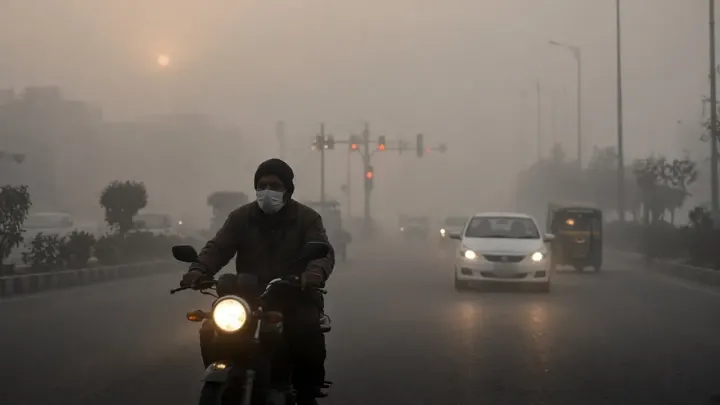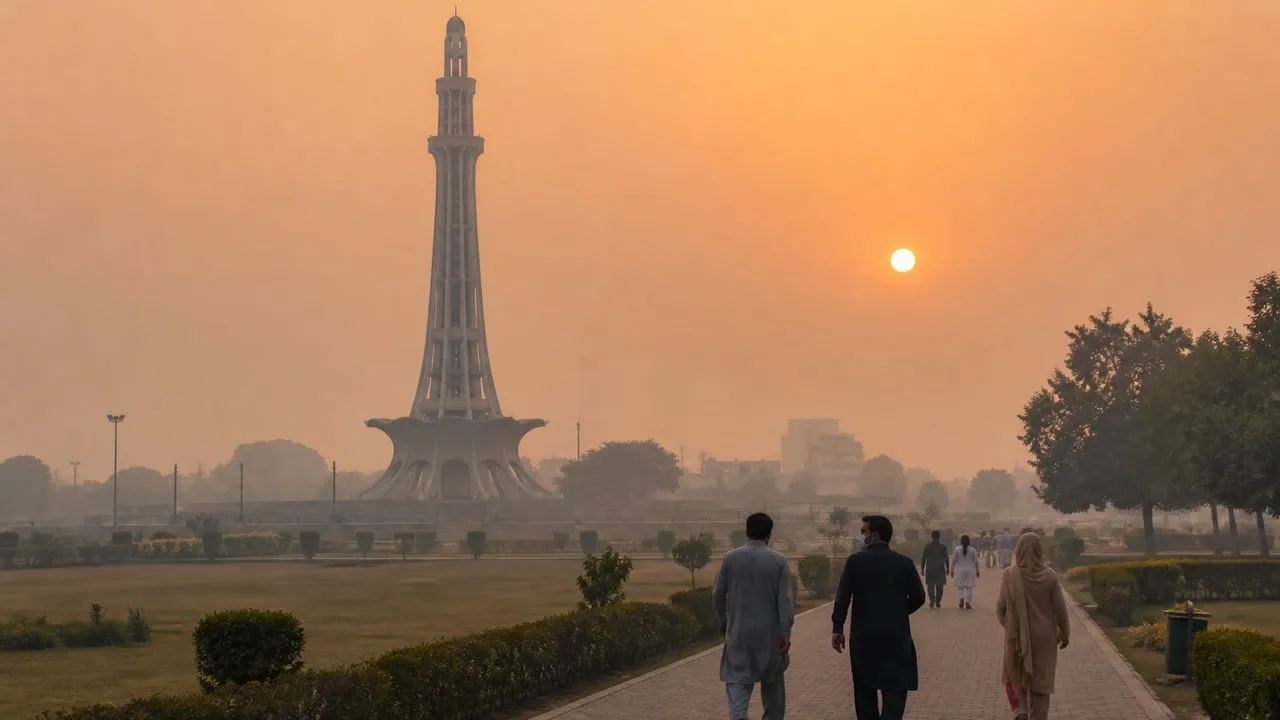
Fine-particle pollution in Lahore declined by 27 percent this October compared to the previous year, though favorable weather conditions drove most of the improvement, according to an analysis released by the Pakistan Air Quality Initiative (PAQI).
Data from 26 monitoring sites operating on matching days showed average PM2.5 levels decrease from 136.3 µg/m³ in October 2025 to 100.1 µg/m³ in October 2026, with 24 locations registering reductions.
Weather Did the Heavy Lifting
PAQI developed a computer model using autumn data since 2018 to isolate weather impacts from other variables, estimating that weather conditions alone reduced PM2.5 levels by about 19 percent relative to what would have occurred under last October's weather.
Under identical weather conditions, the reduction narrows to only 4 percent, a figure encompassing government actions, crop burning, and all other contributors that the current data cannot differentiate.
Nighttime conditions proved to be the primary driver, as the nocturnal inversion layer trapping smoke averaged 68 metres in depth this October compared to 43 metres a year prior, allowing emissions greater dispersion space.
Satellite observations also noted approximately one-third fewer agricultural fires across Pakistani Punjab, Indian Punjab, and Haryana, though burning began roughly a week later than in 2025, meaning some pollution reductions might have shifted into November.
Air Still Far From Safe
Even with the cleaner air, Lahore exceeded Pakistan's legal limit of 35 µg/m³ throughout every day of October, and the monthly average of 100 µg/m³ sits nearly seven times higher than the daily guideline set by the World Health Organization at 15 µg/m³.
Nevertheless, the month marked the cleanest October for the city since 2021, falling about 18 percent under the 2020 to 2025 average of 122 µg/m³. Multan at 106 µg/m³ and Gujranwala at 105 recorded higher monthly averages than Lahore, while Rawalpindi at 50 registered as the cleanest among the six best-monitored cities in Punjab.
This relief may prove temporary, as PAQI forecasts indicate Lahore's PM2.5 levels rising to 149 µg/m³, categorized as Very Unhealthy, by Wednesday, November 4, which is 49 percent above the October mean. Last year, air quality reached hazardous levels in early November, and the Punjab government has once again stationed anti-smog guns across Lahore for the current season.