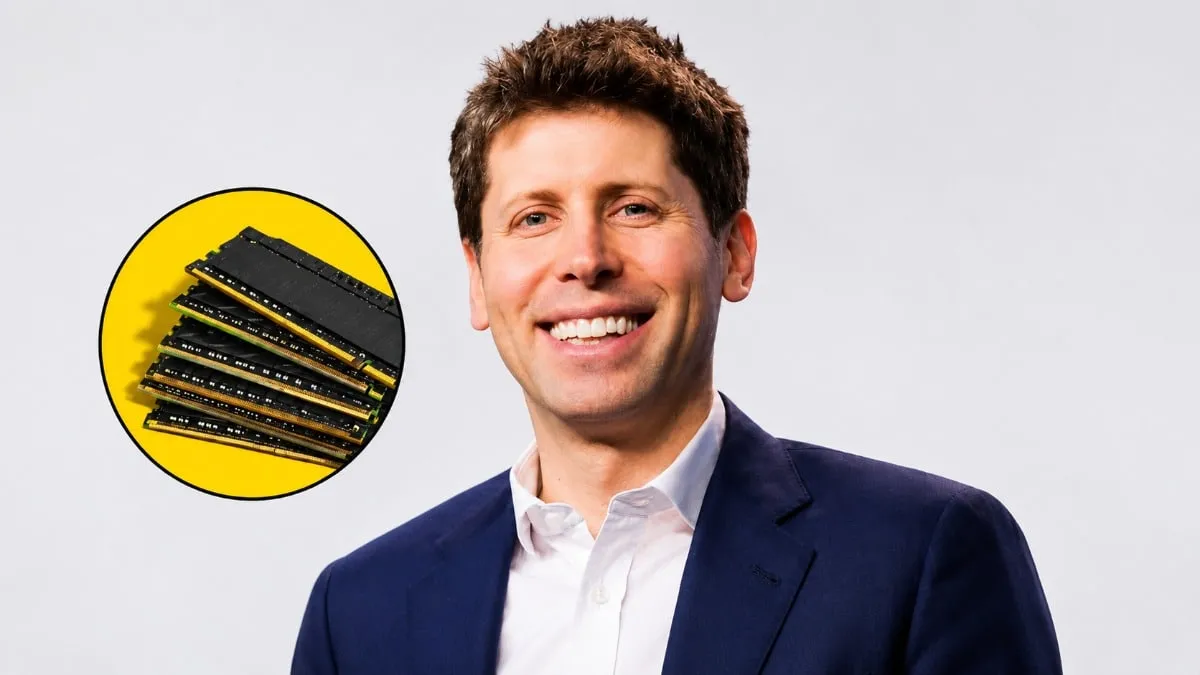
OpenAI chief executive Sam Altman stated that keeping massive amounts of memory inside personal computers wastes the restricted global supply, especially when cloud data centers can use those components more effectively. During an appearance on the Cheeky Pint podcast, Altman explained that personal machines frequently leave their memory sitting idle, whereas cloud facilities operate that hardware continuously.
His statements emerge while surging requirements for artificial intelligence infrastructure strain worldwide memory inventories and raise costs for everyday buyers.
OpenAI Chief Argues Personal Machines Squander Scarce Memory
While on the program, Altman addressed the rising popularity of executing artificial intelligence models locally on personal computers rather than depending on web-based systems. This method, known as local artificial intelligence inference, lets individuals operate models on their own equipment without transmitting every query to an external server. Still, Altman questioned if scattering vast amounts of memory across millions of desktop and laptop machines makes sense during a shortage of DRAM. He characterized this setup as quite terrible regarding worldwide resource distribution. Based on Altman's remarks, personal computers use their installed memory for roughly 5 percent of the duration, leaving expensive components wasted. He maintained that gathering memory inside cloud facilities enables identical resources to assist a greater number of people and manage heavier computational workloads. His statements centered strictly on how efficiently local artificial intelligence operations perform versus centralized computing setups.
Artificial Intelligence Infrastructure Boosts Memory Orders
Altman made his observations as technology firms elevate their investments in artificial intelligence hardware. Massive artificial intelligence networks demand extensive memory capacity to parse queries, execute models, and handle data. Consequently, facility operators are buying massive amounts of DRAM and high-bandwidth memory to sustain heavier computational tasks. Prominent memory producers, such as Samsung and SK Hynix, secured long-term supply deals with cloud vendors and infrastructure builders. This expansion in requirements triggered tighter memory availability and elevated costs throughout the consumer electronics sector, impacting items like desktop computers, laptops, and mobile phones that rely on identical memory chips.
Local Processing Cuts Reliance on Web Services
Altman's perspective arrives alongside rising enthusiasm for models capable of functioning directly on user devices. Local execution enables people to analyze data locally instead of relying completely on internet-connected platforms. It also cuts down on subscription requirements and grants individuals stronger authority over their machines. Nevertheless, operating larger models locally demands robust processors and high memory capacity. Altman maintains that centralized networks use restricted memory supplies with greater efficiency because numerous individuals share identical hardware. OpenAI delivers its capabilities primarily via cloud infrastructure, though the firm also distributes models that individuals can execute on personal devices.
Effects on Consumers and Daily Computing
Altman's remarks do not suggest that personal computers should eliminate RAM entirely. Memory stays vital for standard tasks like internet browsing, video editing, gaming, and running multiple programs at once. Instead, his viewpoint addresses the efficiency of deploying restricted memory assets when executing artificial intelligence programs. The remarks emphasize a broader discussion over whether computing should centralize within massive facilities or stay available on privately owned hardware. For buyers, the topic holds direct importance because rising demands from artificial intelligence corporations continue influencing the cost and availability of memory found in personal devices.