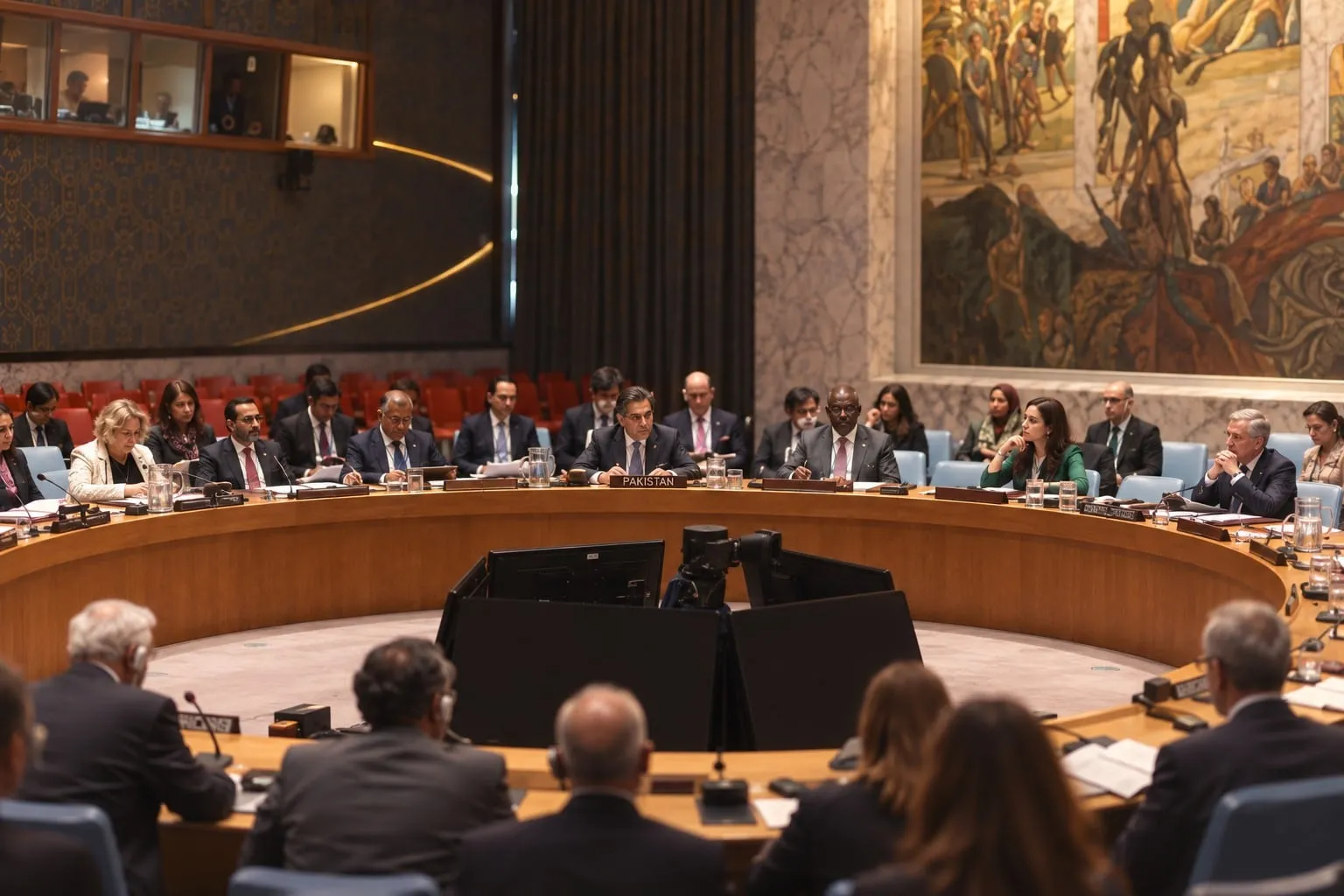
Pakistan Arms Control Resolution Wins 180 Votes at United Nations
A Pakistan-sponsored arms control resolution has passed the United Nations General Assembly's First Committee with 180 votes in favour. India and Israel were the only two countries to oppose the measure during the committee session.
The formal title of the measure is "Conventional arms control at the regional and subregional levels". It places the governance and restriction of conventional military equipment squarely at regional and subregional tiers before the committee.
The United Nations General Assembly First Committee handles disarmament, global security affairs, and international peace challenges. The adoption of this specific text took place directly within this committee rather than during a floor vote of the full General Assembly.
Understanding the United Nations General Assembly First Committee
The First Committee is one of six main committees of the United Nations General Assembly. It deals specifically with disarmament and international security matters that affect member states worldwide.
Resolutions passed in the First Committee typically move forward as recommendations to the plenary sessions of the General Assembly. This committee serves as a primary venue for nations to debate global threat reductions, arms limitations, and non-proliferation treaties.
Diplomats and military advisors use these sessions to draft text that reflects regional security concerns. The focus on regional and subregional levels addresses the specific local tensions that drive military buildups between neighbouring states.
What Conventional Arms Control Means for Regional Security
Conventional arms refer to traditional military weapons that do not involve nuclear, biological, or chemical capabilities. This category includes tanks, artillery, combat aircraft, attack helicopters, warships, and small arms.
Controlling these weapons at regional and subregional levels aims to prevent local arms races and maintain military stability between rival states. Proponents argue that managing conventional arsenals locally reduces the risk of accidental conflict and lowers military expenditures.
Treaties and agreements focusing on these levels usually involve transparency measures, troop limitations, and mutual inspections. Nations often debate whether regional caps adequately account for broader security threats that extend beyond immediate borders.
Why India and Israel Opposed the Resolution
India and Israel were the only two countries to cast opposing votes against the Pakistan-sponsored text. Both nations frequently object to regional conventional arms control frameworks that they argue do not reflect their broader strategic environments.
New Delhi consistently maintains that conventional arms control must be addressed on a global scale rather than through localized regional frameworks. India faces unique security challenges involving multiple heavily armed neighbours, shaping its approach to multilateral disarmament initiatives.
Similarly, Israel navigates complex regional dynamics in the Middle East where localized arms control proposals often fail to encompass all regional actors and non-state threats. Consequently, both countries regularly vote against resolutions that single out regional parity or specific subregional balancing acts.
The Historical Context of Pakistan and Conventional Arms Resolutions
Pakistan has a long history of introducing resolutions concerning conventional disarmament and regional security at the United Nations. Islamabad frequently emphasizes the need to maintain a military balance in South Asia to prevent conventional dominance by larger neighbours.
These diplomatic efforts date back decades, reflecting Pakistan's consistent foreign policy stance on bilateral and regional strategic stability. The recurring presentation of these texts allows Islamabad to rally international support for structured military restraint in volatile regions.
While committee votes demonstrate broad numerical backing from the international community, implementing these regional frameworks remains voluntary. The resolutions serve primarily as normative pressure points rather than legally binding enforcement mechanisms for dissenting states.
Next Steps in the United Nations Process
Following the successful vote in the First Committee, the resolution advances toward further procedural steps within the United Nations system. Committee-approved texts typically return to the broader General Assembly for final endorsement later in the session.
Observers will monitor how member states vote during the subsequent plenary stages, though voting patterns rarely shift significantly from committee results. The debate highlights ongoing divisions over how the international community should address regional conventional weapon accumulations.