Pakistan Fuel Prices Lowered for November 3 Under Daily Pricing
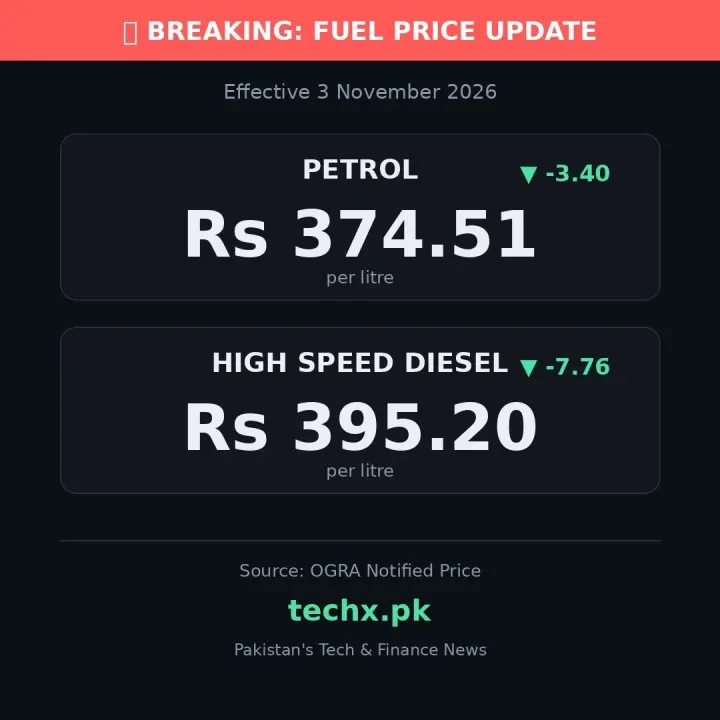
The government has lowered high-speed diesel by Rs7.76 per litre and petrol by Rs3.40 for November 3, 2026, giving consumers a brief reduction in fuel costs. The new rates fall under the daily petroleum pricing system, with the next determination scheduled for November 4.
According to the Oil and Gas Regulatory Authority, both fuels will have lower ex-depot prices for November 3. Diesel receives the larger reduction, while the petrol cut offers a smaller saving for motorists.
The Revised Prices for High-Speed Diesel and Petrol
The Oil and Gas Regulatory Authority sets these figures based on international market trends and local tax structures. The adjustment applies immediately to retail outlets across the country.
- High-speed diesel: Rs395.20 per litre, down Rs7.76 from Rs402.96.
- Petrol: Rs374.51 per litre, down Rs3.40 from Rs377.91.
These numbers reflect the latest computation by energy authorities. Motorists paid higher rates previously, making this announcement a notable, albeit brief, downward shift.
Where the Fuel Savings Matter for Transport and Agriculture
The diesel reduction matters particularly to transport operators, farmers and businesses moving goods. Trucks, buses, tractors, tube wells and other farm machinery depend on diesel, linking its price to the expense of transporting goods and producing food.
Agricultural production costs rely heavily on diesel for irrigation pumps and harvesting machinery. When diesel prices drop, farmers experience a temporary relief in running expenses, which can temporarily reduce the cost of pumping groundwater for crops.
Transport fleets also burn large quantities of diesel daily. Lower fuel expenses for trucks and buses reduce the immediate overhead of shipping commercial goods across regional distribution networks.
How Cheaper Petrol Impacts Urban Commuters and Households
For motorcyclists and small-car owners, cheaper petrol will bring a modest reduction in commuting costs. That offers some breathing room for households facing pressure from spending on fuel, electricity, food and education.
Urban workers relying on personal motorcycles or compact cars spend a significant portion of their monthly income on fuel. Even a small drop of Rs3.40 per litre helps lower daily travel expenses for office workers and students.
Household budgets remain tight as families balance utility bills and grocery expenses alongside transportation costs. The reduction provides a minor financial cushion during a period of sustained high living expenses.
No Certainty Beyond November 3 Due to Daily Pricing
The next price determination is due just a day later, so the announced cuts do not guarantee that lower rates will continue. Consumers and businesses remain exposed to changes in their fuel bills under the daily pricing mechanism.
Under a daily pricing system, retail rates react quickly to shifts in global oil benchmarks and currency exchange rates. This frequent adjustment policy means that prices can reverse direction within 24 hours.
Daily revisions remove the stability associated with older fortnightly or monthly pricing models. Market participants must monitor official announcements daily to anticipate upcoming expenses.
Economic Impact of Short-Term Fuel Price Movements
Repeated price movements make budgeting harder for transporters, farmers, small businesses and motorists. The challenge is greater for those with little room to absorb an abrupt rise in operating expenses.
Corporate financial planning becomes complex when fuel inputs change almost daily. Small transport companies struggle to set fixed freight rates when their primary operating cost fluctuates constantly.
Inflationary pressures across the broader economy respond strongly to energy costs. Unpredictable fuel tariffs complicate national efforts to stabilize commodity prices and consumer goods.
What Comes Next for Fuel Consumers and Businesses
A lasting decline in diesel prices could reduce transport and farming input costs, helping to ease some inflationary pressure. A reduction covering only one day, however, is unlikely to make a substantial difference to the broader cost of living.
Observers will watch the November 4 price determination closely to see whether the downward trend persists. Sustained decreases are necessary to create measurable savings for industrial manufacturing and public transport fares.
Citizens must prepare for ongoing volatility in the energy market. Maintaining flexibility in monthly expense planning remains essential for households and enterprises dealing with fluctuating petroleum rates.