Spanish Second Tier Football Match Abandoned After Late Collision
A Spanish second-tier football match between Tenerife and Andorra ended in dramatic and distressing circumstances when officials abandoned the fixture during stoppage time. The contest reached the 97th minute with the score tied at 2-2 as both teams searched for a late winner. A long ball sent up the pitch sparked a frantic final counter attack, changing the atmosphere of the stadium from competitive tension to immediate concern for player safety.
Tenerife striker Jesus de Miguel sprinted forwards to get on the end of the long ball, hoping to secure a victory in the dying moments of the game. However, Andorra goalkeeper Jesus Owono charged off his line towards the halfway line to intercept the danger. The resulting impact was a sickening collision that left players and spectators visibly shaken as medical staff rushed onto the turf.
What Happened During the Tenerife and Andorra Clash
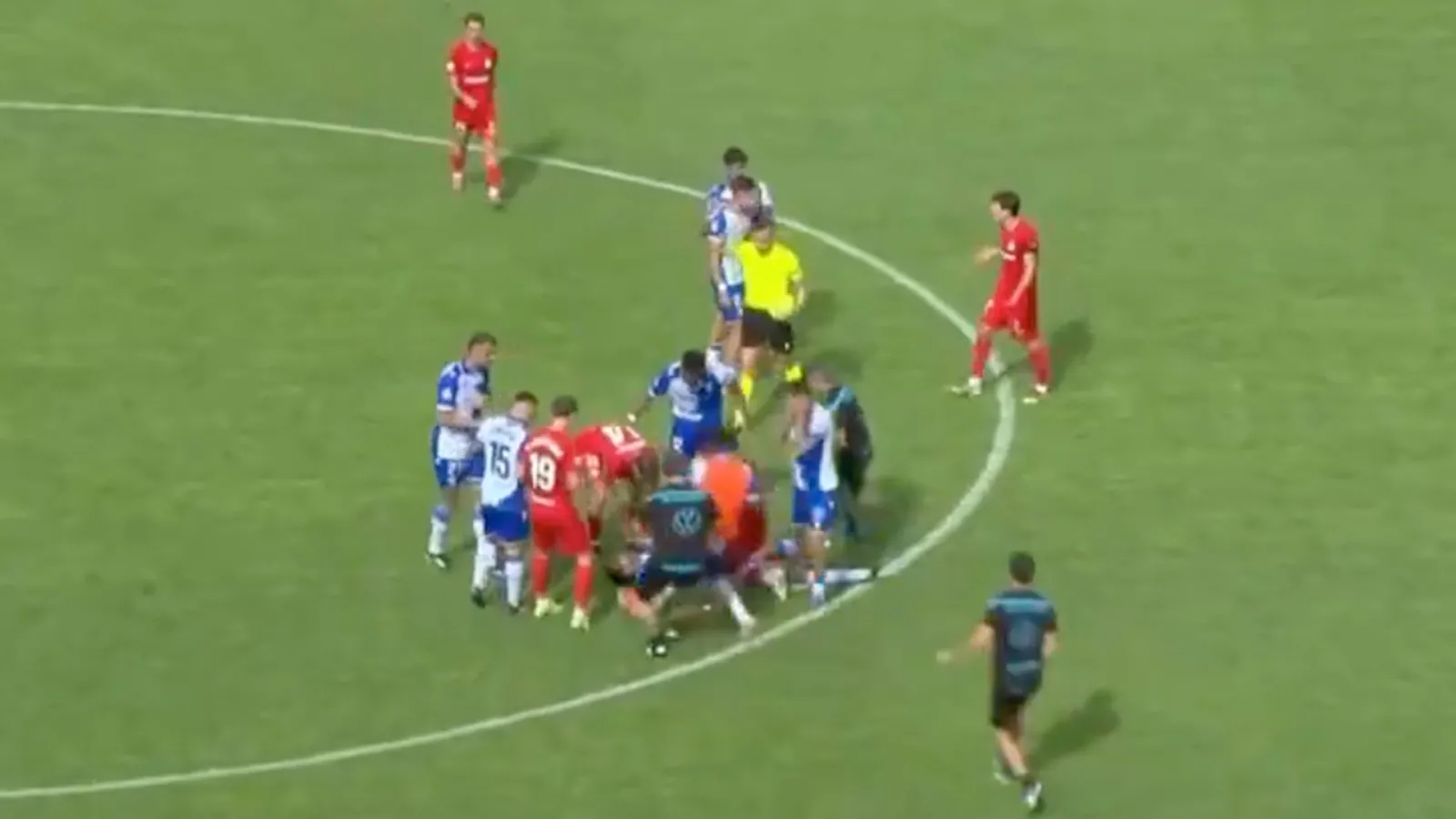
Goalkeeper Jesus Owono clattered directly into Jesus de Miguel near the halfway line during the desperate defensive clearance. The referee immediately issued a straight red card to the Andorra goalkeeper for the horrendous challenge, which saw him knee De Miguel in the head during the momentum of the rush. The forward initially writhed around on the turf in agony before the situation escalated.
De Miguel then rolled onto his back and appeared to lose consciousness on the pitch. His team-mates became instantly distressed by his lack of movement and frantic signals were made to the benches. They called for urgent medical attention while several players placed their hands on their heads in disbelief and shock.
Players Left in Tears as Match is Called Off
The severity of the medical emergency created deeply upsetting scenes on the field. Several players were left in tears as medical professionals worked on the stricken Tenerife forward. Realising the gravity of the situation and the emotional toll on the athletes, the referee opted to call off the proceedings entirely rather than attempt to play the final seconds.
Football protocols generally allow for matches to resume after brief stoppages, but referees hold the authority to abandon fixtures if safety or extraordinary circumstances dictate. The psychological impact of seeing a colleague lose consciousness proved too heavy for the pitch, leading to the premature end of the league fixture.
Official Statements and Club Responses
Following the abandonment, Tenerife put out a statement which read: "The #TenerifeAndorra match has been suspended due to medical reasons involving Jesus de Miguel. Our best wishes and full support." The message reflected the immediate priority of the club, which centered entirely on the health and recovery of their forward rather than the sporting outcome of the 2-2 draw.
Disciplinary bodies in Spanish football are expected to review the match official's report regarding the abandonment and the red card issued to Jesus Owono. Standard procedures dictate that league officials will determine whether the score stands as final or if remaining protocol applies, though player welfare remains the foremost consideration in such unprecedented medical events.
Understanding Second Tier Football in Spain
The Spanish second tier, officially known as Segunda Division or La Liga Hypermotion, represents the second level of the professional football league system in Spain. Operating directly below La Liga, it features twenty-two clubs competing in a grueling thirty-eight-match regular season. The competition is notoriously physical, with teams fighting intensely for promotion to the top flight or struggling to avoid relegation to the third tier.
Fixtures late in the season often carry immense pressure, leading to high-stakes moments where players push their physical limits. Goalkeepers frequently act as sweepers, rushing far out of their penalty areas to cut off counter attacks when their defensive lines push high up the pitch. This tactical risk-taking occasionally results in heavy physical contact, though incidents resulting in unconsciousness and match abandonment remain exceedingly rare.
Protocol for Medical Emergencies in Professional Football
Modern professional football leagues enforce strict medical protocols designed to handle severe head injuries and concussions. Referees are instructed to halt play immediately if a head injury is suspected, granting medical staff instant access to the field without waiting for permission. The implementation of stretcher procedures, neck braces, and oxygen is standard practice when a player loses consciousness.
Governing bodies across European football follow international guidelines regarding suspected concussions, requiring thorough hospital assessments and mandatory rest periods. In this instance, the rapid response of both teams medical departments ensured that Jesus de Miguel received immediate evaluation on the pitch before any transport decisions were finalized. The abandonment of the fixture underscored the reality that human health supersedes sporting schedules.