What the IT Minister Said at the Margalla Dialogue
Pakistan internet speeds have jumped 60 percent over the past two and a half years, Federal Minister for Information Technology Shaza Fatima Khawaja announced on 11 November 2026, adding that the country now counts roughly 1.8 million 5G subscribers and a live internet capacity of seven terabits per second. The figures paint a picture of real progress, but they also raise honest questions about what ordinary users are actually experiencing every day.
Speaking at the Margalla Dialogue, the minister detailed that Pakistan internet data usage had increased by two terabits per second, taking the country total live internet capacity to around seven terabits per second. Fibre-optic connectivity across the nation has also doubled during this timeframe, growing from three million connections to more than six million connections.
Two new submarine internet cables have been added to improve international connectivity and reduce data bottlenecks. Furthermore, Shaza Fatima highlighted that Pakistan had completed the largest spectrum auction in its history, offering 480 MHz of spectrum. This auction increased the country total available spectrum from 274 MHz to more than 750 MHz.
Pakistan 5G Users Reach 1.8 Million Across 24 Cities
Pakistan has around 1.8 million 5G users, with services now introduced in 24 cities. That represents a meaningful jump from where things stood just three months earlier. By August 2026, 5G services had reached around 1.3 million users across 23 cities, with more than 1,200 5G sites activated during the first four months of the rollout. The subscriber base grew by roughly half a million people in about three months, showing that the new mobile technology is picking up real momentum.
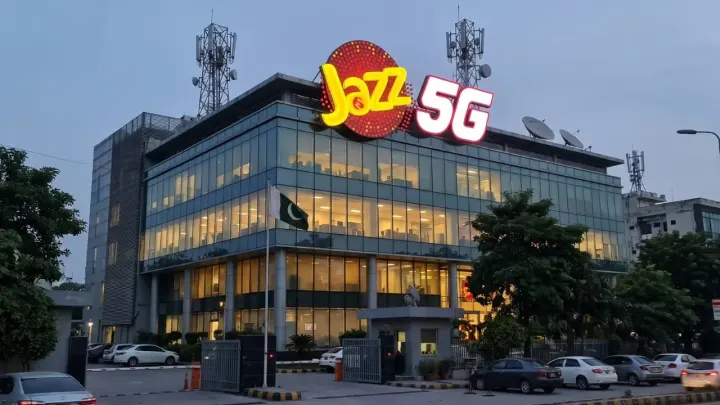
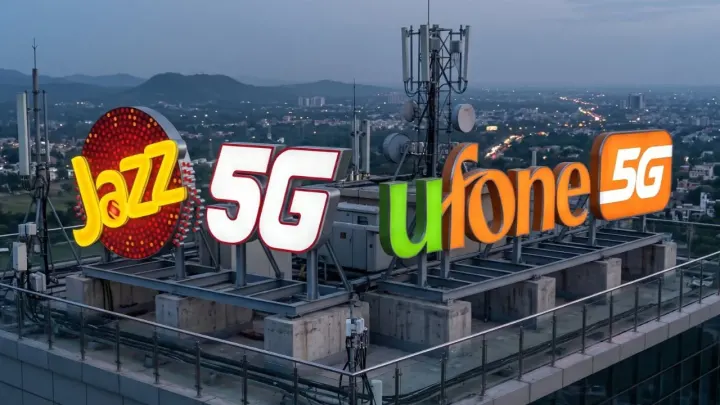
5G was officially launched in Pakistan on 19 March 2026, with major telecom companies Zong and Jazz being the first operators to roll it out in multiple cities. Zong reported a launch in more than 16 cities, including Islamabad, Karachi, Lahore, Peshawar, and Quetta. The official introduction followed closely after the spectrum auction held on 10 March 2026.
An interesting gap exists in the official numbers regarding handset adoption. As of mid-2026, 3.81 million 5G-ready phones were already registered in Pakistan, yet active 5G subscribers stand at 1.8 million. That means roughly half of all people possessing a 5G-capable handset have not transitioned to a 5G plan yet. This indicates the user base could expand rapidly once coverage widens, especially since the government has confirmed there has been no increase in rates for 5G mobile services.
The Real-World Picture for Pakistani Users
The minister statistics are government figures, and it is fair to hold them alongside what users are reporting on the ground. Customers across different networks and regions continue to complain about slow internet speeds, and many say they have yet to notice any real improvement in their daily web browsing or streaming services. Lawmakers raised concerns about the quality of existing mobile networks, questioning how Pakistan could move towards 5G when users in several areas were still struggling with basic 3G and 4G connectivity.
One committee member said mobile internet services had deteriorated since the introduction of 5G, while another complained that even basic network services were unavailable in parts of Sindh. Committee members also raised concerns about uneven 5G infrastructure distribution. The committee chairman pointed out that Sukkur, Pakistan third-largest city, has only two 5G sites. Another member noted that the 5G rollout in Sindh had mainly focused on Karachi.
The minister acknowledged that telecom services faced several challenges, including infrastructure theft. She explained that entire telecom towers, generators, and diesel were sometimes stolen, which directly affects network operations and reliability. A 60 percent speed jump at the infrastructure level is real progress, but it means little to a user in a small city whose local tower is running on overloaded spectrum. The gap between national averages and local experience remains a significant hurdle.
The Bigger Telecom Picture in Pakistan
Pakistan mobile phone subscriptions have reached approximately 210 million, as the country expands internet connectivity to support online services, technology exports, and its growing digital economy. Pakistan now has 167 million broadband subscribers as of September 2026, including 163 million mobile broadband subscribers and 4.2 million fixed broadband connections.
The minister added that rising data consumption from social media platforms and artificial intelligence is putting more pressure on existing telecom infrastructure. That means the demand side of the equation is growing just as fast as the supply side. For businesses and freelancers, faster and more reliable internet is directly linked to earning potential. Pakistan IT sector relies heavily on stable connectivity, and improvements in Pakistan internet speeds matter for remote workers, software houses, and the country growing e-commerce sector.
The government maintains it is continuing to invest in digital infrastructure under the Digital Nation Pakistan vision, with Prime Minister Shehbaz Sharif personally overseeing the initiative. As the digital ecosystem expands, citizens and enterprises watch closely to see whether infrastructure developments will translate into consistent service quality across all provinces.