Pakistan Mobile Manufacturing by the Numbers
Pakistan local mobile phone manufacturing and assembly plants produced 23.03 million handsets during January-October 2026. To put that figure in perspective, it is almost six times the 3.85 million units imported commercially during the exact same period.
Local manufacturers assembled 2.95 million mobile phones in October 2026 alone, making it one of the stronger single months of the calendar year. This steady output reflects a sustained industrial rhythm inside the country.
The full-year trend from the previous year is also encouraging for industry watchers. Local manufacturing and assembly plants produced 30.21 million mobile handsets during the full calendar year 2025, compared to just 2.37 million imported commercially, proving that the shift toward domestic assembly is a long-term structural change.
Smartphones vs 2G Phones: A Split That Matters
Of the 23.03 million handsets assembled in the first ten months of the year, about 9.62 million were smartphones, while roughly 13 million were 2G phones. That means more than half of everything assembled locally is still basic 2G technology. Yet data from the Pakistan Telecommunication Authority shows that smartphones account for 71 percent of active mobile devices on local networks.
This gap tells an important story about consumer habits and market reach. Locally assembled 2G phones are cheap and widely used in rural areas and among lower-income buyers who need reliable communication tools. But the mobile users already active on telecom networks are mostly using smartphones, meaning the industry is producing a high volume of entry-level hardware to reach people who do not yet own any phone at all.
Industry experts note that basic feature phones remain a critical entry point for first-time buyers transitioning into the digital sphere. As network coverage expands into more remote districts, demand for these affordable voice-centric devices stays resilient, even as urban centers lean heavily toward touchscreens and mobile data applications.
VGO TEL Leads Pakistan Mobile Manufacturing in 2026
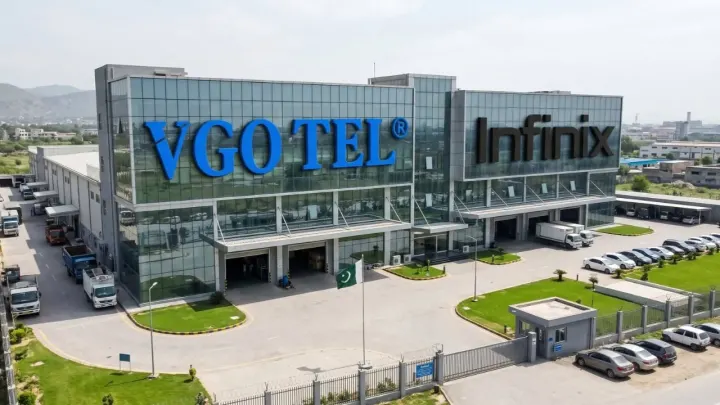
VGO TEL has emerged as Pakistan leading locally assembled mobile phone brand during January-October 2026, marking a major shift in a market where Infinix had long dominated the top spot. This realignment shows how competitive the domestic assembly sector has become as local brands vie for consumer loyalty.
Previously, Infinix dominated the local assembly market in both 2024 with 3.98 million units and 2025 with 3.65 million units. VGO TEL has now successfully reversed that trend. VGO TEL led January-September 2026 with 2.50 million units, followed by Infinix at 1.96 million and Itel at 1.59 million.
Other brands filling out the top tier include TECNO at 1.16 million, Samsung at 1.04 million, Vivo at 0.99 million, Nokia at 0.97 million, and China Mobile at 0.72 million for the first nine months. The four leading brands, VGO TEL, Infinix, Itel and TECNO, accounted for about 59 percent of total production during that period, concentrating market share among a handful of key players.
5G Assembly Is Growing but Still Small
One figure that often gets missed in the headline production numbers is 5G hardware development. During 2025, local manufacturing and assembly plants produced 553,079 5G-enabled handsets, and by September 2026 that figure had reached 78,463 units in a single month, suggesting the ramp-up is slowly gaining pace.
Pakistan 5G rollout is still in early stages, but local factories are quietly building the hardware pipeline for it. As telecom operators prepare for future spectrum auctions and network upgrades, assembly lines are adapting to ensure that consumers will have access to compatible devices without relying entirely on expensive foreign shipments.
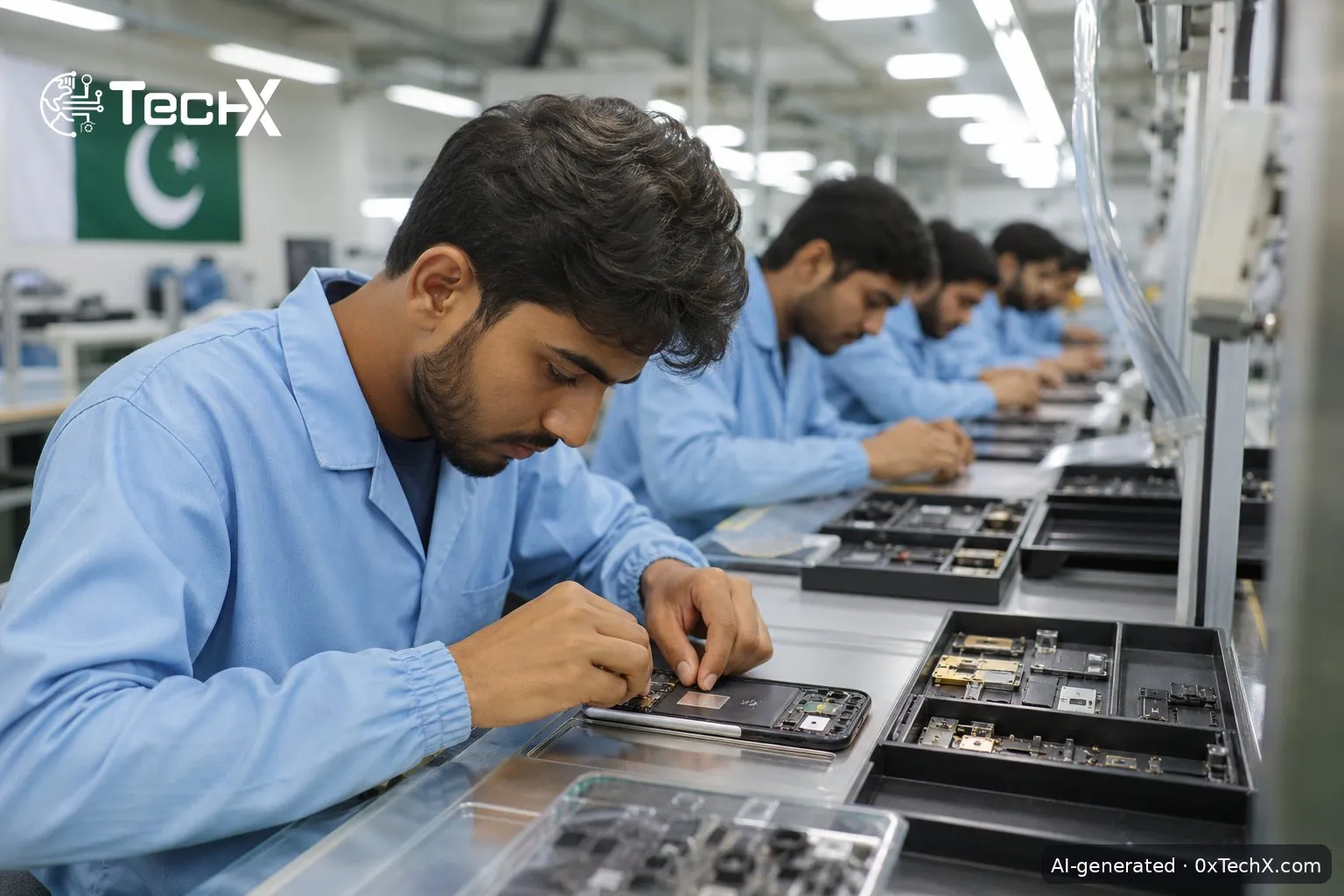
Manufacturing high-speed connectivity devices domestically requires tighter quality control and advanced component integration. Factory floors are gradually incorporating these techniques, training local technicians to handle modern circuit boards and complex radio frequency modules.
Assembly vs Manufacturing: The Gap Nobody Talks About
Here is what most coverage of these production figures skips over: the difference between basic assembly and actual component manufacturing. Domestic value addition in mobile manufacturing is estimated at only 10 to 20 percent. That means the bulk of a phone value, including its microchips, high-resolution screens, and core processors, still comes from outside Pakistan, mainly from manufacturing hubs in China.
The government is well aware of this structural limitation. The government wants to move beyond basic assembly, since domestic value addition in mobile device manufacturing currently hovers at around just 10 to 20 percent. A new policy targets raising that figure to 50 percent over time. That would be the difference between Pakistan being a screwdriver economy for phones and a real phone-making nation.
For Pakistani consumers and the tech industry, this distinction matters immensely. High assembly volumes reduce import bills and create vital factory jobs across industrial zones. But deep manufacturing, making the physical parts locally, is what builds lasting industrial capability and long-term export potential.
How Local Assembly Affects Consumers
Locally manufactured and assembled phones met 97 percent of Pakistan mobile phone demand in July 2026, up sharply from earlier months. This dominance of local supply over finished imports keeps retail phone prices more stable and reduces the adverse effect of currency fluctuations on handset costs.
Local assembly met around 95 percent of domestic mobile phone demand in August, while locally manufactured and assembled devices accounted for approximately 87 percent of total demand during the first eight months of the year. For the average buyer in Lahore or Peshawar, that means the phone on the store shelf is far more likely to have been put together inside Pakistan than shipped in from abroad.
This trend also connects to Pakistan broader push to grow its technology sector. The country freelance and digital economy is expanding fast, and affordable locally assembled smartphones are part of the base layer that makes digital participation possible for more citizens seeking online employment and financial inclusion.