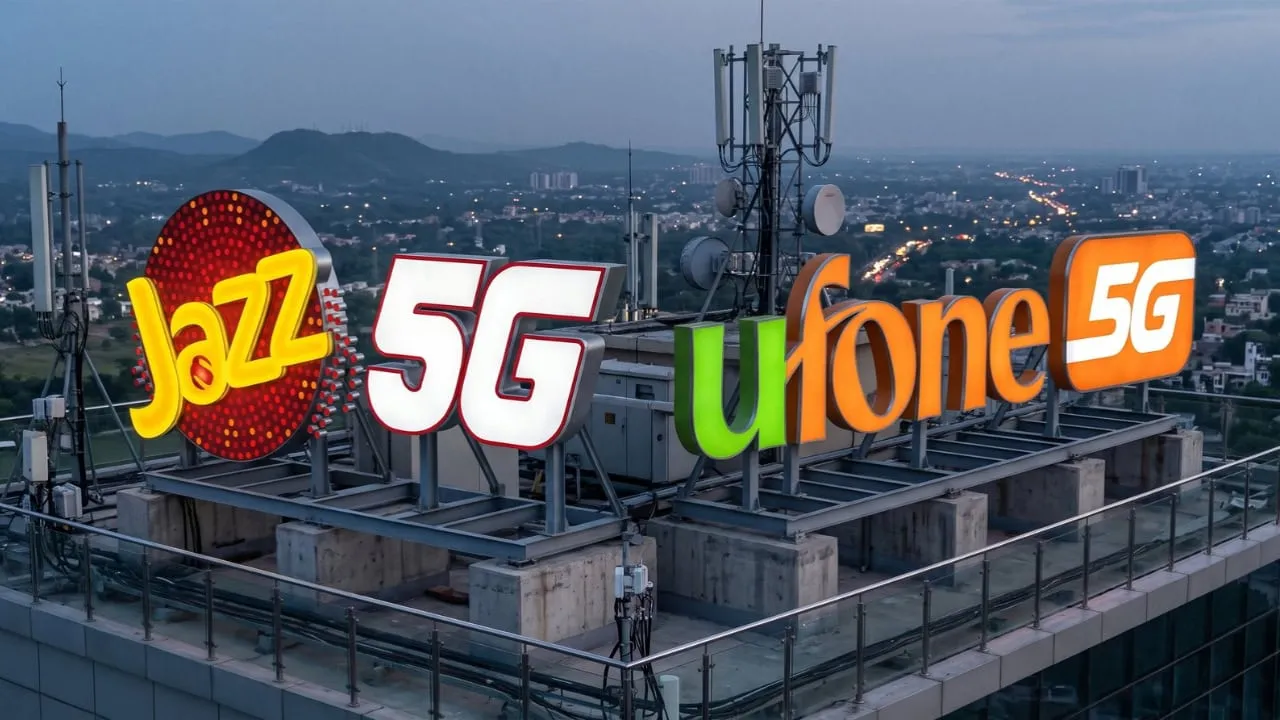
Ufone Cellular Market Share Reaches 36 Percent in Pakistan
Ufone has nearly caught up with market leader Jazz in Pakistan's cellular market. According to October 2026 Pakistan Telecommunication Authority data, Ufone captured a 36.03 percent share of the cellular market. Consequently, a marginal difference of just 0.33 percentage points now separates the top two operators.
This major shift follows Pakistan Telecommunication Mobile Limited's acquisition of Telenor Pakistan. Specifically, Ufone now consolidates Telenor Pakistan's market share and figures into its own numbers. As a result, the Ufone cellular market share now stands at roughly 36 percent, changing the balance of power in the national telecommunications sector.
Telecommunications regulators and industry analysts monitor these figures closely to understand subscriber distribution. The integration of major networks reshapes how millions of citizens access voice and data communications daily. Such corporate restructuring events alter investment strategies across the entire technology infrastructure of the country.
For everyday users, market shifts often translate into new promotional campaigns as companies fight for subscribers. Understanding these dynamics requires looking at the historical development of mobile telephony in the region. Over the past two decades, mobile networks transformed from a luxury item into an essential utility for economic participation.
October 2026 PTA Cellular Market Share Breakdown
According to October 2026 Pakistan Telecommunication Authority data, Jazz retained its top position with a 36.36 percent market share. However, Ufone followed closely behind at 36.03 percent. This tight margin places the two telecommunications giants in an unprecedented neck-and-neck race for industry supremacy.
Meanwhile, Zong maintained its third position with a 26.62 percent share. In addition, the Special Communications Organisation accounted for 0.99 percent of the market. These figures reflect the total active subscriber base recorded by the regulatory authority during the specified monthly reporting period.
Clearly, this consolidation has transformed the competitive structure of Pakistan's cellular market. Together, Jazz and Ufone now account for 72.39 percent of the total market. Such high market concentration means that decisions made by these two entities directly influence the vast majority of consumers.
Furthermore, Pakistan Telecommunication Mobile Limited's acquisition of Telenor Pakistan directly expanded the Ufone cellular market share. Because Ufone now includes Telenor Pakistan's consolidated figures, the gap with Jazz has become very narrow. Therefore, this small margin signals an increasingly competitive contest for market leadership.
Regulatory oversight by the Pakistan Telecommunication Authority ensures fair competition and protects consumer interests during such massive corporate mergers. The authority tracks subscriber numbers through automated systems connected to operator databases. These monthly updates provide a transparent view of industry health and operator performance.
Understanding the Telenor Pakistan Acquisition by PTML
The journey toward this market configuration involved complex corporate transactions and regulatory approvals. Pakistan Telecommunication Mobile Limited pursued the acquisition of Telenor Pakistan to strengthen its operational scale. Merging two large telecommunications entities requires months of technical alignment, spectrum harmonization, and administrative integration.
When companies combine networks, engineers must merge distinct switching centers, transmission lines, and cell tower sites. This process aims to eliminate network redundancies while expanding geographic coverage for existing subscribers. For Telenor customers, the transition means their accounts and services now fall under the unified umbrella of the acquiring firm.
Corporate acquisitions in the telecom sector also involve significant financial investments and long-term debt restructuring. Companies must satisfy regulatory conditions set by the competition commission and the telecommunications authority before closing transactions. These safeguards prevent monopolies and ensure that service quality remains high during corporate transitions.
The consolidation trend reflects global patterns where high operational costs drive smaller or mid-tier operators to merge. Scale is essential in modern telecommunications to fund continuous network upgrades and meet rising consumer data demands. By pooling resources, operators achieve economies of scale that help sustain long-term business viability.
Stronger Competition Ahead for Next-Gen Mobile Services
Moreover, this development will likely intensify competition across several key areas. Specifically, the shift will likely drive tougher competition in network expansion and service quality. Additionally, operators will likely face stronger competition in data offerings and investment.
Notably, this heightened rivalry becomes especially likely with the rollout of next-generation mobile services. Ultimately, just 0.33 percentage points separate Jazz and Ufone as both operators contest market leadership. Consumers stand to benefit from this intense competition through better packages and faster network deployments.
As operators prepare for advanced mobile technologies, capital expenditure remains a critical factor for success. Companies must invest heavily in fiber optic backhauls, modern base stations, and energy backup systems. These investments are necessary to handle exponential growth in mobile data consumption driven by streaming and digital applications.
Industry observers expect aggressive marketing campaigns as both market leaders try to capture remaining unserved segments. Brand loyalty programs, bundled data packages, and enterprise solutions will form the core battlegrounds for subscriber acquisition. The coming months will reveal whether Ufone can overtake Jazz completely or if Jazz will defend its top position.
Impact on Consumers and the Broader Telecom Sector
The transformation of the cellular landscape affects millions of retail and corporate subscribers across urban and rural regions. Improved network performance and competitive pricing are the most direct benefits expected from this duopoly-like market structure. However, consumer protection watchdogs maintain vigilance to ensure that reduced competition does not lead to higher service tariffs.
Small businesses and digital entrepreneurs rely heavily on stable mobile internet connections for daily commercial operations. Enhanced network capabilities resulting from post-acquisition investments can boost productivity and expand digital commerce opportunities. Reliable connectivity acts as a foundational pillar for modern economic growth and financial inclusion initiatives.
Regional disparities in network coverage remain a challenge that operators must address during their expansion phases. While major cities enjoy high-speed connectivity, remote areas often experience coverage gaps or lower data speeds. Regulatory frameworks encourage operators to extend services to underserved populations through targeted licensing obligations.
Ultimately, the October 2026 market share data marks a turning point for the national telecommunications industry. The near parity between Jazz and Ufone sets the stage for a dynamic period of innovation and market rivalry. Stakeholders across the economy will watch closely as these operators deploy new services and shape the future of digital connectivity.