Understanding the New Wireless Equipment Standards in Pakistan
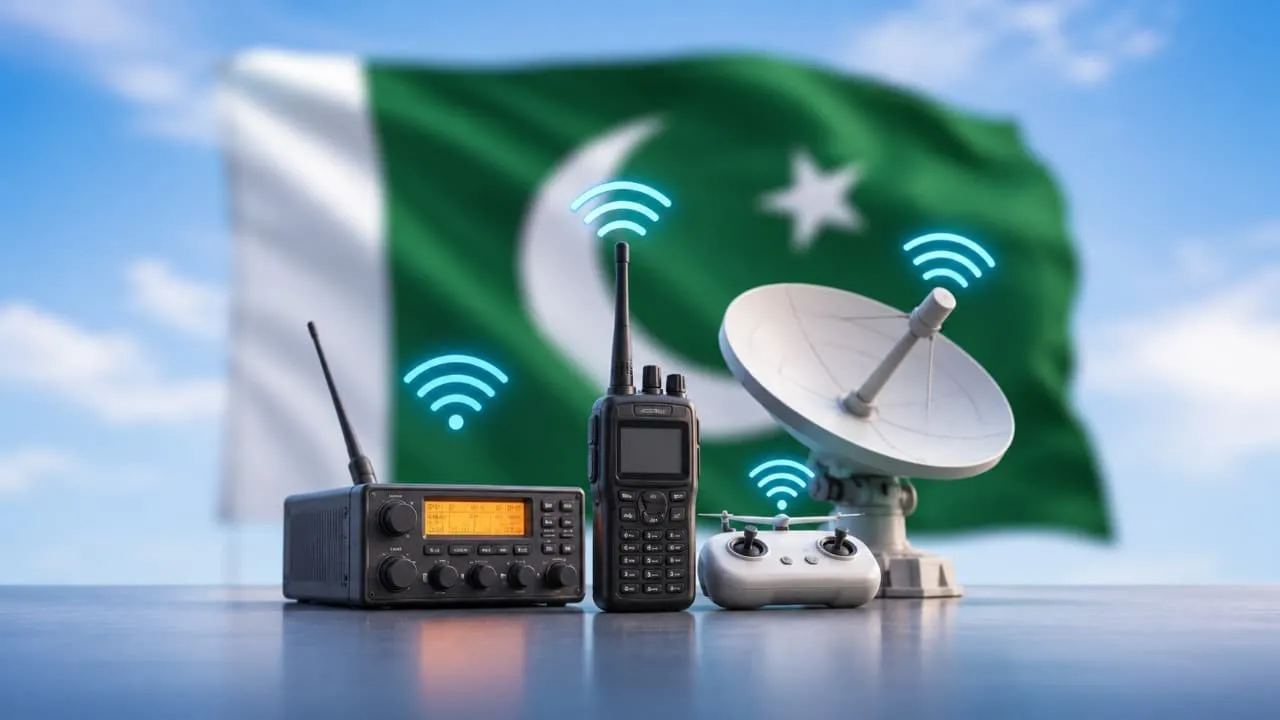
Radio communication, radar, tracking devices, and other wireless equipment used in Pakistan will now have to meet mandatory technical standards. The new rules require manufacturers and importers to ensure their products meet government-approved requirements before they can be supplied. This regulatory shift marks a major turning point for the telecommunications sector in the country, bringing local compliance measures in line with international practices for radio frequency management and device safety.
For ordinary consumers, this means greater regulatory oversight of equipment used in communication systems, including aviation and emergency services. The rules are intended to ensure that such equipment meets the required technical standards, while giving authorities more power to check whether manufacturers and importers are following them. By tightening control over imported hardware, the government aims to prevent substandard technology from entering local distribution networks.
The regulatory framework sets clear legal obligations for commercial entities operating within the technology sector. Companies that deal in radio frequency hardware must re-evaluate their supply chains and compliance procedures to match the updated mandates. Industry participants must understand the exact scope of the rules to avoid legal penalties and operational disruptions.
Which Devices Are Covered Under the 2024 Regulations?
The Ministry of Information Technology and Telecommunication has introduced these requirements through the Telecommunication Equipment Standards Regulations, 2024. These guidelines apply to a wide array of hardware categories that rely on radio frequency transmissions to operate.
The regulations cover several types of equipment, including:
- Very High Frequency (VHF) and Ultra High Frequency (UHF) radio devices.
- Radar systems that detect objects and track their movement.
- Devices used for tracking and tracing.
- Amateur radio and auxiliary radio equipment.
- Ground and airborne model control equipment.
- Other wireless communication devices and terrestrial telecommunication equipment.
The rules also specify technical requirements for radar systems operating across different frequency bands. Each category faces distinct technical evaluations to ensure compatibility and safety within the domestic frequency spectrum.
What Importers and Manufacturers Must Do to Comply
Under the regulations, manufacturers and importers must ensure their equipment meets the prescribed technical standards. Commercial entities cannot distribute or sell affected hardware without completing the mandatory compliance procedures established by the state.
Those applying for a Certificate of Conformity (CoC) must submit documents to prove their equipment meets the requirements. These include:
- Declarations confirming compliance with the standards.
- Test reports from accredited laboratories.
- Bills of lading or air waybills.
- Technical documents and product information.
- Any other documents required by the Authority.
Preparing these documents requires close coordination with certified testing laboratories. Importers must budget time and resources for thorough technical evaluations before shipping products into the country.
Inspection Without Notice and Record Keeping Rules
The regulations also give authorised government officers the power to inspect or survey telecommunication equipment to check whether it meets the required standards. These inspections can take place with or without prior notice. Regulatory agents hold the legal authority to enter facilities, examine hardware stocks, and verify compliance on the spot.
Importers, manufacturers, and licence holders must also maintain updated records of their equipment for at least three years. They will have to provide these records to the Authority whenever requested. Failing to produce these documents during an audit can result in severe regulatory penalties or the suspension of business licenses.
This record keeping requirement ensures transparency across the entire supply chain. Authorities can trace the origin and compliance history of any wireless device found operating within the country.
Background of Telecommunication Regulation in Pakistan
The telecommunications sector in Pakistan has expanded rapidly over the past two decades, driven by the proliferation of mobile networks, internet services, and commercial radio hardware. Managing the radio frequency spectrum requires careful oversight to prevent interference between commercial broadcasts, aviation channels, and emergency communication networks. Without strict standards, imported devices operating on unauthorized frequencies can disrupt critical infrastructure and public safety systems.
Historically, enforcement mechanisms for specific hardware categories varied, leading to inconsistencies in product quality and compliance. The introduction of the Telecommunication Equipment Standards Regulations, 2024 consolidates regulatory control under clear legal parameters. By setting unified benchmarks for VHF, UHF, radar, and tracking hardware, the government establishes a predictable environment for legitimate businesses while closing loopholes exploited by grey market importers.
Impact on Businesses, Consumers, and the Technology Sector
Commercial importers and domestic manufacturers face immediate adjustments in how they source and test wireless products. Acquiring test reports from accredited laboratories adds a preliminary step to the procurement cycle, which may influence shipping timelines and inventory costs. However, established enterprises that already adhere to international quality benchmarks may find the transition straightforward, as local standards align closely with global norms.
Consumers benefit from increased protection against faulty or hazardous electronic devices. In sectors like aviation and emergency services, reliable communication hardware is vital for public safety. Ensuring that all deployed radar and radio systems meet stringent technical thresholds reduces the risk of equipment failure during critical operations. As the regulations take full effect, the market should see a higher concentration of certified, high-quality wireless technology available for both industrial and consumer use.