Pakistan Seeks $672 Million Private Investment for M-6 Motorway
Pakistan expects to attract $672 million in private investment for the first two sections of the Hyderabad-Sukkur M-6 Motorway under a public-private partnership model, as the government pushes ahead with privatization and infrastructure development amid mounting losses at state-owned enterprises.
Prime Minister's Adviser on Privatisation Muhammad Ali announced the investment during the sixth Pakistan Prosperity Forum on Thursday. He said that the Public-Private Partnership Authority Board had approved the construction of the two motorway sections under a 25-year concession model. The government has also proposed $156 million in viability gap funding for the first section.
How the Public-Private Partnership Model Works for Infrastructure
Under the proposed arrangement, private investors will participate in developing and operating the motorway sections, bringing fresh capital into Pakistan's infrastructure sector. The government seeks to use public-private partnerships to mobilize private investment for major development projects instead of relying solely on public funds.
Ali said the government's approach to infrastructure development and privatization was focused on attracting investment, modern management expertise, and operational efficiency rather than simply transferring ownership of public assets. This strategy allows state authorities to share financial and operational risks with private corporate partners while retaining long-term ownership of vital transport corridors.
Public-private partnerships have become a standard mechanism for delivering large-scale public works across developing economies. By engaging private capital, governments can direct constrained national budgets toward social sectors like health and education while private firms fund revenue-generating physical assets.
Background of the Hyderabad-Sukkur M-6 Motorway
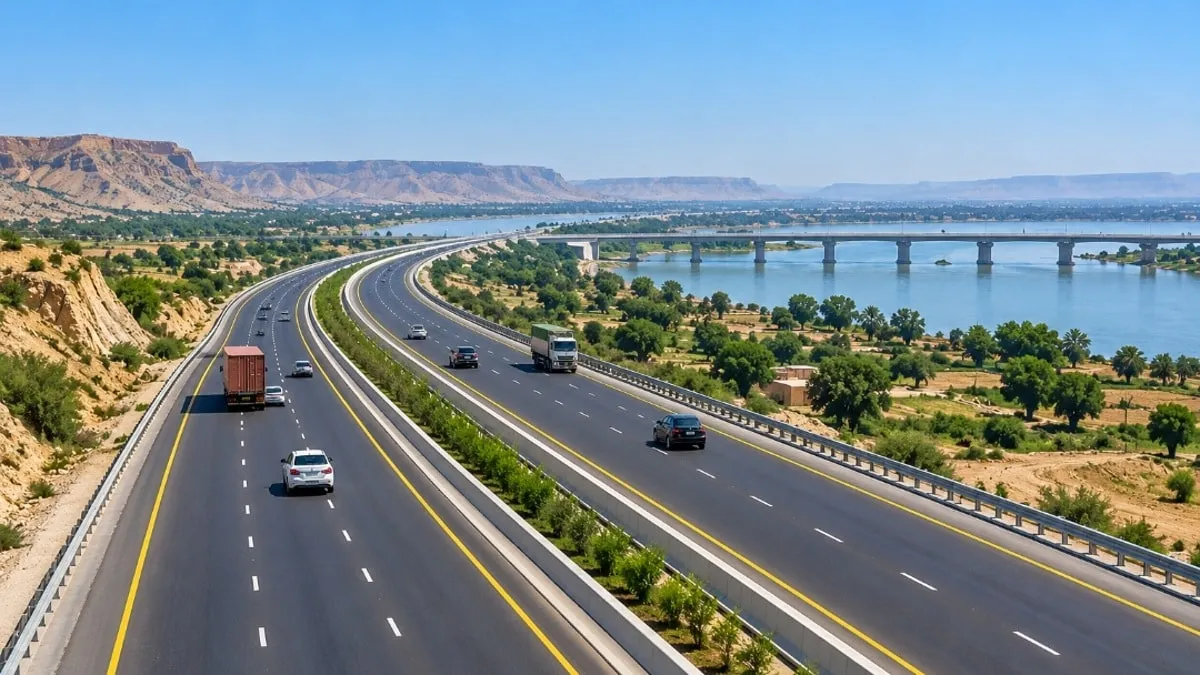
The 306-kilometer Hyderabad-Sukkur M-6 Motorway is a planned six-lane, access-controlled highway in Sindh and the final missing link in Pakistan's Peshawar-Karachi Motorway network. The project is divided into five sections, connecting Hyderabad, Tando Adam, Nawabshah, Naushahro Feroze, Ranipur, and Sukkur.
The project has faced years of delays, with its original public-private partnership agreement terminated in December 2023 after the concessionaire failed to achieve financial close. Delays in major transport infrastructure often create cascading economic costs, including higher vehicle operating expenses, extended transit times, and bottlenecks in freight movement between major urban centers and ports.
Addressing State-Owned Enterprise Losses Through Reform
The push for private sector participation in the M-6 Motorway coincides with a broader government drive to address mounting losses at state-owned enterprises. Public sector entities across energy, transport, and manufacturing have frequently drained national financial resources, prompting fiscal authorities to explore structural reforms.
Privatization officials argue that introducing private sector management can turn around loss-making operations and stop the outflow of public subsidies. By transferring commercial enterprises and infrastructure operations to private entities, the state hopes to convert fiscal liabilities into tax-paying assets that contribute to economic growth.
Economic Impact on Trade and Regional Connectivity
Completing the Hyderabad-Sukkur M-6 Motorway will integrate the final segment of the primary national trade corridor linking the port city of Karachi with northern manufacturing hubs. Efficient road transport reduces logistics costs for businesses, speeds up agricultural supply chains, and improves market access for regional producers.
Provinces crossed by the corridor stand to benefit from increased commercial activity, local employment during construction, and improved safety standards compared to existing two-lane highways. Modern motorway infrastructure also facilitates regional trade integration with neighboring landlocked countries seeking access to southern maritime ports.
Next Steps for the M-6 Concession Process
Following the board approval announced at the Pakistan Prosperity Forum, authorities will proceed with procurement steps to invite bids from qualified private developers and consortiums. Potential investors will review the financial terms, traffic volume projections, and the proposed $156 million viability gap funding allocation for the first section before submitting proposals.
Observers will monitor whether the revised 25-year concession structure successfully attracts international and domestic capital where previous attempts stalled. Meeting financial close deadlines will remain a critical milestone for the administration as it attempts to demonstrate credibility in public-private partnership execution.