What Was Announced and Where
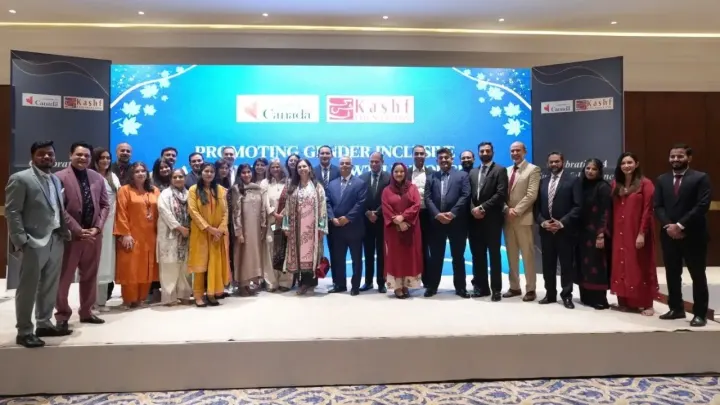
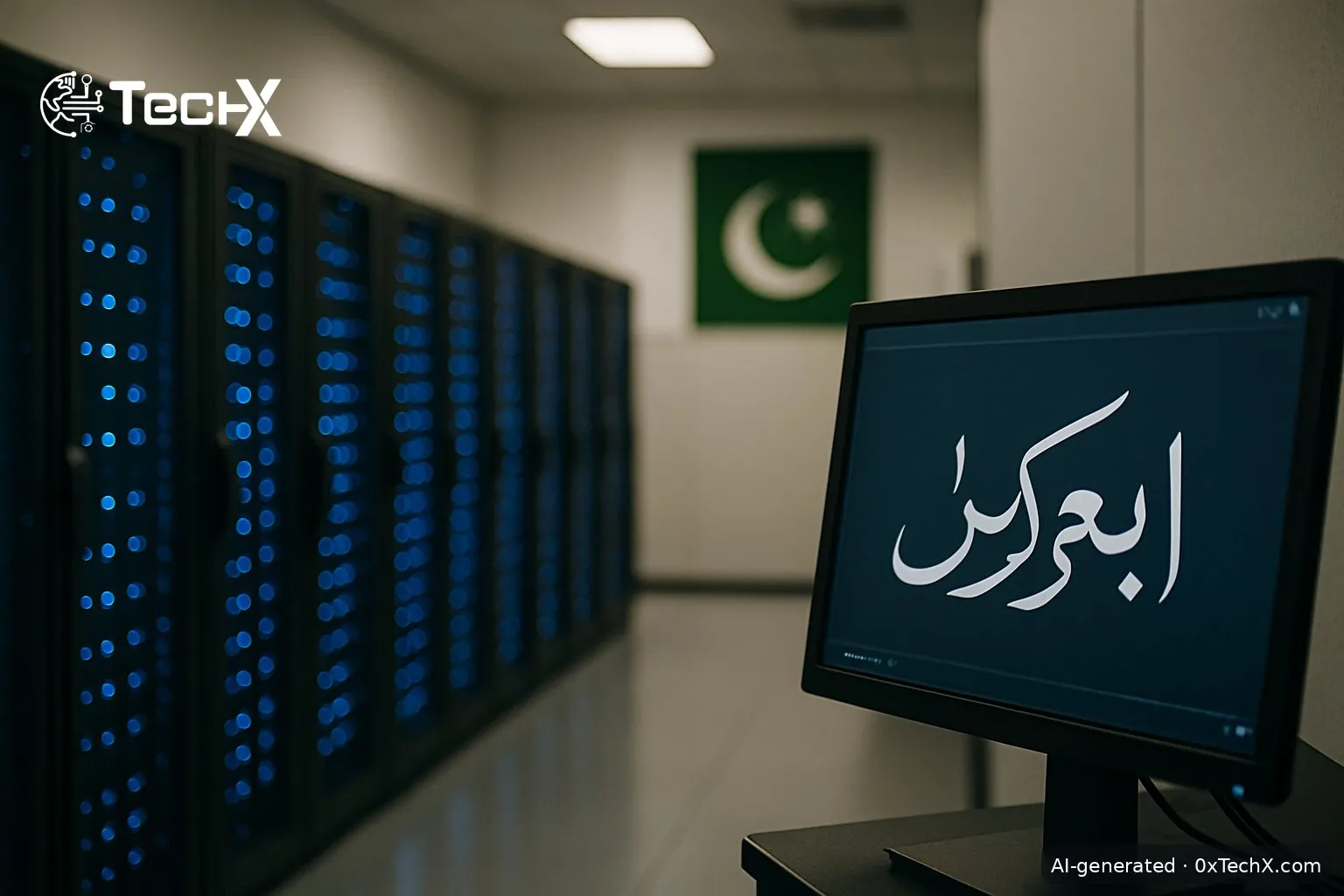
Federal Minister for IT and Telecom Shaza Fatima Khawaja revealed the government-backed Buraq large language model, tailored for Urdu and regional languages, alongside local sovereign compute infrastructure at the Global AI and Digital Summit 2026 in Seoul.
The World Bank Group, South Korea's Ministry of Science and ICT, and its Ministry of Finance and Economy jointly hosted the gathering in Seoul from October 19 to 22, where Khawaja outlined the national digital transformation strategy.
Pakistan prepared to sign the Digital and AI Compact at the event as the first participating nation, centering the initiative around the new Buraq framework.
Why the Buraq Urdu AI Model Matters for Ordinary Pakistanis
Standard artificial intelligence systems like Gemini or ChatGPT transmit user queries to foreign servers in Europe or the United States, leaving sensitive local, financial, and government records exposed to external jurisdictions.
The sovereign compute setup allows local entities to execute real-time applications, process large files, and train algorithms without offshore reliance, protecting medical imaging, government documents, telecom logs, and banking transactions securely within Pakistan.
Urdu representation remains extremely scarce online, making up only 0.03% of global URLs indexed by Common Crawl in July 2026, which causes standard global models to generate inaccurate or awkward responses.
The Four Pillars Behind Buraq
Khawaja explained during a World Bank panel discussion that public computing infrastructure and the Buraq system form the final tier of a framework anchored by four separate foundations.
- Digital identity: NADRA issues verified digital identities to over 100 million citizens to authenticate users and manage online consent.
- Payments: The Raast instant payment rail managed by the State Bank automates welfare distribution based on AI identification.
- Data sharing: The WASL national exchange layer, built through the World Bank-supported Digital Economy Enhancement Project, secures institutional data exchanges through encrypted and logged transactions.
- Safeguards: The National Data Governance Policy establishes uniform rules for publishing, protecting, classifying, and sharing public information.
The minister noted that artificial intelligence serves as the final layer rather than the initial step, meaning the country established its digital foundations before deploying advanced tools.
Pakistan Is Not Starting From Zero on Urdu AI
While Buraq operates as a state-directed project, private development has already taken root, illustrated by a model called Qalb introduced earlier in 2026 by a Pakistani student in the United States named Taimoor Hassan.
Trained on 1.97 billion tokens, Qalb underwent evaluation across more than seven international benchmarks, outperforming prior Urdu-focused systems on specific practical tasks.
Spoken by over 230 million individuals globally across diaspora populations, India, and Pakistan, Urdu has historically lacked sufficient representation in advanced technology frameworks.
What This Means for Pakistan's Tech Sector
Hospitals, financial institutions, and fintech startups dealing with sensitive information can now adopt local artificial intelligence safely without violating data residency constraints.
A domestic language model supplies local startups with an advantage in producing Urdu-centric products for both local users and the wider South Asian diaspora.
The minister also declared a $1 billion national funding commitment extending through 2030, supported by public sector deployments and regulatory overhauls.
Skipping foundational requirements usually leads to failed pilot projects and low public trust, a pitfall the minister emphasized that Pakistan is actively avoiding.
Frequently Asked Questions
What is the Buraq Urdu AI model?
The Buraq Urdu AI model is a large language model being built by the Pakistani government. It is trained on Urdu and regional languages and is designed to run entirely on servers inside Pakistan, so no Pakistani data is sent abroad.
Who announced Buraq and when?
Pakistan's IT Minister Shaza Fatima Khawaja attended the Global AI and Digital Summit 2026 in Seoul to highlight the country's future roadmap on digital transformation and artificial intelligence. The Buraq announcement was made on October 22, 2026, at a World Bank panel on digital government.
Why does Pakistan need its own Urdu AI model?
Global AI models are mostly trained on English and have very limited Urdu data. Urdu accounted for just 0.03% of global URLs collected by Common Crawl in July 2026. This makes global AI tools poor at understanding Pakistani users. Buraq aims to fix that, while also keeping sensitive government, health, and financial data from leaving the country.
What is sovereign compute and why does it matter?
Sovereign compute means government-owned or government-contracted computing power (servers and GPUs) that sits physically inside Pakistan. When Buraq runs on this infrastructure, all data processing happens locally. This protects citizen privacy, meets data residency rules, and reduces dependence on foreign tech companies. It also means Pakistan's PTA and other regulators can enforce their own rules without relying on foreign platforms to cooperate.