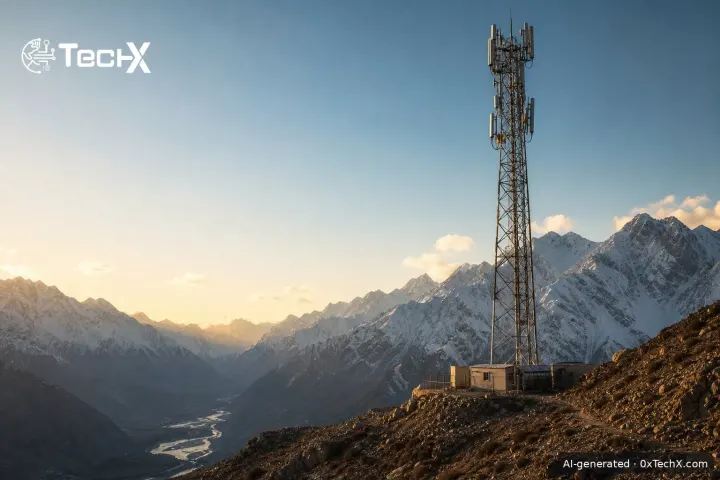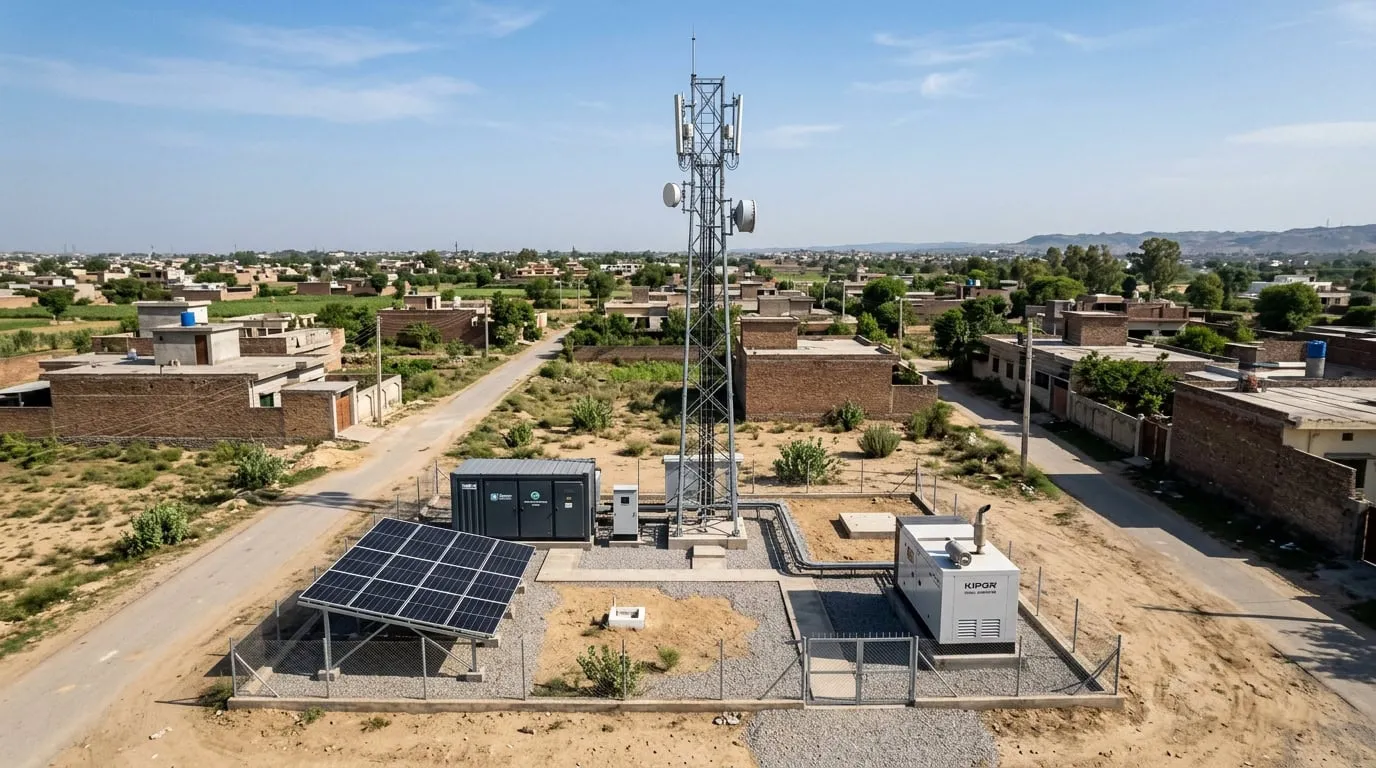
The Pakistan Telecommunication Authority (PTA) has proposed a phased shift of telecom towers to alternative energy sources, including solar power, battery storage and hybrid systems, to reduce diesel consumption, tackle frequent power outages and improve network reliability.
In a formal notice released this week, the regulator invited telecom operators and infrastructure providers to submit time-bound plans for converting Base Transceiver Stations (BTS) to alternative energy. Operators have been asked to identify sites experiencing prolonged outages, assess the feasibility of renewable energy solutions and propose investment plans with implementation timelines of one, two or three years. PTA has also sought industry feedback by December 7, 2026, on whether solar installations should be mandatory at sites experiencing monthly outages of 5% or more.
Why the Shift to Solar Matters for Pakistan's Telecom Sector
Pakistan's telecom network relies heavily on diesel generators to keep towers running when the national grid falters. According to PTA data, diesel fuels roughly 30% of the energy mix for BTS sites, with the 10% highest-consuming towers accounting for a disproportionate share of fuel use and emissions. Frequent load-shedding, especially in rural provinces, forces operators to keep generators running around the clock, driving up operational costs and contributing to air pollution.
Transitioning to solar and hybrid systems promises three immediate benefits: lower fuel expenses, reduced carbon footprints, and more stable service during grid interruptions. For consumers, this could translate into fewer dropped calls and faster data speeds during power cuts, while operators could see a reduction in OPEX that improves profitability.
What the Proposed Roadmap Requires From Operators
PTA's roadmap outlines three core deliverables for each participating operator:
- Identify BTS sites that have experienced prolonged outages in the past 12 months.
- Conduct a technical feasibility study for solar, battery or hybrid installations, taking into account site-specific factors such as roof space, sun-hours, and grid proximity.
- Submit a detailed investment plan that includes capital costs, financing options, projected diesel savings and a timeline for implementation (one, two or three years).
Operators must also provide current energy-use statistics, backup arrangements, and an assessment of grid availability for each site. The regulator stresses that any alternative-energy system must guarantee uninterrupted connectivity during nighttime, cloudy weather and other periods of limited solar generation.
How the Mandatory Solar Threshold Would Work
PTA is seeking feedback on a proposal that would make solar installations compulsory at any BTS where monthly outages exceed 5%. If the threshold is adopted, operators would be required to install solar panels sized to meet at least 70% of the tower's daytime load, complemented by battery storage capable of covering nighttime demand for a minimum of eight hours.
Compliance would be monitored through quarterly reports submitted to PTA's Energy Efficiency Unit. Non-compliant sites could face penalties, including higher licensing fees or temporary suspension of spectrum allocation.
Incentives and Shared Infrastructure Options
To encourage swift adoption, PTA is considering a suite of incentives:
- Reduced spectrum licensing fees for operators that achieve a 20% reduction in diesel consumption within two years.
- Tax rebates on imported solar equipment, subject to certification by the Pakistan Standards and Quality Control Authority.
- Facilitation of shared renewable-energy infrastructure, allowing multiple tower owners to co-locate solar arrays and battery banks on a single site.
Coordination with power-sector institutions such as the National Transmission and Despatch Company (NTDC) and the Alternative Energy Development Board (AEDB) is also on the agenda, aiming to align telecom renewable projects with national grid-integration standards.
Historical Context: Energy Challenges in Pakistan's Telecom Landscape
Since the early 2000s, Pakistan's telecom expansion has outpaced the growth of the national grid. The country's chronic power-shortage problem intensified after the 2010 load-shedding crisis, prompting operators to invest heavily in diesel generators. Over the past decade, the government introduced the National Energy Efficiency Programme, but implementation at the tower level remained fragmented.
In 2021, PTA launched a pilot project converting 150 towers in Sindh to solar-battery hybrid systems. The pilot reported a 45% reduction in diesel use and a 12% improvement in uptime during peak load-shedding periods. Building on that experience, the current proposal seeks to scale the model nationwide.
Impact on Stakeholders: Operators, Consumers and the Environment
For telecom operators, the shift represents a capital-intensive but potentially cost-saving transition. Initial CAPEX for a typical 20-kW solar-battery system ranges from Rs. 1.6 billion to Rs. 2.2 billion, depending on site conditions. However, the reduction in diesel spend, often Rs. 15,000 per day per generator, can yield payback periods of three to five years.
Consumers in outage-prone areas stand to benefit from more reliable voice and data services, especially during the night when diesel generators are most likely to fail due to fuel shortages. Rural businesses that rely on mobile internet for transactions could see increased productivity.
Environmentally, the projected diesel cut could avert up to 200,000 metric tonnes of CO₂ emissions annually, aligning with Pakistan's commitments under the Paris Agreement.
Next Steps and Timeline
PTA has set the following milestones:
- December 7, 2026 - Deadline for operators to submit feedback on the mandatory-solar threshold and to present preliminary conversion plans.
- January 2027 - PTA reviews submissions and publishes a final policy document, including any mandatory requirements.
- Q2 2027 - Commencement of pilot implementations for sites selected under the one-year timeline.
- End of 2029 - Target for at least 60% of the 10% highest-diesel-consuming BTS sites to have operational solar-hybrid systems.
Stakeholders are advised to monitor PTA's official portal for updates on the final policy and to prepare detailed feasibility studies well ahead of the December deadline.
Practical Takeaways for Telecom Companies
Operators should begin by mapping outage data to pinpoint the most vulnerable towers. Early engagement with solar EPC firms can lock in favorable pricing before potential market fluctuations. Finally, documenting existing diesel consumption and backup arrangements will streamline the reporting process required by PTA.