Punjab Chief Minister Maryam Nawaz Sharif announced on Monday that 1,150 rural women have already completed the SheThreads skills-training programme and have been placed in textile-industry jobs, while the government aims to train a total of 2,500 women by June.
The announcement came during a press briefing in Lahore, where the chief minister also revealed that the Punjab Traffic Police, in partnership with a private university, have begun training women to drive rickshaws - a follow-up to earlier taxi and scooter-driving courses.
What Is the SheThreads Programme?
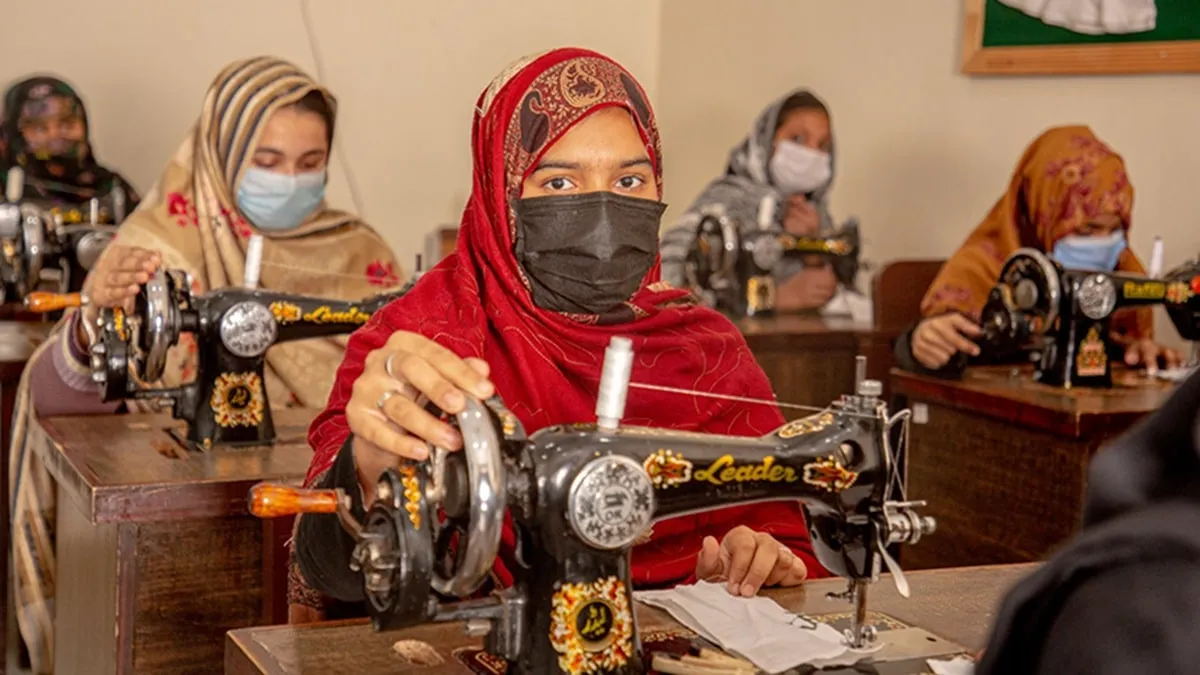
SheThreads is a provincial initiative launched in 2022 to address chronic under-employment among women in Punjab's rural districts. The programme offers a three-month curriculum in industrial sewing, pattern making and apparel supervision. Participants receive a monthly stipend of Rs. 15,000 while they study, and upon successful completion they are linked with textile factories that have pledged to hire graduates.
The curriculum follows standards set by the Pakistan Skills Development Fund and aligns with the National Skills Development Programme, ensuring that trainees acquire competencies recognised across the country's garment sector.
How Many Women Have Completed Training and Secured Jobs?
According to the chief minister's statement, 1,150 women have already finished the three-month course and have been placed in permanent or contract positions within the province's textile clusters, primarily in Faisalabad, Sialkot and Gujranwala. These placements include roles such as stitchers, quality-control assistants and junior supervisors.
The government tracks placement outcomes through a digital portal managed by the Punjab Skills Development Authority. As of the latest update, the placement rate stands at 92 percent, meaning that the majority of graduates have moved directly into paid employment after the stipend period ends.
What Is the Target for June and How Is the Programme Expanding?
The chief minister set a clear target: train 2,500 women by the end of June 2024. To meet this goal, the provincial administration has opened registration centres in 12 districts, including Jhang, Chakwal, and Muzaffargarh. The registration process is online and also available at local women's development offices.
In addition to the core sewing curriculum, the programme now incorporates modules on basic entrepreneurship, financial literacy and digital marketing, allowing graduates to consider starting their own home-based garment units if factory jobs are limited.
Why Is the Stipend Important?
The Rs. 15,000 monthly stipend serves two purposes. First, it offsets the opportunity cost for women who might otherwise need to stay at home or work in informal, low-paid labour. Second, it acts as a safety net that encourages completion of the full three-month training without dropout.
Economic analysts note that the stipend is roughly equivalent to the average daily wage for agricultural labour in Punjab, making it a substantial incentive for families to support women's participation.
What Is the New Rickshaw-Driving Initiative?
In a parallel effort to broaden women's employment options, the Punjab Traffic Police have launched a rickshaw-driving course for women. The training, conducted in collaboration with a private university, took place at driving schools in Bahria Town and Manawa, where 34 women completed the practical and theoretical components.
City Traffic Officer Syed Abdul Rahim Shirazi explained that the programme aims to "create respectable job opportunities for women" and to challenge cultural barriers that have traditionally kept women out of public transport roles.
The rickshaw-driving curriculum includes traffic-law theory, vehicle-maintenance basics, and customer-service etiquette. Successful participants receive a certification that allows them to operate auto-rickshaws under the provincial transport licence system.
How Does This Fit Into Punjab's Broader Women-Empowerment Strategy?
Both the SheThreads and rickshaw-driving initiatives are components of the Punjab Women Empowerment Action Plan, a multi-year strategy launched in 2021. The plan targets five sectors - textiles, transport, agriculture, information technology and tourism - to create at least 100,000 new jobs for women by 2027.
Funding for these programmes comes from the provincial budget, supplemented by a Rs. 1.6 billion grant from the World Bank's Gender Equality Fund, which is earmarked for skill development and micro-enterprise support.
What Are the Expected Economic Impacts?
Experts estimate that each SheThreads graduate adds roughly Rs. 250,000 in annual earnings to household income, based on average wages for entry-level textile workers. Multiplied across the projected 2,500 trainees, the initiative could inject about Rs. 625 million in additional earnings into rural economies each year.
The rickshaw-driving programme is expected to increase women's participation in the informal transport sector by 5 percent in the districts where training has been delivered, according to a recent study by the Punjab Institute of Development Economics.
What Are the Next Steps and How Can Interested Women Apply?
Registration for the next batch of SheThreads training opens on 15 November 2024 and will remain open for two weeks. Applicants must be residents of Punjab, aged 18-35, and have at least a matriculation certificate. The application portal requires a scanned copy of the national ID and a brief statement of interest.
Women interested in the rickshaw-driving course can contact the Punjab Traffic Police's Women's Transport Unit at the regional traffic office or visit the designated training centres in Lahore, Faisalabad and Rawalpindi.
Both programmes will continue to be monitored by the Punjab Skills Development Authority, which will publish quarterly placement reports and solicit feedback from participants to refine curricula.
Overall, the chief minister's announcements reflect a coordinated push to translate skill acquisition into tangible employment, thereby reducing gender-based income gaps and fostering economic self-reliance among Punjab's rural women.