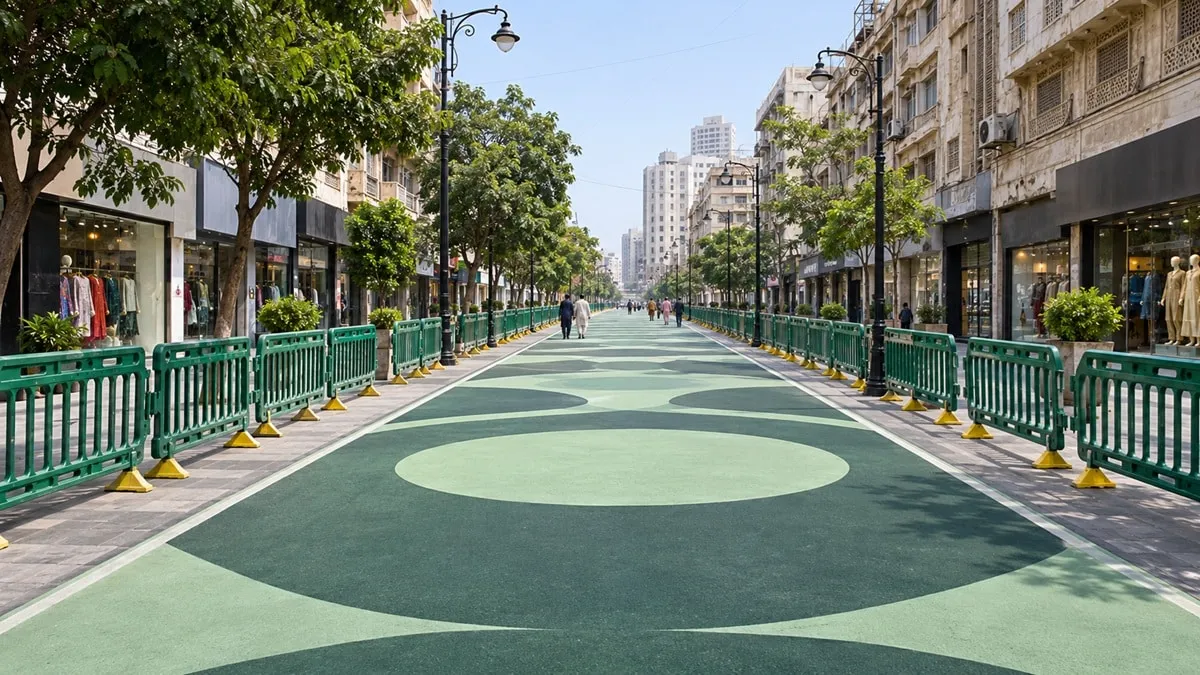
Karachi Mayor Announces Plans for Pedestrian-Only Roads
Karachi Mayor Murtaza Wahab has announced plans to make selected roads in the city pedestrian-only, taking inspiration from London's decision to restrict vehicle access to Oxford Street. This ambitious urban planning proposal aims to reshape how citizens move through Pakistan's largest economic hub, prioritizing foot traffic over motorized transport in designated zones. By looking at international models, municipal leaders hope to address chronic congestion, pollution, and safety concerns that currently affect commuters and shoppers alike.
Wahab said London's mayor had designated a one-kilometer stretch of Oxford Street exclusively for pedestrians, a move that has received widespread appreciation. This international precedent serves as the baseline for the Karachi Metropolitan Corporation as they evaluate which commercial and high-density corridors could undergo a similar transformation. Urban specialists often point out that reclaiming street space for people can breathe new life into commercial districts by creating safer, more inviting environments for the public.
The London Oxford Street Pedestrianization Model
The announcement comes after a section of London's famous shopping street was permanently closed to traffic on Monday, October 26. This high-profile British initiative removed a major traffic artery from public vehicle use, shifting the focus entirely to foot traffic and urban public space utilization. The UK capital's transport authorities designed the phased intervention to measure both economic and logistical impacts before expanding further.
The move allows pedestrians to use an area previously occupied by vehicles, including London's iconic red double-decker buses and black cabs. Commuters and shoppers who previously navigated crowded sidewalks now share an expansive open corridor free from exhaust and vehicle hazards. City planners in London structured the project to enhance retail experiences and reduce urban carbon emissions in a densely packed commercial zone.
Phased Implementation and Future Expansion
Around half of Oxford Street has been pedestrianized in the first phase, with plans to extend the restrictions to the remaining sections depending on the initiative's success. This methodical rollout allows municipal authorities to monitor traffic redirection, public reaction, and business revenue before committing to a full-length closure. Karachi officials are expected to study these operational phases to determine how a similar phased rollout might function within local markets.
Implementing such a significant change requires careful logistical planning, especially regarding public transportation rerouting and delivery vehicle access for local businesses. In London, the initial phase tested the resilience of surrounding street grids to absorb displaced traffic. Karachi will face similar challenges when selecting its pilot locations, as local commercial hubs rely heavily on continuous vehicular supply chains and informal transport options.
Political Cooperation and Urban Governance
Wahab noted that political parties in London had not created legal hurdles to the decision, emphasizing the importance of political cooperation in implementing similar projects in Karachi. Urban transformation projects often stall in politically fragmented environments where rival factions dispute municipal policies for competitive advantage. The Karachi Mayor highlighted cross-party consensus in the British capital as a crucial element that allowed the pedestrianization scheme to move forward smoothly.
Governance structures in major metropolitan areas frequently encounter friction between local, provincial, and national political stakeholders. For Karachi, achieving bipartisan or multi-party agreement on major civic overhauls remains a persistent challenge due to the diverse political representation across the metropolis. Wahab's emphasis on political harmony underscores that transforming public spaces depends as much on legislative goodwill as it does on engineering and design.
Impact on Urban Mobility and Commerce in Karachi
Transforming busy thoroughfares into pedestrian-only zones alters the daily routines of millions of residents who rely on the city transport network. Karachi currently struggles with heavy traffic congestion, inadequate sidewalks, and limited public recreational spaces. Restricting vehicles in select areas could provide much-needed relief to pedestrians, reduce noise pollution, and encourage micro-mobility options such as walking and cycling.
Local businesses in designated pedestrian zones often experience shifts in customer foot traffic. While some merchants initially express concern over delivery access and customer parking, international case studies frequently demonstrate that pedestrian-friendly areas attract higher volumes of shoppers over time. Municipal authorities in Karachi will need to balance commercial requirements with pedestrian safety to ensure that local vendors support the transition.
Next Steps for Municipal Authorities
As the Karachi Metropolitan Corporation reviews potential roads for pedestrianization, residents and business owners await further details on specific locations and timelines. City officials have not yet released a definitive list of streets slated for conversion, nor have they announced a formal start date for the pilot project. Observers will be watching to see how the administration selects the initial test zones and whether they can secure the necessary political backing.
Public consultations and traffic impact assessments typically precede major infrastructural overhauls in metropolitan centers. Ensuring transparent communication with affected communities will help mitigate resistance and build public trust in the initiative. The success of Karachi's endeavor will rely heavily on meticulous execution, drawing lessons from London while adapting strategies to local realities.