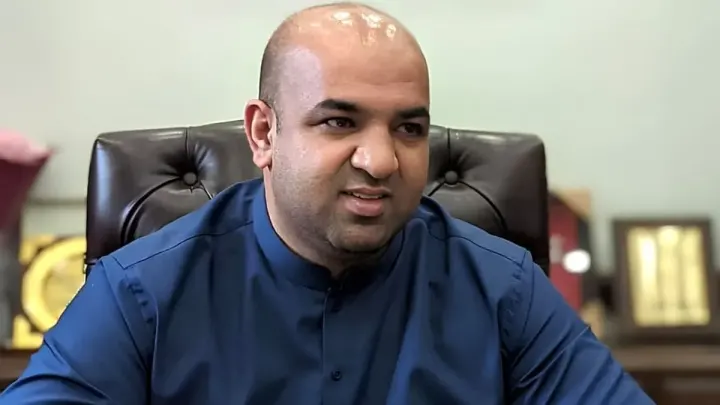
Punjab Education Minister Rana Sikandar Hayat announced on Tuesday that the province will roll out a digital On-Screen Marking (OSM) system for board examinations, using facial-recognition technology to verify examiners and a real-time dashboard to monitor marking progress.
The announcement came with a video of a live demonstration carried out by the Board of Intermediate and Secondary Education (BISE) Bahawalpur, showing answer sheets being fed into a high-speed scanner, instantly appearing on a screen and being checked by an examiner whose identity was confirmed by facial recognition.
How the On-Screen Marking System Works
During the demonstration, a stack of answer copies was placed on a modern scanner capable of processing dozens of pages per minute. The scanner digitises each sheet, creating a clear image that is uploaded to a secure server. The image then appears on a web-based dashboard that examiners can access from a workstation inside the marking centre.
Before an examiner can begin, the system activates a webcam linked to facial-recognition software. The software compares the live image with a pre-registered photograph of the examiner. If the software detects a single matching face, the dashboard unlocks and the examiner can view the scanned answer. If the camera picks up two faces, the system automatically locks the session and alerts security staff.
Once access is granted, the examiner sees each answer sheet on screen, can zoom in for clarity, and can assign marks using a drop-down menu. An AI-assisted checking feature runs in parallel, flagging potential inconsistencies such as unusually high or low scores for a given question. The dashboard records every action, creating a timestamped audit trail that can be reviewed by supervisors.
Why Punjab Is Moving to Digital Marking
The OSM system is part of a broader reform agenda aimed at modernising Punjab's examination infrastructure. Historically, board exams in the province have been marked manually on paper, a process that can take several weeks and is vulnerable to human error, lost sheets, and disputes over marking consistency.
In recent years, the provincial government has invested in electronic sheet (e-sheet) pilots for science subjects, allowing students to fill answers on a tablet or computer. The decision to extend digital marking to all matric and intermediate subjects follows a meeting earlier this month where the chairpersons of Punjab's nine educational boards agreed to use e-sheets for four science subjects starting next year and to introduce on-screen marking for the remaining subjects.
By converting paper answers into digital files, the OSM system reduces the physical handling of sheets, cuts the risk of misplacement, and speeds up the turnaround time for results. The facial-recognition layer adds a security dimension, ensuring that only authorised personnel can view and grade the papers, thereby limiting opportunities for tampering.
Technical and Operational Details
The scanners used in the pilot are industrial-grade devices capable of scanning at 120 pages per minute with optical character recognition (OCR) accuracy above 99 percent. The OCR engine extracts printed text, while handwritten responses are stored as image files for the examiner to review. The system's backend runs on a cloud-based platform hosted by the provincial education department, with redundant servers to guarantee uptime during the marking window.
Facial-recognition software is supplied by a local tech firm that complies with Pakistan's data-protection guidelines. The software stores biometric templates, not raw images, and deletes them after the marking period ends. Access logs are encrypted and can be audited by the Board's chief controller of examinations.
Examiner training sessions have been scheduled across the province. Participants receive a brief on how to log in, how the facial-recognition check works, and how to use the dashboard's marking tools. A help-desk operates 24 hours a day during the marking period to resolve technical glitches.
Impact on Students, Teachers and the Education System
For students, the new system promises faster result publication. In previous cycles, results for matric and intermediate exams could be delayed by up to six weeks due to manual collation. With digital marking, the education department expects to release results within three weeks of the exam's conclusion.
Teachers, who often serve as examiners, will experience a shift from pen-and-paper grading to screen-based evaluation. While the system retains the examiner's judgment, the AI-assisted checks provide a safety net that highlights outlier scores, helping teachers maintain consistency across large cohorts.
The broader education system stands to gain from increased transparency. Because every marking action is logged, any grievance lodged by a student or parent can be traced back to a specific examiner and time stamp, reducing the likelihood of arbitrary score changes.
Next Steps and Timeline
The pilot conducted by BISE Bahawalpur will be evaluated over the next two months. The education ministry has said that if the pilot meets performance benchmarks, such as scanning speed, facial-recognition accuracy above 98 percent, and examiner satisfaction scores above 80 percent, the OSM system will be rolled out to all nine boards for the upcoming academic year.
Implementation across the province will involve installing scanners in each board's marking centre, upgrading network infrastructure, and completing examiner certification. The ministry has earmarked Rs. 1.6 billion for hardware procurement, software licensing, and training programmes.
Stakeholders are advised to watch for a formal circular from the Punjab Boards of Intermediate and Secondary Education, expected in early December, which will detail the rollout schedule, exam dates that will use OSM, and guidelines for handling technical issues.
Challenges and Considerations
While the system offers many benefits, it also raises concerns about data privacy and the reliability of facial-recognition technology in crowded marking rooms. Critics argue that lighting conditions and camera angles can affect accuracy, potentially locking out examiners who are correctly authorised.
To mitigate these risks, the pilot includes backup authentication methods, such as a one-time password sent to the examiner's registered mobile device. The backup can be used if facial recognition fails after two attempts.
Another challenge is ensuring that the AI-assisted checking does not introduce bias. The education department has commissioned an independent audit of the AI model to verify that it treats all subjects and answer styles fairly.
Finally, the transition requires a cultural shift among examiners accustomed to paper-based marking. Ongoing support, clear SOPs, and transparent communication are essential to secure buy-in from teachers and senior officials.