Why UK Households Are Being Urged to Stockpile Emergency Supplies
Brits are being urged to stockpile three days of emergency supplies amid growing fears of cyber attacks on critical national infrastructure. Official warnings have prompted households to prepare for potential national emergencies, with citizens told to gather essential provisions before disruption strikes.
Recent events have heightened these concerns across Europe and the United Kingdom. A cyber attack targeting supermarket fridges and freezers across Europe prompted the UK cyber chief to back Government calls for households to prepare for a national emergency. Over the past week, airlines have been plagued by bomb threats, UK wholesalers and meat processing plants have been hacked, and refrigerators at French blood banks have been targeted by cybercriminals.
Understanding the Threat to Critical National Infrastructure
Critical national infrastructure encompasses the assets, facilities, and systems that provide vital services for the functioning of a society and economy. In the United Kingdom, this includes energy networks, water supply, transport systems, food distribution chains, and communication networks. When cybercriminals target these sectors, the ripple effects can quickly reach ordinary households.
Recent high-profile digital intrusions demonstrate that supply chains are increasingly vulnerable to malicious software and unauthorized access. Supermarkets, meat processing facilities, and healthcare logistics rely heavily on interconnected computer systems to monitor temperatures, manage inventory, and coordinate transport. Disruptions to these digital networks can halt the flow of goods to local shops within hours.
What Government Advice Recommends for Water and Hydration
When preparing a domestic emergency kit, securing an adequate water supply is the primary priority. Government advice suggests having at least three litres of bottled drinking water per person per day to sustain basic health and hydration during an outage.
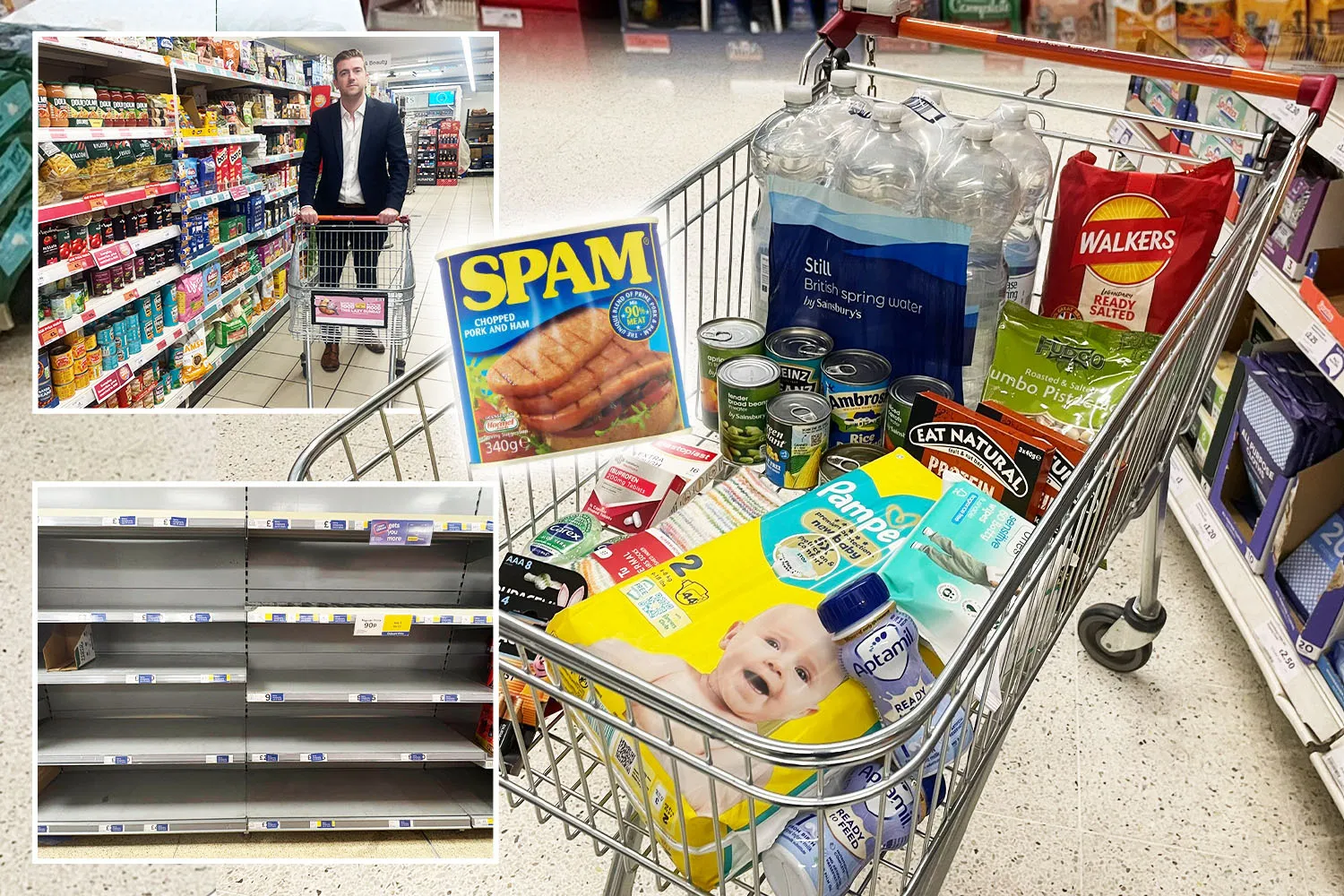
Recent official data suggests that 82 percent of UK adults had less than one day supply of bottled drinking water in their household. Families must also account for basic sanitation needs, such as washing or bathing toddlers, which requires an even greater volume of liquid. Handling large quantities of heavy bottles presents practical challenges, as six-packs of two-litre bottles can easily split open and roll across supermarket floors. Shoppers are advised to purchase one or two large bottles at a time rather than attempting to carry excessive weight in a single trip.
Choosing the Right Non-Perishable Food and Tinned Goods
Officials recommend buying food you would normally eat, meaning households should avoid purchasing items like Spam, sardines, and cold soups just because an emergency has been announced. Stockpiling familiar items ensures that families actually consume the provisions rather than letting them go to waste.
Suitable items include tinned fruits and vegetables, protein bars, crisps, nuts, and tinned desserts such as rice pudding. Parents with infants must also ensure they have sufficient supplies of nappies, wipes, food pouches, and ready to drink baby formula in case normal heating methods become unavailable. Many shoppers fill their trolleys with pasta, rice, and baked beans, though households must consider how they will cook these items if the power goes out.
Sourcing Essential Electrical Gizmos and Backup Power
Securing non-perishable food and water is only part of the preparation process. Households also need electrical gizmos to get through days without power, yet many local supermarkets do not sell torches, power banks, or FM radios.
The humble wind-up radio has experienced a notable resurgence in demand following official announcements. A Sun on Sunday sweep of 12 major stores across Newcastle found only one outlet had any on the shelves just days after the Government announcement. Meanwhile, electrical retailer Maplin reported torch sales had soared 284 percent, and power banks were up 106 percent over the same time period.
The Financial and Practical Reality of Emergency Prepping
Stockpiling provisions involves balancing potential risks against household budgets and storage space. Purchasing enough items to meet basic recommendations can quickly become expensive, with a standard trolley of supplies costing £65 while barely covering a single day for a family, before accounting for electrical equipment.
While gathering emergency goods might feel far-fetched while critical infrastructure remains operational, memories of empty toilet paper shelves during the coronavirus pandemic highlight how quickly consumer habits can change. Being prepared ahead of time prevents chaotic scenes and ensures households can manage short-term disruptions without having to fight over scarce resources in the dark.