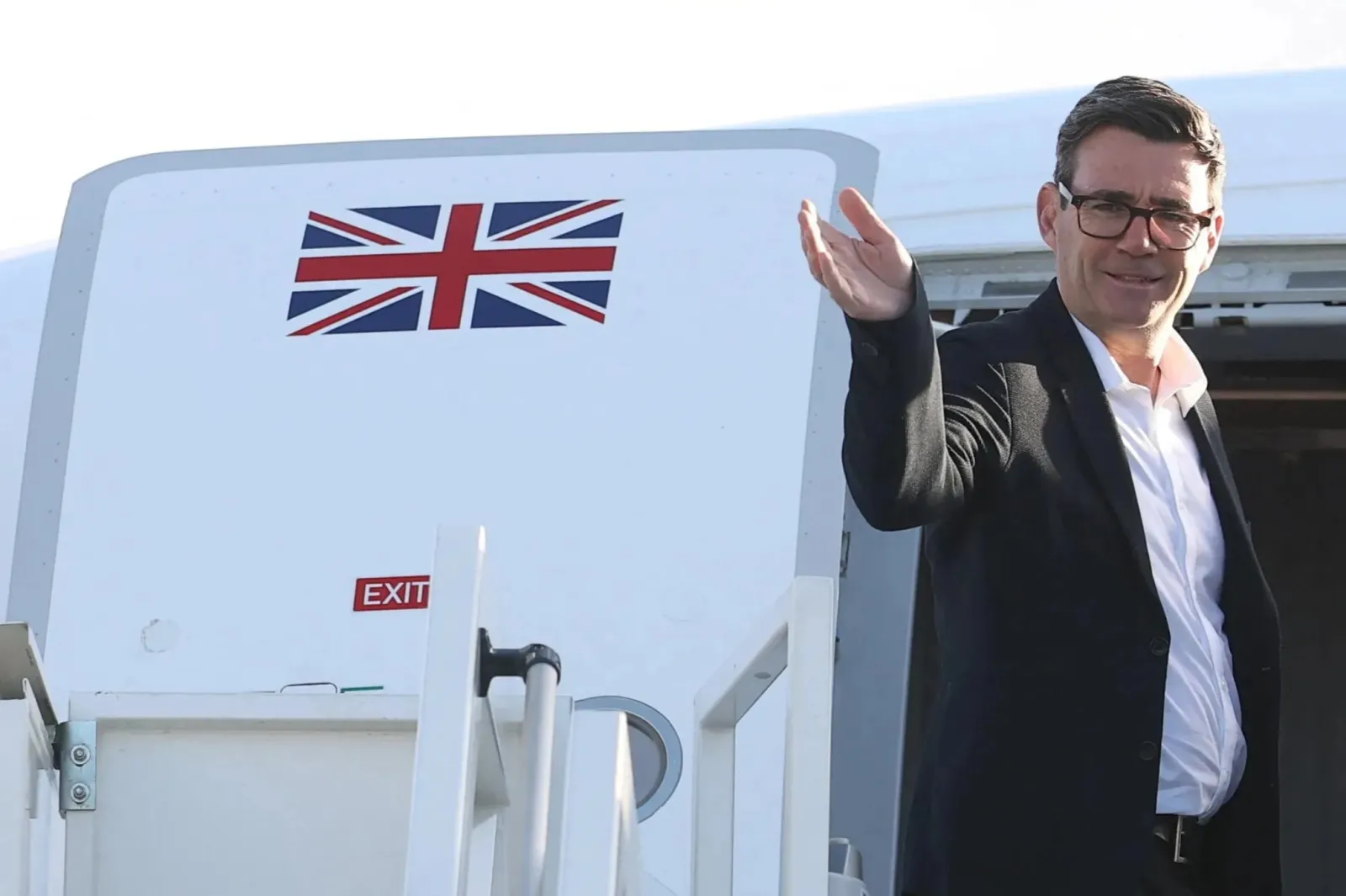
Prime Minister Andy Burnham used a taxpayer-funded VIP jet on Wednesday morning to travel from Manchester to London, a diversion that added an estimated £20,000 to the cost of a government delegation's flight to a Commonwealth summit in the Caribbean.
The flight, which originally departed Stansted Airport with a delegation bound for the summit, was redirected northward to pick up Burnham and his wife before proceeding to the Caribbean. The incident has revived public debate over the use of public money for official travel and the environmental impact of such trips.
What Exactly Happened on the Flight?
According to the report, a VIP jet - an Airbus A321 - took off from Stansted Airport early Wednesday carrying a government delegation to a Commonwealth summit in the Caribbean. Mid-flight, the aircraft was instructed to turn north and land at Manchester Airport to collect the Prime Minister and his spouse. The diversion added an estimated £20,000 to the bill, a figure calculated from standard operating costs for the aircraft type and the additional fuel required for the change in route.
Burnham had spent the preceding weekend in Manchester and chose not to travel to London by train, opting instead for the jet that was already in the air. The decision effectively turned the aircraft into a private taxi service for the Prime Minister, according to critics.
Why the Controversy Over Government Travel?
Government travel in the United Kingdom is governed by the Civil Service's "Travel and Subsistence" policy, which requires officials to use the most cost-effective and environmentally responsible means of transport available. The policy generally favours rail travel for domestic journeys under 300 miles, unless exceptional circumstances justify air travel.
In this case, the distance from Manchester to London is roughly 200 miles, a route that can be covered by a direct train in about two hours. The use of a VIP jet therefore appears to contravene the principle of cost efficiency and raises questions about the justification for the extra expense.
How Much Does a VIP Jet Cost?
The Airbus A321, when operated as a government VIP jet, incurs costs that include fuel, crew salaries, maintenance, airport fees, and depreciation. Industry estimates place the hourly operating cost of an A321 at around £6,000 to £7,000, depending on fuel prices and crew composition. The £20,000 figure cited in the report aligns with a typical three-hour flight segment, which would cover the round-trip diversion and the continuation to the Caribbean.
For comparison, a standard first-class rail ticket from Manchester to London costs roughly £150, while a business-class ticket on a commercial airline would be in the region of £300. The disparity highlights the magnitude of the additional public expenditure.
Environmental Impact of the Flight
Beyond the financial cost, the environmental impact of using a private jet for a short domestic leg is significant. A single hour of flight for an Airbus A321 can emit approximately 2.5 tonnes of CO₂, according to the UK Department for Business, Energy & Industrial Strategy's emissions factors. By contrast, a train journey of the same distance typically emits less than 0.05 tonnes of CO₂ per passenger.
The contrast has drawn criticism from opposition parties and environmental groups, who argue that the Prime Minister's actions undermine the government's stated commitment to Net Zero emissions by 2050.
Political Reactions and Past Precedents
Labour's opposition to the use of private jets by senior ministers has been a recurring theme in parliamentary debates. Over the past five years, Labour MPs have highlighted several instances where Conservative ministers have travelled on government-funded aircraft for domestic trips, prompting calls for stricter oversight.
In response, the Treasury's Public Expenditure Committee has recommended tighter reporting requirements for ministerial travel, including a public register of all VIP jet use. The committee's 2022 report noted that transparency is essential to maintain public confidence in how taxpayer money is spent.
What Does This Mean for the Commonwealth Summit?
The Commonwealth summit in the Caribbean, scheduled for later this month, brings together heads of government from 54 member states to discuss trade, climate change, and security cooperation. The UK's delegation, led by the Foreign Secretary, is expected to use the same aircraft after the diversion.
While the summit itself is not directly affected by the diversion, the episode adds a layer of diplomatic sensitivity. Host nations often scrutinise the environmental credentials of visiting leaders, and the use of a high-emission jet could be perceived as contradictory to the climate commitments discussed at the summit.
What Are the Next Steps?
The Cabinet Office has announced that it will review the circumstances surrounding the flight and assess whether the travel complied with existing guidelines. A formal report is expected within the next two weeks, and the findings may be presented to the Public Accounts Committee.
Should the review determine that the travel was not justified, the government could face calls for reimbursement of the £20,000 cost, as well as potential revisions to the travel policy to prevent similar occurrences.
Practical Takeaways for Citizens
For taxpayers, the incident underscores the importance of monitoring how public funds are allocated for official travel. Citizens can request access to the government's travel register under the Freedom of Information Act to see detailed breakdowns of future trips.
Environmental advocates suggest that individuals continue to pressure their representatives for stricter emissions standards and for the government to lead by example in reducing carbon footprints associated with official travel.
In the meantime, the public debate over the balance between convenience for senior officials and fiscal responsibility is likely to continue, especially as the UK approaches the next general election.