Visitors at the Bari Imam shrine in Islamabad are being served langar (free meals) three times a day, the district administration has said.
Additional Deputy Commissioner (ADC) General Islamabad Dr. Anam Fatima visited the shrine to review the arrangements, according to a post by DC Islamabad on X.
She inspected the quality of the food, cleanliness, and the distribution system, and expressed satisfaction with the arrangements.
Dr. Fatima said that providing quality food to visitors in a dignified and organized manner is the district administration's top priority.
What Is Langar and Why It Matters at Religious Sites
Langar is a tradition of serving free meals to all visitors, regardless of background, that dates back centuries in South Asian spiritual culture. The practice is rooted in the principle of hospitality and equality, and many shrines, mosques, and Sufi centres maintain a communal kitchen to feed pilgrims.
At the Bari Imam shrine, the langar service is scheduled for breakfast, lunch, and dinner, allowing devotees to spend the entire day at the site without worrying about food costs. For low-income families, the three meals can reduce the expense of a day-long visit by several hundred rupees.
Who Oversees the Langar Programme at Bari Imam?
The banner seen in a video shared by the DC office states that the langar for Bari Imam visitors is arranged by the Directorate of Auqaf Islamabad. The Auqaf Directorate is a government body responsible for managing endowments, shrines, and religious properties across the capital territory.
Its duties include maintaining shrine infrastructure, overseeing charitable activities, and ensuring that any public service offered at a religious site complies with safety and hygiene standards. In this case, the Directorate coordinates food procurement, kitchen staffing, and distribution logistics.
How the Distribution System Works
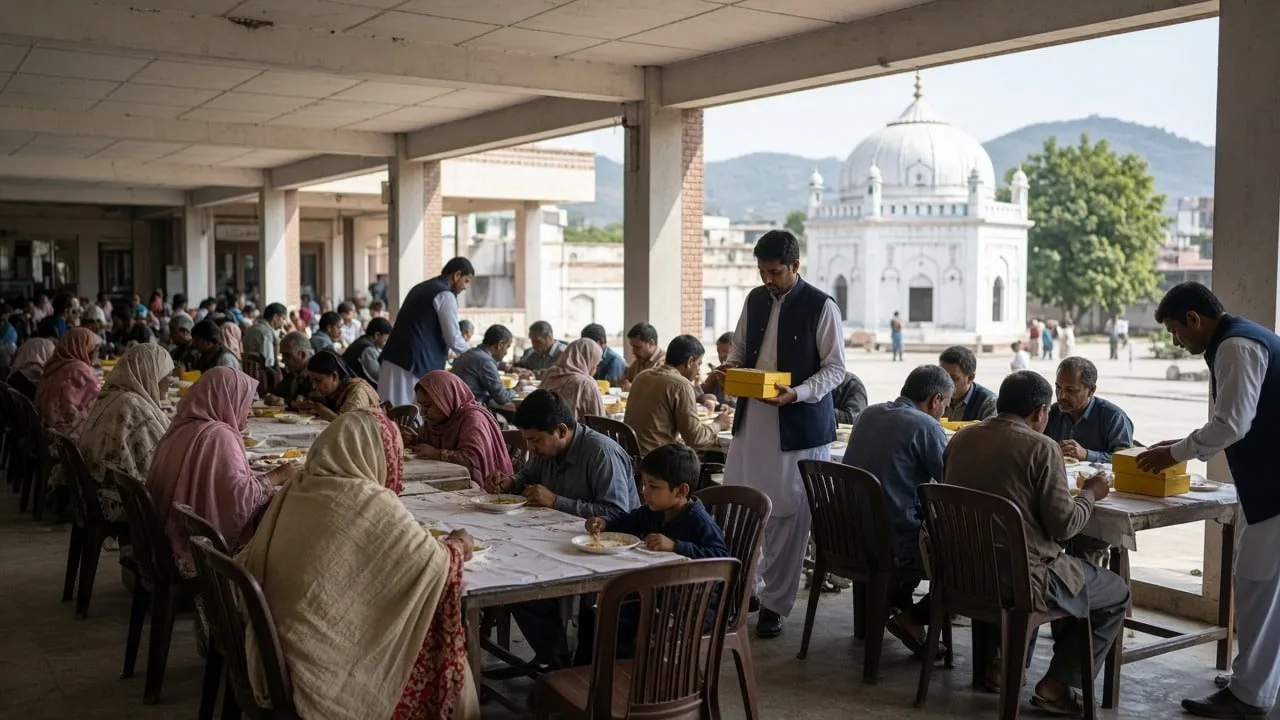
According to the video, men, women, and children are seated at long tables in a covered dining hall. Staff members hand out packed meals, which are prepared in a kitchen adjacent to the hall. The process follows a simple flow: food is cooked in bulk, portioned into individual containers, and then passed along a line of volunteers who place the meals on trays for guests.
Dr. Fatima inspected the cleanliness of the dining area, the temperature of the food, and the overall organization of the service. She reported satisfaction with the arrangements, indicating that the system meets the administration's standards for hygiene and efficiency.
Historical Context of the Bari Imam Shrine
The Bari Imam shrine, dedicated to the 17th-century Sufi saint Hazrat Bari Imam, is one of Islamabad's most visited spiritual sites. The shrine attracts thousands of devotees each week, especially during religious festivals such as Urs, when the saint's death anniversary is commemorated.
Historically, the shrine has offered basic amenities to pilgrims, including water fountains and resting areas. The introduction of a structured langar service aligns with long-standing traditions of Sufi hospitality while adding a modern administrative layer to ensure consistency.
Comparison With Other Free-Meal Initiatives
The article notes that free-meal programmes have been run elsewhere, including the federal government's Ehsaas Saylani Langar initiative for the poor. The Ehsaas programme, launched in 2019, targets low-income households across Pakistan by providing daily meals at designated centres.
While the Ehsaas initiative operates through a network of government-run kitchens, the Bari Imam langar is specific to shrine visitors and is managed by a regional Auqaf office. Both programmes share the goal of reducing food insecurity, but they differ in scope, target audience, and operational oversight.
Recent Legal Issues Around the Shrine Area
The shrine area has also been in the news recently after the Capital Development Authority (CDA) declared a Bari Imam house an illegal occupation. The CDA's decision relates to land-use regulations that govern construction within the capital's master plan. Legal disputes over property around religious sites are not uncommon, and they often involve negotiations between the Auqaf Directorate, local authorities, and community leaders.
Despite the legal controversy, the langar service continues uninterrupted, suggesting that the administration views food provision as a separate, essential public service.
Impact on Visitors and the Local Community
The three-times-daily meals directly benefit pilgrims who travel from other provinces, as well as local families who visit the shrine for prayer or cultural events. By removing the cost of meals, the programme encourages longer stays, which can boost ancillary economic activity such as local transport and souvenir sales.
For the staff and volunteers who run the kitchen, the programme provides regular employment and a sense of community service. The Auqaf Directorate reports that the kitchen employs a mix of full-time cooks, part-time helpers, and volunteers drawn from nearby neighborhoods.
What to Watch for Next
The district administration has not announced any changes to the schedule or scale of the langar service. However, future inspections by ADC Dr. Anam Fatima or other officials could lead to adjustments in food quality standards, seating capacity, or operating hours.
Stakeholders, including shrine caretakers, local residents, and visitors, should monitor announcements from the Auqaf Directorate and the DC office for any updates on funding, staffing, or policy changes.
Practical Takeaways for Visitors
- Meals are served three times daily, breakfast, lunch, and dinner, inside a covered dining hall.
- Food is prepared on-site and distributed in packed portions.
- The service is free for all visitors, with no registration required.
- Visitors should follow the seating arrangement and maintain cleanliness as instructed by staff.
By offering free, dignified meals, the Bari Imam shrine continues a centuries-old tradition of hospitality while adapting to modern administrative standards.