How Karachi Traffic Police Tracked Violations in the First Year
Motorcyclists who rode without helmets accounted for the highest number of traffic violations recorded by Karachi's electronic challan system during its first year, as traffic police issued more than 814,000 tickets for the offense. This single category dominates the statistics released by local authorities, reflecting widespread non-compliance among riders across the metropolitan area.
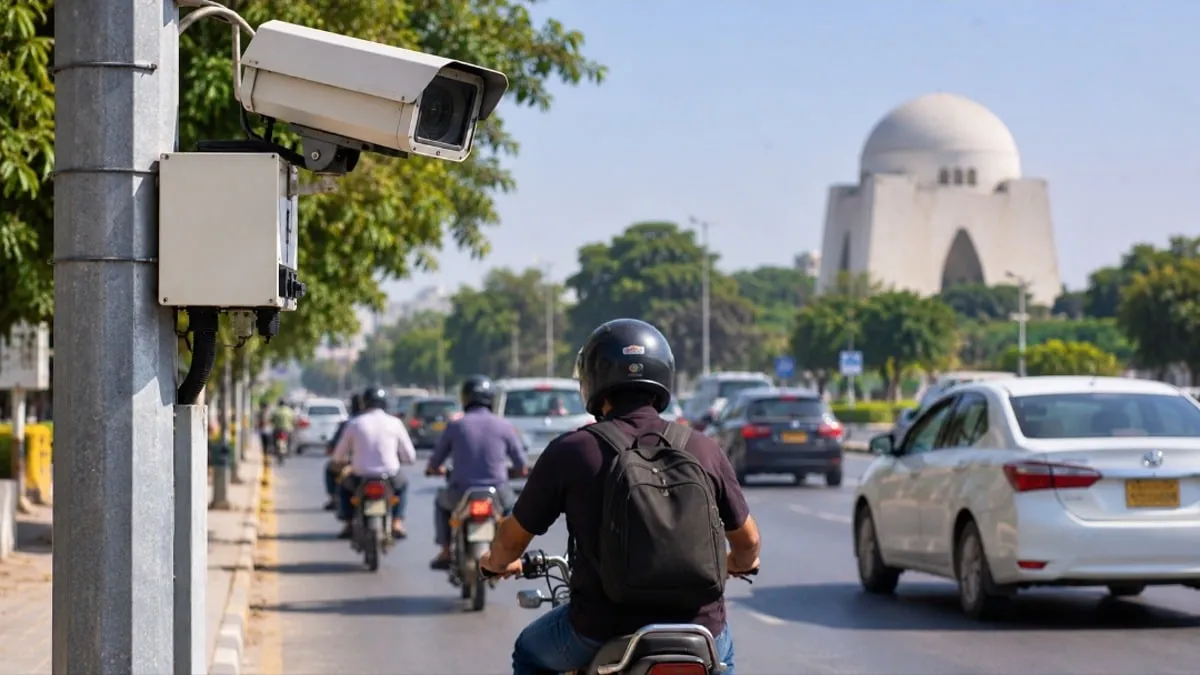
The electronic tracking network, known locally as TRACS, relies on automated cameras and digital monitoring equipment installed at major intersections and thoroughfares throughout the city. By capturing digital evidence of traffic infractions, the system reduces reliance on manual enforcement by patrol officers and aims to create a continuous monitoring environment.
Traffic police figures show that authorities also issued over 715,000 challans to motorists who failed to wear seat belts, making it the second most common violation. Police issued 65,255 challans for speeding, 36,474 for using mobile phones while driving and 34,652 for wrong-way driving.
The sheer volume of tickets highlights the massive scale of daily non-compliance on urban roadways in Pakistan's largest city. Millions of vehicles move through these corridors every day, creating complex logistical challenges for law enforcement agencies attempting to maintain order.
Breakdown of Seat Belt and Helmet Offenses
The two leading categories of infractions, helmet non-compliance and seat belt neglect, account for the vast majority of the nearly 1.947 million traffic violation tickets generated during the operational period. Together, helmets and seat belts make up more than 1.5 million of the total recorded offenses.
Traffic safety advocates point out that protective gear such as helmets and seat belts serve as the first line of defense against severe injuries and fatalities during collisions. The high number of tickets issued for these specific omissions demonstrates that public adherence to basic safety standards remains low despite ongoing public awareness campaigns.
Motorcycle usage is exceptionally high in the city, with millions of riders depending on two-wheelers for daily commuting and commercial deliveries. Consequently, helmet enforcement forms a core component of municipal traffic management strategies.
Automobile drivers likewise exhibit substantial resistance to mandatory seat belt regulations, as evidenced by the 715,000 plus penalties recorded by the digital cameras. Police monitoring units capture these infractions continuously, logging license plate numbers and dispatching notices to registered vehicle owners.
Speeding and Dangerous Driving Infractions Recorded
Beyond personal protection gear, the digital monitoring network captures dynamic moving violations that pose immediate dangers to pedestrians and other motorists. Police issued 65,255 challans for speeding during the first year of operation.
Speeding on major urban corridors frequently leads to high-impact collisions, prompting authorities to deploy automated radar and camera setups to catch speeding vehicles. These devices record vehicle velocities without requiring physical chases by patrol cars.
In addition to excessive velocity, distracted driving remains a persistent hazard on municipal streets. Police issued 36,474 challans for using mobile phones while driving, an offense that significantly increases reaction times and accident risks.
Wrong-way driving represents another severe threat to public safety, resulting in 34,652 challans. Motorists frequently cut corners or attempt to save travel time by driving against the flow of traffic on busy service roads and main avenues.
Parking Violations and Vehicle Fitness Certificates
The figures also show that authorities issued 78,377 challans for parking in no-parking zones. Unauthorized parking frequently causes severe bottlenecks and traffic congestion in commercial districts.
Municipal authorities also penalized another 54,443 motorists for not having fitness certificates and issued 18,519 challans for expired certificates. Vehicle fitness certification ensures that cars and commercial transports meet environmental and mechanical standards required for safe operation.
Unfit vehicles contribute to urban air pollution and mechanical failures that stall traffic flow on critical transit routes. Regular checks on vehicle documentation aim to remove substandard machinery from public roads.
The enforcement mechanism catches these document-based infractions through database checks linked to vehicle registration numbers captured by traffic monitoring cameras across the region.
Additional Traffic Offenses and Total Ticket Volume
Traffic police also penalized thousands of motorists for violating traffic signals, using fancy or concealed number plates and creating obstructions on roads. Signal jumping creates immediate collision hazards at complex junctions where multiple streams of traffic intersect.
Concealed or non-standard number plates hinder both manual policing and automated camera identification, making illegal vehicle modifications a primary target for enforcement units. Road obstructions caused by improper loading or double parking further degrade the capacity of urban transit corridors.
The figures emerged as Karachi's electronic challan system completed its first year of operation, issuing nearly 1.947 million traffic violation tickets in total. This cumulative total encompasses every category of infraction tracked by the digital infrastructure.
The sheer magnitude of the million-mark milestone illustrates both the pervasive nature of traffic infractions and the expansive coverage achieved by the automated monitoring deployment during its inaugural twelve months.
Official Goals and Future Enforcement Strategy
Traffic police chief Pir Muhammad Shah said TRACS aims to discourage traffic violations and improve road safety rather than simply generate revenue. The overarching objective of the electronic enforcement apparatus is to foster a culture of compliance among daily commuters.
Authorities intend to use the data gathered during this first operational year to refine deployment strategies and target high-offense zones. Public notifications and digital challan deliveries ensure that offenders receive prompt notice of their infractions and associated fines.
As the system moves past its initial milestone, law enforcement agencies plan to maintain continuous digital surveillance to drive down violation rates. Long-term improvements in commuter behavior remain the primary benchmark for the success of the electronic traffic management initiative.