Drafted recently, a new blueprint for political and economic stability in Khyber Pakhtunkhwa outlines 206 specific steps spanning 27 government departments. Insiders indicate that this 100- to 180-day strategy concentrates heavily on law and order, administrative frameworks, public service delivery, and economic growth throughout the province and its merged districts.
Scheduled projects during this timeframe involve building and fixing roads alongside resolving hospital medicine shortages. Additional provisions encompass supplying fresh school furniture, upgrading health center amenities, and rolling out youth programs featuring technical instruction and interest-free loans.
Sources explain that the strategy was formulated to guarantee security, refine governance, and drive economic steadiness by prioritizing development reforms. Officials including the provincial government, department advisers, government workers, a former senator, and an interior minister conducted numerous visits and discussions to shape the strategy.
Proposals suggest executing tasks through the Street MPO under the supervision of the Deputy Commissioner Peshawar. The blueprint outlines fixing about 1,150 primary roads, covering 8,000 open manholes, enhancing sanitation at 4,000 spots, clearing roughly 150 blocked drains, and reviving 80 parks.
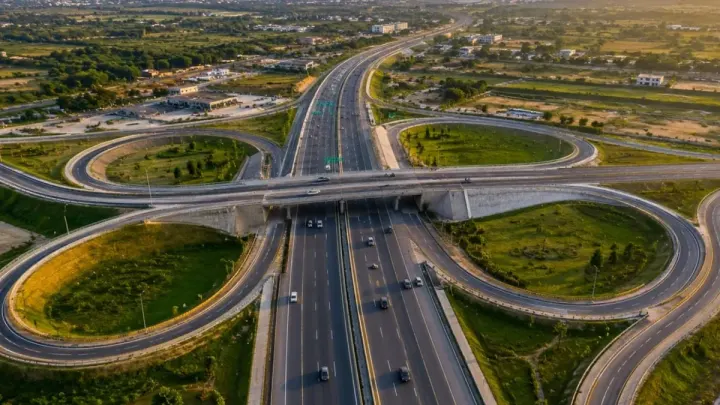
Plans also call for embellishing markets and city buildings across every district, installing solar streetlights along main highways, upgrading 20 congested traffic intersections in Peshawar, and restoring the GT Road alongside unfinished sections of the Ring Road.
Additional suggestions cover building and upgrading the Bannu Bypass, reactivating dormant water supply systems, running basic health centers round-the-clock in specific districts, and upgrading athletic grounds.
Healthcare provisions include offering immunization services at basic health units, operating 250 centers around the clock, maintaining a minimum 80 percent stock of vital medicines, and tracking the attendance of doctors, nurses, helpers, and staff digitally.
Educational initiatives involve upgrading 1,500 schools, supplying desks and seating for roughly 700,000 students, transferring underperforming schools to private management, restoring ruined or closed schools within merged districts, and broadening Rescue 1122 coverage into southern Khyber Pakhtunkhwa.
Youth-focused recommendations feature interest-free financial loans, technical education, job-oriented skills, establishing youth hubs inside government properties, organizing sports tournaments, and supporting business and research initiatives at universities.
Within the energy and mineral sectors, subsidized financial aid for solar home equipment is designated for 65,000 families, prioritizing widows and vulnerable groups.
The strategy further suggests conducting medical examinations for coal miners, offering technical education, digitizing mining records, and opening emergency response centers for mine mishaps in Kohat, Abbottabad, and Buner.
Finally, various titles have been suggested for this blueprint, such as Stable Khyber Pakhtunkhwa and the Khyber Pakhtunkhwa 180-Day Strategic Action Plan.