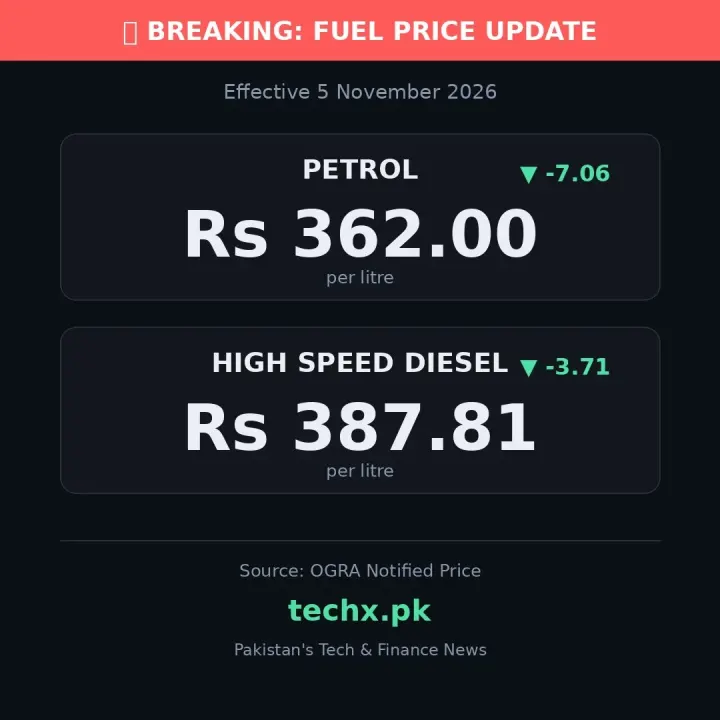
Pakistan's Oil and Gas Regulatory Authority (OGRA) announced on July 17, 2026 that the ex-depot price of Motor Spirit (petrol) fell to Rs. 362.00 per litre and High Speed Diesel (HSD) dropped to Rs. 387.81 per litre, continuing a daily reduction trend introduced earlier this month.
The move is part of a new government policy that revises petroleum product prices every 24 hours to protect the local economy from extreme market volatility caused by the ongoing 2026 fuel crisis.
Why Daily Price Adjustments Were Introduced
In February 2026, Iran blocked shipping traffic through the Strait of Hormuz, a chokepoint that handles roughly 25% of the world's seaborne oil trade. The United States responded with a naval blockade of Iranian ports, and later launched airstrikes to force the strait open. The back-and-forth military actions have repeatedly disrupted oil shipments, creating the largest disturbance to global energy supplies since the 1970s.
Pakistan, a net importer of crude oil, felt immediate pressure on its balance of payments as crude prices surged. To prevent wholesale inflation and protect consumers, the federal government instructed OGRA to shift from a monthly price-setting regime to a daily one, effective July 17, 2026.
How OGRA Sets Daily Prices
OGRA calculates ex-depot prices based on three components: the international spot price of crude oil, the cost of freight and insurance (CIF) to Pakistani ports, and a fixed margin that covers refining, distribution and taxes. Under the daily system, the authority receives updated CIF data each morning, applies the pre-approved margin, and publishes the new rates before markets open.
The daily schedule excludes weekends and public holidays, as stated in an official quote:
These daily adjustments will remain unchanged during weekends (Saturdays and Sundays) and public holidays.This ensures price stability for businesses that operate on a weekly payroll and for consumers who plan purchases around market days.
Impact on Consumers and Businesses
The latest revision shows a Rs. 7.06 drop for petrol and a Rs. 3.71 reduction for diesel compared with the previous day's rates (04/10/2026). For a typical commuter driving 40 kilometres a day, the petrol cut translates to roughly Rs. 2.80 saved per day, or about Rs. 84 per month.
Transport companies, which rely heavily on diesel, see a modest saving of around Rs. 1.50 per litre. Over a fleet of 50 trucks, each consuming 150 litres per day, the collective monthly savings could exceed Rs. 1.1 million. These figures, while modest relative to overall operating costs, provide immediate cash-flow relief and help curb inflationary pressure on food and goods that depend on road transport.
Historical Context of Petroleum Pricing in Pakistan
Since the early 2000s, Pakistan has used a semi-annual price-revision mechanism, adjusting rates based on quarterly reviews of international oil markets. The system was criticized for lagging behind rapid price swings, especially during the 2018 global oil price shock when consumers faced sudden spikes.
The daily model mirrors practices in a few oil-importing nations, such as Kenya and Bangladesh, which adopted similar mechanisms after experiencing supply shocks. In those countries, daily adjustments have been credited with reducing price volatility and limiting speculative trading.
Geopolitical Drivers of the 2026 Crisis
The US-Israel war on Iran, which began in early 2026, escalated tensions in the Persian Gulf. Iran's closure of the Strait of Hormuz in February halted the flow of an estimated 20-25 million barrels per day. The United States' retaliatory blockade and subsequent airstrikes in July further compounded the disruption.
A brief ceasefire in June offered a temporary reprieve, but the truce collapsed on July 8 after renewed strikes on commercial vessels. Iran responded by sealing the strait again, prompting the US to launch consecutive airstrikes aimed at reopening the passage. The ongoing crossfires have kept global oil markets on edge, pushing Brent crude above US$110 per barrel for much of the summer.
What Comes Next for OGRA and the Pakistani Market
OGRA has indicated that the daily pricing framework will remain in place until the international supply situation stabilises. No specific end date has been announced, but the authority will review the policy every six months to assess its effectiveness.
Stakeholders are advised to monitor the following indicators:
- International Brent and WTI crude price movements, published daily by major exchanges.
- Updates from the Ministry of Energy on any diplomatic developments affecting the Strait of Hormuz.
- Domestic inflation reports from the Pakistan Bureau of Statistics, particularly the food and transport components.
Consumers can expect further price adjustments in the coming days, with the possibility of additional reductions if global oil shipments improve.
Practical Takeaways for Readers
1. Fuel prices will be announced each morning; checking local news or the OGRA website before filling up can ensure you pay the latest rate.
2. Businesses should factor daily price volatility into budgeting, especially for logistics and delivery services.
3. The government's daily adjustment policy is designed to prevent sudden spikes, but it does not eliminate the underlying impact of global supply disruptions.
By staying informed about both international developments and daily price releases, Pakistani consumers and businesses can better navigate the uncertain fuel market.