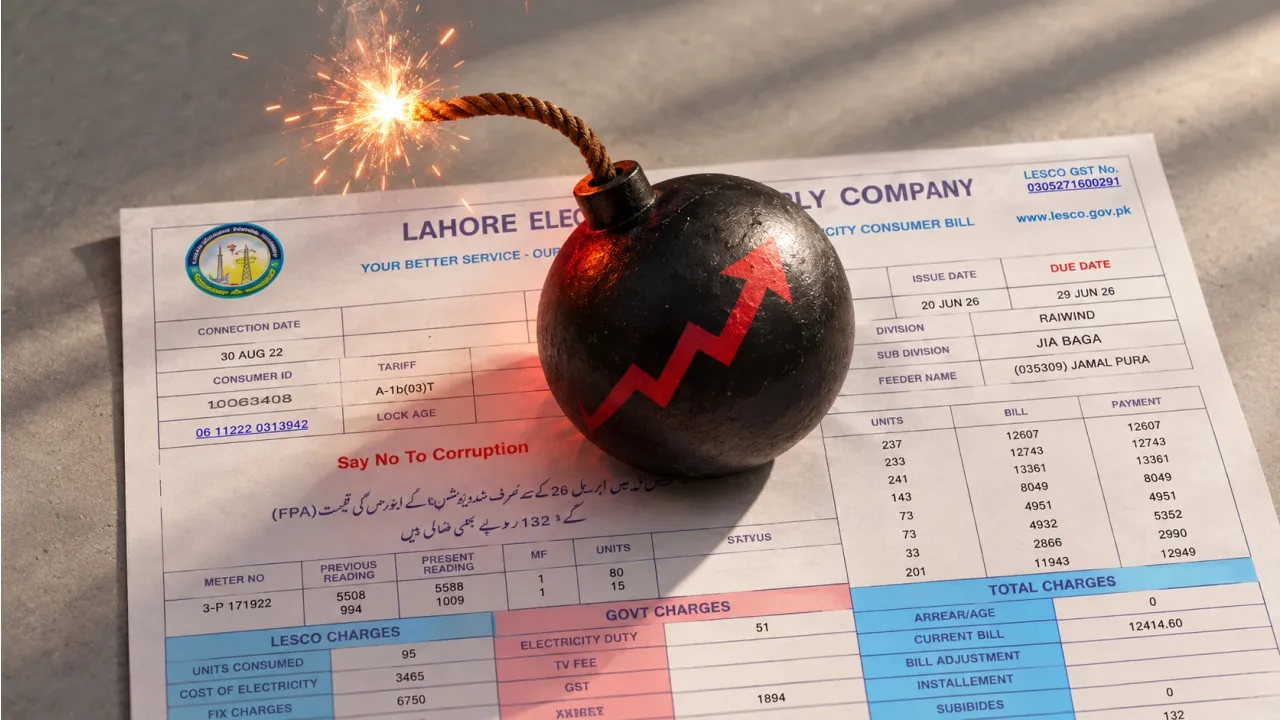
Electricity users all over Pakistan might encounter an extra Rs. 32.7 billion charge on their November utility bills because the Power Division estimated a fuel price adjustment of Rs. 2.56 per unit for power used during September 2026.
This estimated adjustment sits Rs. 1.45 per unit above the August fuel price adjustment of Rs. 1.11 per unit, though regulators will make the final decision.
The Power Division stated that planned load management throughout September kept the anticipated rise down, noting that without those steps, the adjustment might have hit Rs. 3.44 per unit.
Cutting off power delivery for roughly two to two and a half hours each day cut down the demand for electricity generated by costly fuels like high-speed diesel and furnace oil.
Providing imported re-gasified liquefied natural gas to power stations at local gas rates also brought down the projected adjustment by 83 paisa per unit.
Officials blamed higher global fuel costs and tight liquefied natural gas availability for the mounting pressure on power bills.
Area conflicts and supply chain issues caused by the shutting of the Strait of Hormuz drove Brent crude rates past $120 per barrel, contrasting with the nearly $70 per barrel baseline tied to the standard electricity rate.
Even though Qatar declared force majeure, Pakistan kept working to obtain re-gasified liquefied natural gas via existing contracts and extra spot shipments when necessary, according to the Power Division.
The division additionally noted that the total effect of fuel adjustments and quarterly tariff changes between January and August stayed at 65 paisa per unit, matching 1.9 percent of the standard electricity rate.
Officials connected this outcome partly to tariff adjustments and a special electricity usage plan aimed at farm and factory users.
Factories and industrial users, meanwhile, disputed the advantages of this support program, stating that its marginal rate of Rs. 22.96 per unit serves only a small sector.
They claim the true marginal expense of roughly Rs. 34 per unit leaves an extra cost near Rs. 11 per unit that gets shifted onto the general tariff, impacting other buyers too.
Answering an appeal from industrial users, the National Electric Power Regulatory Authority conducted a public session last week regarding whether to alter or halt the incremental consumption plan, and a ruling remains awaited.
The Power Division reported it will keep tracking global fuel markets and supply routes to reduce how much external price spikes affect electricity buyers.