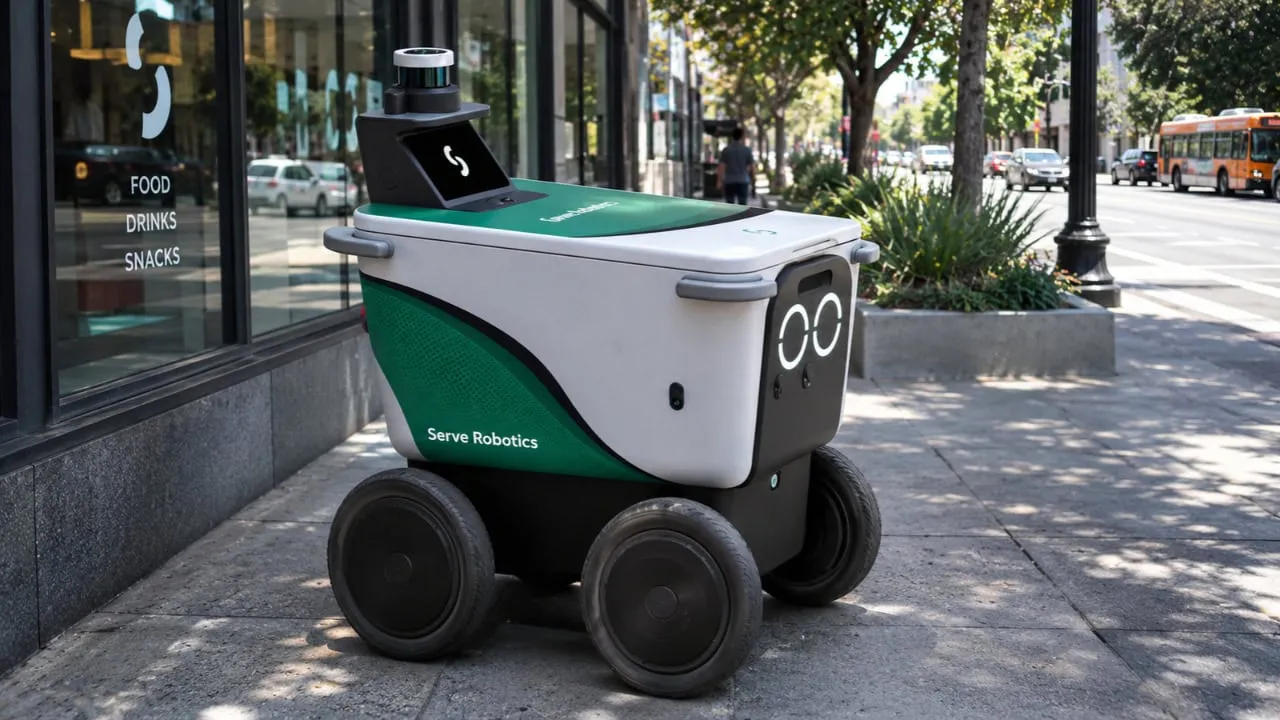
Serve Robotics Announces Physical AI Services
Serve Robotics no longer wants to just deliver food on sidewalks. The company now wants to power everyone else's robots too. The publicly traded maker of autonomous delivery bots announced a new business line called Physical AI Services on Thursday. It will sell the connectivity and data tools that Serve originally built for its own fleet to other robotics companies.
CEO Ali Kashani compared the move directly to Amazon's creation of AWS. He stated that the company is taking the technology built for its own use and opening it up for more people to build upon. The Amazon parallel is deliberate and instructive. AWS started as internal infrastructure that Amazon built to run its own retail operations. It eventually became a standalone cloud business that now generates more profit than retail itself. Kashani learned that playbook firsthand and believes robotics has reached the same inflection point. When the technology is new, you build everything yourself. However, once it matures, you open the platform.
What Are the Products in Physical AI Services?
Physical AI Services launches with three specific products designed to help other robotics companies manage their fleets and train their models. The first product, called Serve Link, connects robots in the field to AI systems running in data centers. This matters because many robots lack the onboard computing power to run large AI models. Serve Link handles unreliable cellular networks and maintains high-performance connections despite patchy coverage. The company also announced a partnership with T-Mobile to bring AI computing closer to robots through edge infrastructure.
The second product curates real-world data that robots collect. Every autonomous machine generates enormous volumes of sensor data during operation. However, finding the specific edge cases that actually improve an AI model is like searching for needles in a haystack. Serve's data curator tool automates that search and feeds relevant examples back into training pipelines.
The third offering goes even further. Serve built a foundation-model data catalog drawn from its own delivery fleet's experience navigating sidewalks, pedestrians, and complex human environments. Other robotics companies can license this catalog to teach their own AI models how real-world spaces work, without collecting all that data themselves.
Early Customers and Industry Adoption
Serve already has its first customer for the new business. Bedrock Robotics, a startup developing self-driving construction equipment, uses the platform. This early adoption marks the first test of whether external firms will embrace tools originally designed for delivery bots.
Turning internal tools into a commercially viable platform requires external demand that does not yet exist at volume. Kashani is betting it will as the broader robotics industry matures and demands specialized infrastructure.
The History and Growth of Serve Robotics
Meanwhile, Serve's core delivery business continues expanding. The company spun out of Uber's Postmates acquisition in 2021 and went public in 2024. It currently builds two types of robots: its signature googly-eyed sidewalk delivery bot and a hospital assistant robot it acquired through Diligent Robotics earlier this year. Additionally, its delivery partnerships now extend beyond Uber to include DoorDash and Wonder.
The bigger question is whether the AWS analogy holds. Amazon had massive internal demand that validated its infrastructure before external customers arrived. Serve's fleet, while growing, operates at a far smaller scale.
Future Outlook for Autonomous Infrastructure
As the robotics sector grows, companies face mounting hurdles in connectivity and data processing. Edge computing partnerships, such as the one with T-Mobile, aim to resolve latency issues for machines operating in dynamic outdoor environments. Data curation tools also address the high costs of sorting through hours of redundant sensor recordings.
Industry watchers will monitor how quickly other startups adopt these offerings. If successful, infrastructure licensing could transform specialized robot makers into foundational technology providers across multiple automated industries.