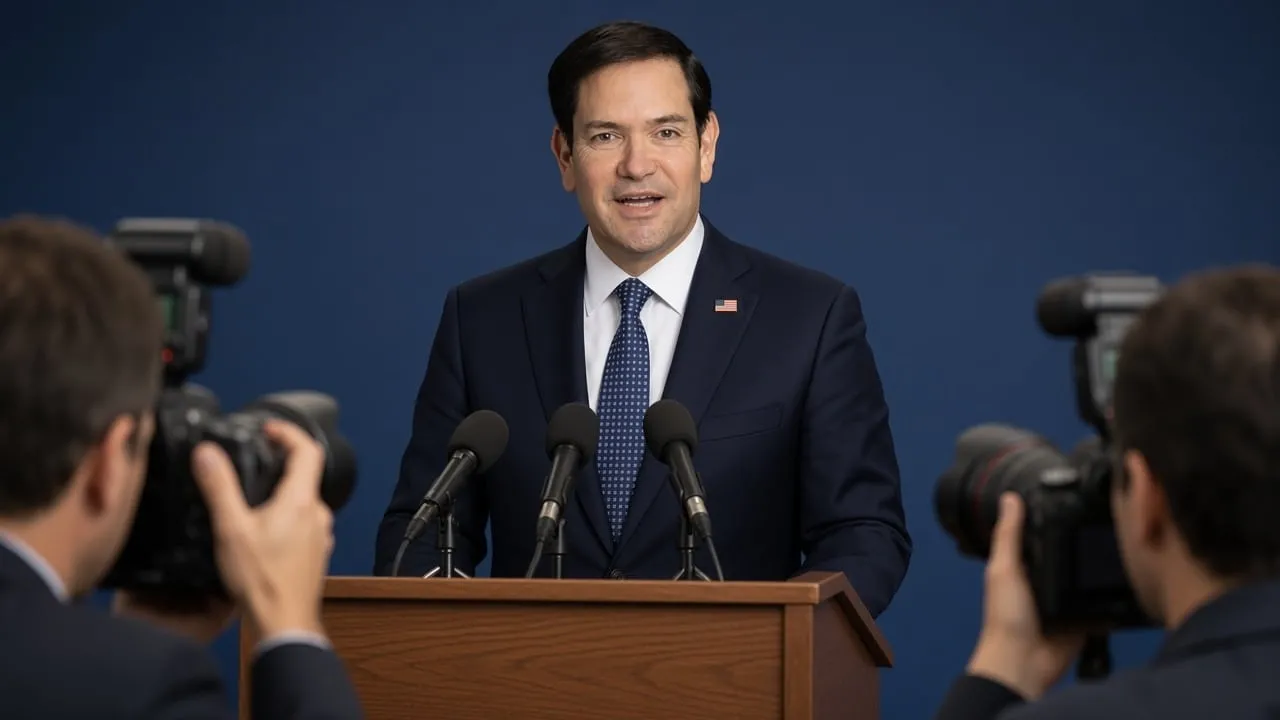
US Secretary of State Marco Rubio stated on October 31 that Washington opposes Pakistan facing terrorism, while recognizing Islamabad's worry that strikes against the nation originate from Afghan soil and that the Taliban fail to properly restrict them. He noted the US would intervene if it could act productively.
Rubio spoke during a press conference on October 31 concluding the G20 Foreign Ministers' Meeting in Atlanta, Georgia, responding to an inquiry regarding disputes between Pakistan and the Taliban administration in Afghanistan.
What Rubio Said About Pakistan and the Taliban
A journalist questioned Rubio regarding regional friction, pointing out that Russia tried mediating between the two countries. Rubio answered:
“Pakistan is concerned about terrorist attacks that are being sponsored from the territory of Afghanistan. They feel as if the Taliban has not done enough to constrain those attacks, and they've taken action against it. We obviously have heard those concerns on their part. We obviously don't want them to be targeted for terrorism.”
He continued, “So if there's a productive role for us to play, we would play it. We don't necessarily have the closest relationship with the Taliban, as you can imagine.”
Rubio concluded by mentioning the US witnessed certain attacks cited by Pakistan and opposed terrorism regardless of origin or target.
Why This Matters for Pakistan
These statements carry weight as they originate from the top American diplomat at an international event, aligning with arguments Pakistan maintained for over a year regarding groups like the banned Tehreek-e-Taliban Pakistan using Afghan land for domestic assaults.
Meanwhile, Rubio refrained from promising any fresh American actions, offering assistance only if Washington proves helpful while noting limited relations with the Taliban. This represents diplomatic backing for Islamabad instead of an operational pledge.
The statements follow remarks made under a week prior where Rubio expressed a desire for increased American influence concerning Pakistan, indicating Islamabad gained importance on Washington's schedule.
Where Pakistan-Afghanistan Talks Stand
Multiple nations attempted easing friction between Kabul and Islamabad.
Qatar and Turkiye arranged a Doha ceasefire last October, though subsequent Istanbul discussions failed the following month. Saudi Arabia arranged meetings as well, and China hosted bilateral talks in Urumqi during April of this year. None resolved the main disagreement concerning militant factions based in Afghanistan.
Earlier in the year, Pakistan halted Operation Ghazab lil-Haq against Afghanistan, though cross-border raids persist. Following a September 18 Kohat strike, Pakistan attacked Afghan land on September 24 and October 1.
Russia, which formally acknowledges the Taliban administration, offered mediation if requested by both parties. Still, the October 5 Moscow Format conference on Afghanistan concluded sans a joint declaration due to disagreements between Pakistani and Afghan representatives over terrorist network terminology.
Pakistan maintained openness to negotiations, stating discussions remain conditional.