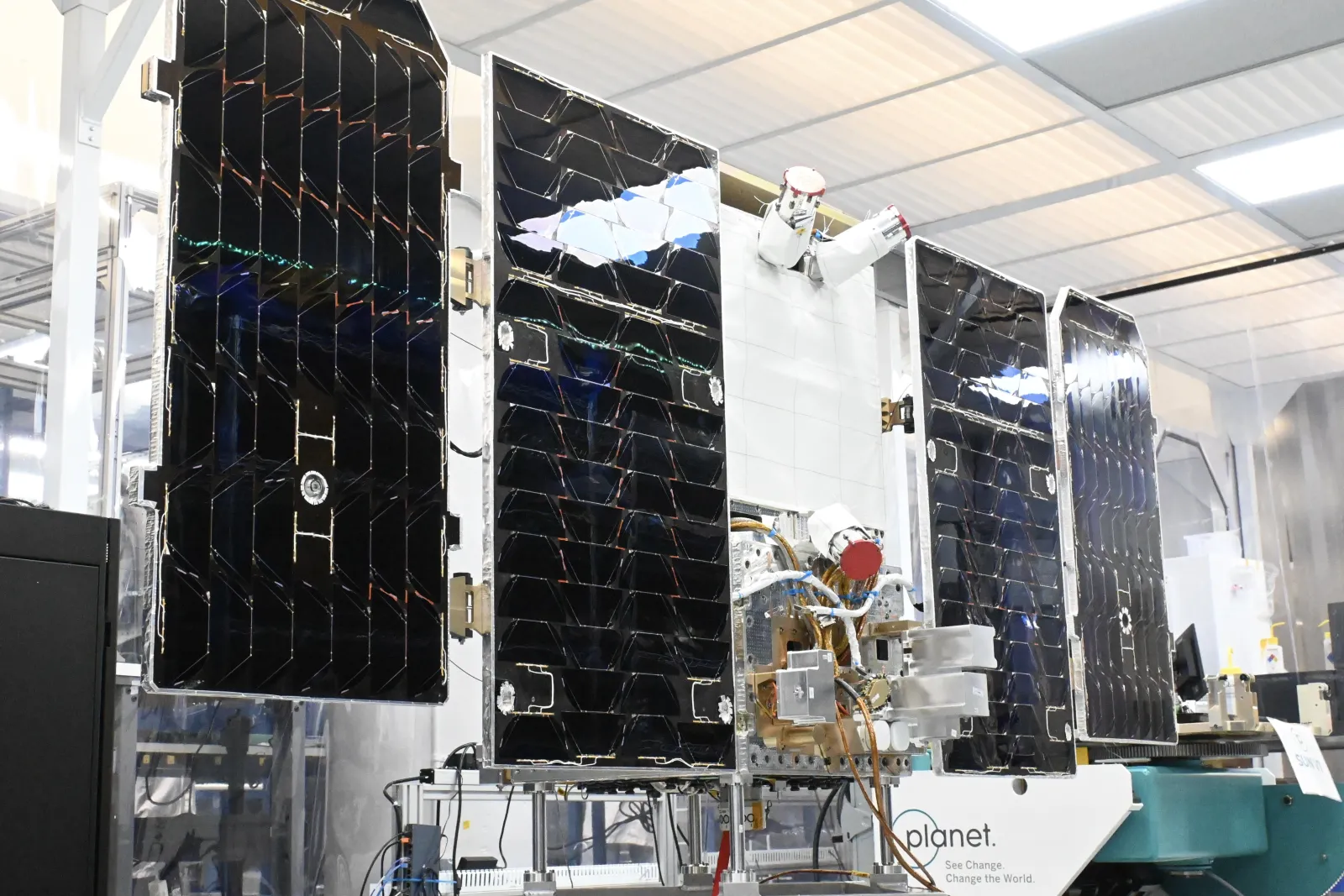
Google Suncatcher's experimental space data center is currently active and talking to Earth following its launch earlier this month aboard a SpaceX Falcon 9 rocket alongside over 100 other spacecraft.
Equipped with a single Google Tensor Processing Unit and capable of producing up to 1 kW of electrical power, the satellite aims to clear the path for future fleets of orbiting spacecraft that handle heavy inference tasks. Because the processor requires substantial energy, it can only operate for about twenty minutes per session, which adds difficulty to space-to-ground data links.
Following a three-week checkout phase to check spacecraft systems, the unit began operations. When mission controllers transmitted an initial prompt this week, they directed the onboard Google DeepMind Gemma 4 model to compose a haiku about orbital existence, resulting in the following verse:
Blue marble below
Data streams in silent grace
Starlight feeds my core. ✨
Google reported testing the system with space-themed limericks and having the craft relay telemetry regarding surrounding orbital conditions.
A spokesperson told TechCrunch that the spacecraft functions nominally.
Current trials will monitor hardware resilience against thermal stress and cosmic radiation. Although Google previously evaluated its processors using terrestrial particle accelerators, engineers must now observe actual space radiation effects on the silicon. Radiation triggers bit flips that alter stored memory values and corrupt data without alerting standard diagnostic software.
Ground simulations indicated radiation would affect model training more than inference tasks, and the team will now evaluate these factors in real conditions.
If this initial processor succeeds, the follow-up phase involves launching two additional spacecraft carrying advanced chips in 2027, featuring higher power output and optical inter-satellite connections.
Google's Starcloud initiative stands out among orbital data center concepts by planning high-speed inter-satellite connections for distributed workloads, whereas rival systems like SpaceX intend to use laser links with satellites spaced too widely for shared processing. Firms such as Starcloud and Cowboy Space plan to run inference tasks on standalone units.
Google and SpaceX share close ties through Alphabet's financial investment in SpaceX, and both entities rely on the development of Starship, the reusable heavy-lift rocket central to Elon Musk's space strategy.
A peer-reviewed study released earlier this month by Suncatcher researchers calculated that SpaceX needs 1,800 Starship flights to match the cost efficiency gains achieved by its past rockets. Suncatcher represents a long-term research effort focused on 2030s infrastructure, though progress may be influenced by broader financial pressures tied to recent AI search integration impacting Alphabet's advertising revenue and stock price this week.