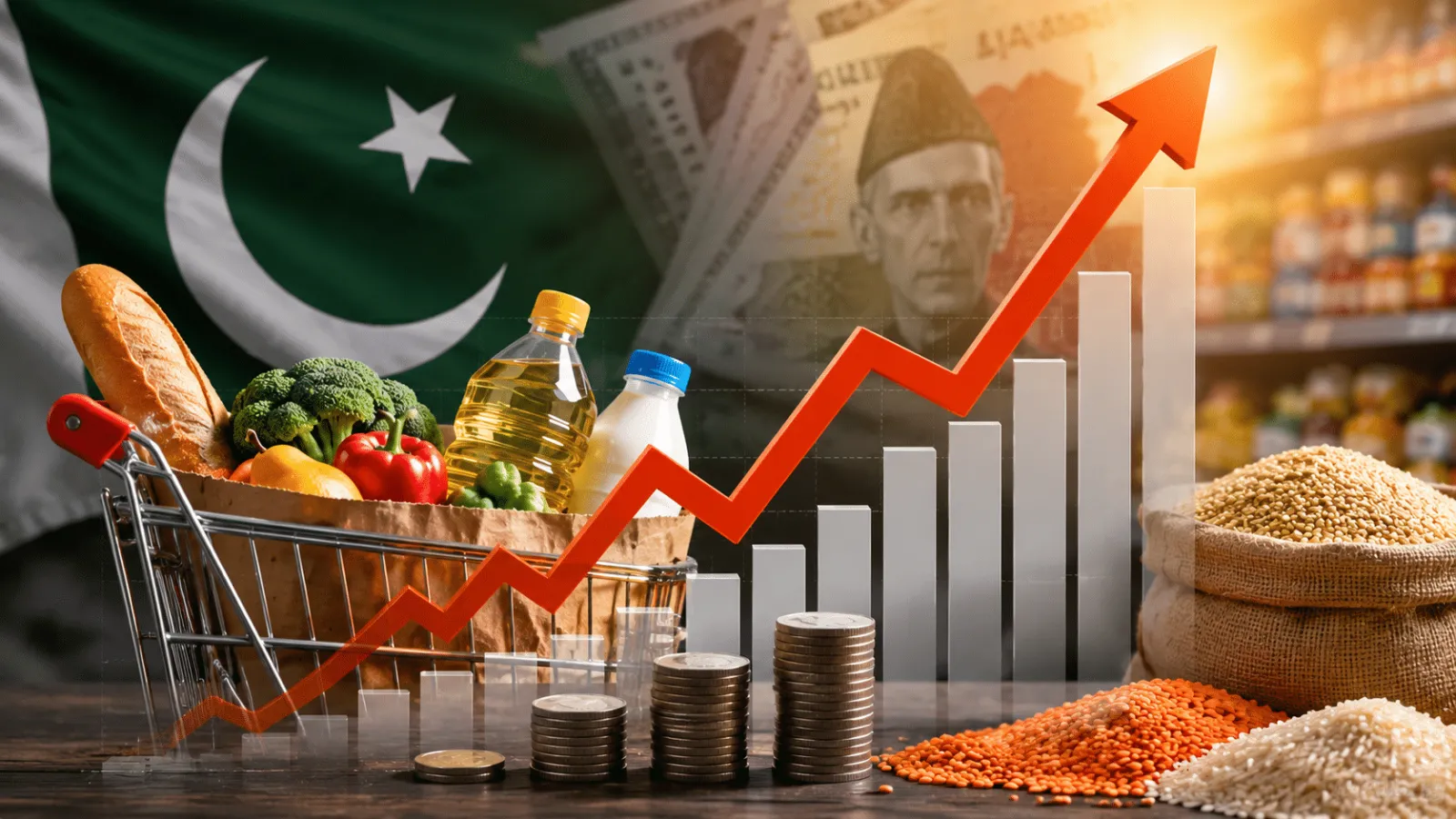
Pakistan's economy expanded by 3.7 percent in fiscal year 2025-26, while average inflation increased to 7.1 percent from 4.5 percent a year earlier, according to a World Bank report.
The data underscore ongoing growth alongside heightened price pressures from higher energy and food costs.
World Bank forecasts indicate the economy will grow by 3.8 percent in FY27, with inflation expected to rise to 8.2 percent, highlighting the challenge of sustaining growth while curbing inflation in the current fiscal year.
Service activities grew 4.1 percent and agriculture rose 2.9 percent, partly boosted by livestock. The report also mentioned that rating agencies S&P and Moody's upgraded Pakistan's credit ratings.
Pakistan issued Eurobonds worth $750 million and secured $3 billion in international markets, while foreign exchange reserves hit $19.7 billion. The fiscal deficit narrowed to 2.6 percent of GDP.
Inflation Accelerates as Energy Costs Rise
Inflationary pressures heightened in the second half of FY26, driven by rising global energy prices after the Middle East conflict, higher wheat and perishable food prices, and fuel cost pass-through.
Average headline inflation was about 5.5 percent between July 2025 and February 2026, then jumped to an average of 10.2 percent from March to June, peaking at 11.7 percent in May 2026.
Food prices also rose after earlier moderation linked to flood disruptions. Average food inflation reached 4.3 percent in urban areas and 5.4 percent in rural areas during the fiscal year.
Energy prices surged between February and June 2026, with petrol up roughly 36 percent, high-speed diesel 31 percent and LPG 46 percent. Transport fares rose about 30 percent in the same period.
This push lifted urban energy inflation from 11.7 percent in February to 26.8 percent in June, while rural energy inflation climbed from 5.7 percent to 27.6 percent. Core inflation, excluding food and energy, averaged 7.4 percent in urban areas and 8.5 percent in rural areas during FY26; urban core inflation hit 9 percent in May as transport costs spread to other prices.
The report noted the State Bank of Pakistan raised its policy rate to 11.5 percent amid the shifting inflation landscape.