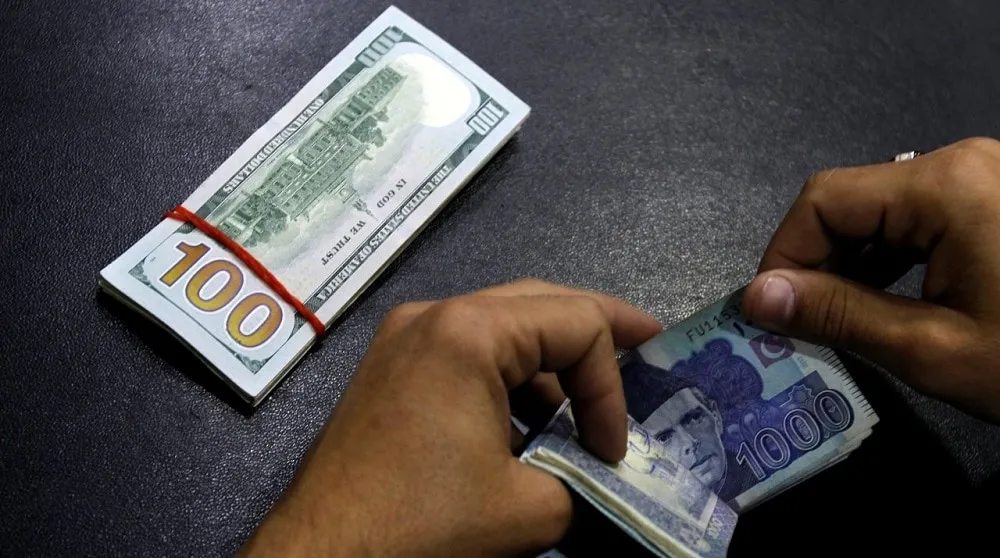
Pakistani Rupee Extends Winning Streak Against US Dollar
The Pakistani rupee closed in green against the US dollar for the 274th consecutive day on Monday, maintaining a prolonged period of stability for local currency markets. The domestic currency finished the session at 276.72 after gaining three paisas against the US dollar on the day. Market participants watched the opening sessions of November closely as the local currency extended a trend that has persisted for nearly ten months.
Official exchange figures confirm that the ongoing stretch of consecutive daily gains began on December 25, 2025. This extended period of relative calm in the foreign exchange market contrasts with historical volatility. Analysts and traders monitor these daily movements to gauge the broader health of external accounts and central bank reserve management.
How the Pakistani Rupee Performed Against Other Major Currencies
While the domestic currency advanced against the greenback, its performance varied widely when measured against other global legal tenders. Currency markets recorded mixed results across European, Asian, and North American units during the same trading session. The rupee lost 32 paisas against the British Pound, reflecting downward pressure on the local currency relative to sterling.
At the same time, the domestic currency lost 38 paisas against the Euro, indicating a broader weakening trend against major European economies. However, the currency managed to secure a gain of 13 paisas against the Australian Dollar. Against regional and North American peers, the performance showed similar divergence, requiring traders to balance multi-currency portfolios carefully.
Detailed Breakdown of Currency Movements in Early November
Closer inspection of the trading tables for late October and early November provides a clear picture of day-to-day fluctuations. Official records show the US dollar trading at 276.7736 on October 28, moving to 276.7618 on October 29, and 276.7522 on October 30, before reaching 276.7219 on November 2. This steady downward movement in the value of the dollar relative to the local currency accounts for the continuous streak of gains.
Other currencies experienced distinct trajectories over the same four trading dates. The Euro moved from 307.8553 on October 28 to 310.1775 by November 2, registering a loss of 0.3810 for the local currency. The British Pound climbed from 367.8599 to 371.5129 over the same window, resulting in a loss of 0.3190 for the rupee.
Meanwhile, the Australian Dollar moved from 194.6549 down to 194.3694, yielding a positive change of 0.1321 for the domestic currency. The Malaysian Ringgit moved from 67.8783 to 67.9907, showing a change of 0.2505. Chinese Yuan figures shifted from 41.5158 to 41.6389, marking a loss of 0.0567 for the rupee.
Stability Against Regional Pegs and Gulf Currencies
The domestic currency showed notable stability when measured against key Gulf and North American counterparts at the start of the month. The Canadian Dollar moved marginally from 196.8798 on October 28 to 198.1610 on November 2, leaving the rupee with a minor gain of 0.0075. Trading in the UAE Dirham remained essentially flat, moving from 75.3536 to 75.3466, recording a minimal change of 0.0001.
Similarly, the Saudi Riyal moved from 73.7552 down to 73.7335 over the four recorded sessions, granting the local currency a gain of 0.0120. These regional currencies often maintain tight relationships with the US dollar, meaning their movements closely mirror the primary exchange rate dynamics observed in the interbank market.
Understanding Interbank Foreign Exchange Operations
Foreign exchange markets in Pakistan operate through interbank platforms where authorized dealers, commercial banks, and financial institutions buy and sell currencies. The State Bank of Pakistan oversees these transactions, setting regulatory frameworks and intervening when necessary to manage excessive volatility. Daily closing rates reflect the weighted average of rates at which commercial banks execute transactions during the session.
Maintaining a stable exchange rate requires careful coordination of monetary policy, interest rates, and trade balances. Import payments and export receipts dictate the fundamental demand and supply dynamics for the US dollar within the banking system. Remittances sent home by overseas workers also contribute significantly to the supply of foreign exchange, supporting the local currency's value over extended periods.
Impact on Imports, Exports, and Domestic Inflation
A stable or strengthening domestic currency has direct implications for everyday economic activity within the country. Businesses relying on imported raw materials find budgeting more predictable when exchange rate fluctuations remain minimal over hundreds of sessions. Importers pay fewer local currency units per dollar, which can help temper cost-push inflation for manufactured goods and energy supplies.
Conversely, exporters sometimes face competitive pressures when the local currency gains strength, as their overseas earnings convert into fewer units at home. However, macroeconomic stability benefits the broader commercial environment by reducing uncertainty and anchoring inflation expectations among consumers and business owners alike. Financial analysts continue to track these daily figures to understand how external trade balances influence the foreign exchange reserves held by the central bank.