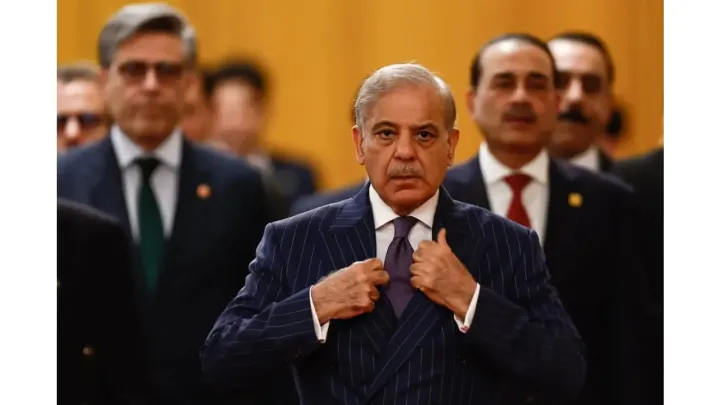
Prime Minister Tasks FBR Chairman With Restructuring Pakistan Agricultural Research Council
Prime Minister Shehbaz Sharif has tasked the Federal Board of Revenue chairman with reviewing the reform and restructuring plan of the Pakistan Agricultural Research Council, sources reported on November 19, 2026. The directive was issued during a performance review meeting of the Ministry of National Food Security and Research held on November 19, 2026, according to sources. Under the directive, the FBR Chairman is responsible for reviewing PARC's reform and restructuring plan, with a deadline of two weeks. This high-level intervention places a crucial scientific and administrative institution under the direct scrutiny of the nation's chief tax official, signaling a new phase in government oversight.
The decision to involve the tax authority chief in agricultural administration highlights the administration's urgent push to streamline public sector entities. By imposing a strict two-week timeline, the leadership demands rapid administrative evaluations to reverse systemic inefficiencies that have long plagued national food security institutions. Observers are closely watching how this dual mandate will unfold as the government attempts to optimize state resources and improve operational outputs across different ministries.
What is the Pakistan Agricultural Research Council
PARC is Pakistan's national agricultural research body, responsible for coordinating research aimed at improving crop productivity, livestock, agricultural technology and food security. Established to act as the apex scientific organization at the federal level, the council collaborates with provincial departments to introduce modern farming techniques and high-yield seed varieties. Its mandate covers a wide spectrum of rural development, encompassing soil science, water management, pest control, and socio-economic studies pertinent to agrarian communities across the provinces.
Despite its critical mandate, the institution has faced mounting administrative and financial hurdles over the years. Its restructuring follows a broader government-led reform drive after assessments identified problems including outdated research facilities, overlapping responsibilities between federal and provincial institutions, weak commercialization of research and limited coordination with farmers and industry. These structural bottlenecks have historically restricted the translation of laboratory breakthroughs into practical field applications for ordinary farmers.
Background of Public Sector Reforms in Pakistan
The push to reorganize agricultural research aligns with a wider national strategy to right-size federal ministries and autonomous bodies. Successive governments have grappled with bloated bureaucratic structures and recurring budget deficits that constrain development spending. Administrative reviews often target entities where overlapping jurisdictions between federal and provincial authorities create redundant expenditures without delivering proportional public services.
Institutional streamlining gained renewed urgency under recent fiscal stabilization programs, which mandate rigorous audits of state-owned enterprises and research councils. Independent evaluations frequently point to inadequate laboratory infrastructure, stagnant operational budgets, and insufficient linkages with the private sector as primary impediments to public scientific output. By tasking senior economic managers with targeted institutional reviews, the government attempts to inject corporate efficiency and accountability into traditional bureaucratic frameworks.
Can FBR Chairman Handle Another Major Assignment
The decision also raises questions about the FBR chairman's existing responsibilities, particularly as the tax authority faces pressure to meet its annual revenue target of Rs. 15.264 trillion, expand the tax net to include retailers and improve collection performance. The Federal Board of Revenue operates as the principal revenue collection agency of the state, bearing the heavy burden of funding public expenditures and meeting stringent international financial commitments. Managing complex domestic taxation policies requires constant administrative focus, legal enforcement, and extensive stakeholder engagement with the business community.
The FBR collected Rs. 4.089 trillion during the first four months of FY2026-27, falling short of its target by Rs. 96 billion. This shortfall illustrates the immense pressure currently resting on the tax administration as officials attempt to plug revenue leaks and bring undocumented sectors into the tax fold. With the tax authority already missing its cumulative targets, assigning its chairman another major restructuring task raises questions about how the additional responsibility will affect his ability to oversee tax reforms and revenue collection.
Impact on Tax Collection and Agricultural Governance
The intersection of tax administration and agricultural research reform introduces notable complexities for federal governance. While administrative restructuring aims to eliminate waste and optimize institutional performance, dividing the attention of key bureaucrats risks diluting focus on core revenue objectives. Business leaders and tax experts frequently argue that the national tax machinery must remain laser-focused on broadening the tax base rather than absorbing extraneous institutional mandates.
Conversely, proponents of cross-departmental assignments argue that senior technocrats possess the administrative acumen required to cut through bureaucratic red tape. Bringing external oversight from the revenue division might introduce financial discipline and rigorous asset tracking into agricultural research management. Nevertheless, the ultimate success of this initiative will depend on how effectively the leadership balances immediate revenue collection goals with long-term institutional restructuring objectives.
What Comes Next for PARC and the FBR
The immediate focus remains on the strict two-week deadline set for the FBR chairman to evaluate and report on the restructuring blueprint. Within this timeframe, the tax chief must analyze PARC's operational framework, financial allocations, and administrative bottlenecks to formulate actionable recommendations. These findings are expected to shape subsequent cabinet decisions regarding budget allocations, staff rationalization, and potential decentralization measures for the research council.
Stakeholders in the agricultural sector, along with federal auditors, will monitor the outcomes of this review to determine whether the restructuring process leads to tangible improvements in crop productivity and resource utilization. At the same time, observers will track monthly revenue figures from the tax authority to assess whether the additional workload impacts fiscal performance. The coming weeks will reveal how the government intends to reconcile its dual ambitions of aggressive tax collection and comprehensive public sector reform.