Rawalpindi Underpasses Reach Seventy Five Percent Completion
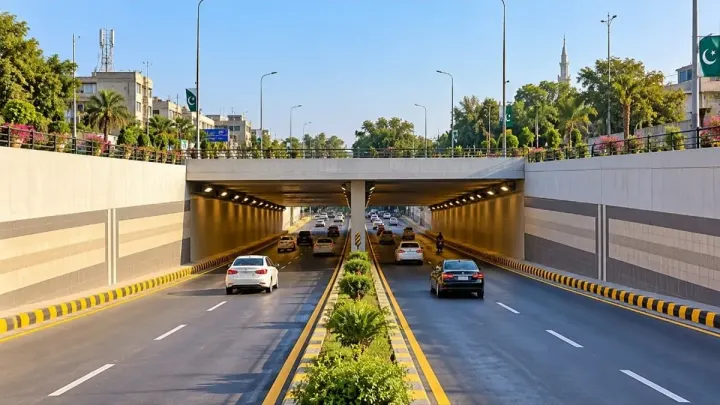
Construction work on two major underpasses in Rawalpindi, located at Race Course Park and Charing Cross, has reached 75% completion. District administration officials report that both projects remain on track to finish by the end of December. The Punjab Highway Department is executing the construction as part of a larger initiative to ease chronic traffic congestion in the region.
Commuters in Rawalpindi have faced severe delays along Peshawar Road and surrounding arteries for years. The addition of these two grade-separated crossings is designed to keep vehicular traffic moving without interruption. Local authorities are closely monitoring the construction timeline to ensure workers meet the December target.
Details of the Race Course Park and Charing Cross Projects
The underpass at Race Course Park will feature two dedicated lanes for northbound traffic. Engineers have designed a three-level road arrangement at this location to facilitate smooth vehicle movement and turning maneuvers. This layout specifically addresses the heavy turning volumes that typically cause bottlenecks near the park.
Meanwhile, the Charing Cross underpass will accommodate southbound traffic through two underpass lanes. This structure incorporates two-level road lanes to handle the high volume of vehicles heading south toward key commercial and residential districts. Both designs reflect careful traffic engineering aimed at maximizing throughput.
Peshawar Road Rehabilitation and Utility Relocation Work
In addition to the underpass construction, the Punjab Highway Department is rehabilitating and expanding the road stretching between Bungalow No. 276 and Raffay Mall on Peshawar Road. This widening project addresses physical capacity constraints that have long plagued this busy thoroughfare. Workers are actively expanding the paved surface to handle increased vehicle counts.
A critical component of the Peshawar Road work involves shifting utility services underground. Moving electricity, telecommunication, and water lines beneath the surface reduces roadside obstructions significantly. This infrastructure upgrade improves sightlines, protects utility lines from weather damage, and creates a cleaner environment for local businesses and pedestrians.
The Broader Twenty Five Kilometer Signal Free Corridor Plan
The two underpasses form a vital part of a wider 25-kilometer signal-free corridor connecting Koral Chowk with Motorway Chowk. This ambitious transportation network seeks to link major entry and exit points across Rawalpindi. The overarching strategy relies on removing traffic signals at key intersections to maintain a continuous flow of vehicles.
Several other components are already finished or underway as part of this master plan. The project includes the completed remodelling of Kutchery Chowk and the construction of the General Post Office underpass. These earlier phases have already demonstrated the benefits of grade separation in the city center.
Coordination Among National and Local Development Authorities
Multiple government bodies are sharing the workload to deliver the 25-kilometer corridor. The National Highway Authority is currently rehabilitating the road section between Motorway Chowk and Chur Chowk. This segment connects the urban core directly to the major highway network.
At the same time, the Rawalpindi Development Authority plans to rebuild Old Airport Road between Koral Chowk and Ammar Chowk. This multi-agency cooperation ensures that all connecting routes receive necessary upgrades simultaneously. Division of labor allows specialized departments to handle roads within their specific jurisdictions efficiently.
Expected Timeline and Travel Time Reductions for Commuters
The Punjab government has established a target to complete the entire signal-free corridor by June 2027. This long-term schedule accounts for heavy civil engineering works across multiple congested urban zones. Officials project that final completion will drastically alter daily commutes across the city.
Once all segments finish, the project seeks to reduce travel time between Islamabad Expressway and Motorway Chowk to 15 to 20 minutes. Current travel times during peak hours often exceed an hour over the same distance. Shorter transit durations will benefit daily workers, commercial transporters, and emergency service vehicles alike.