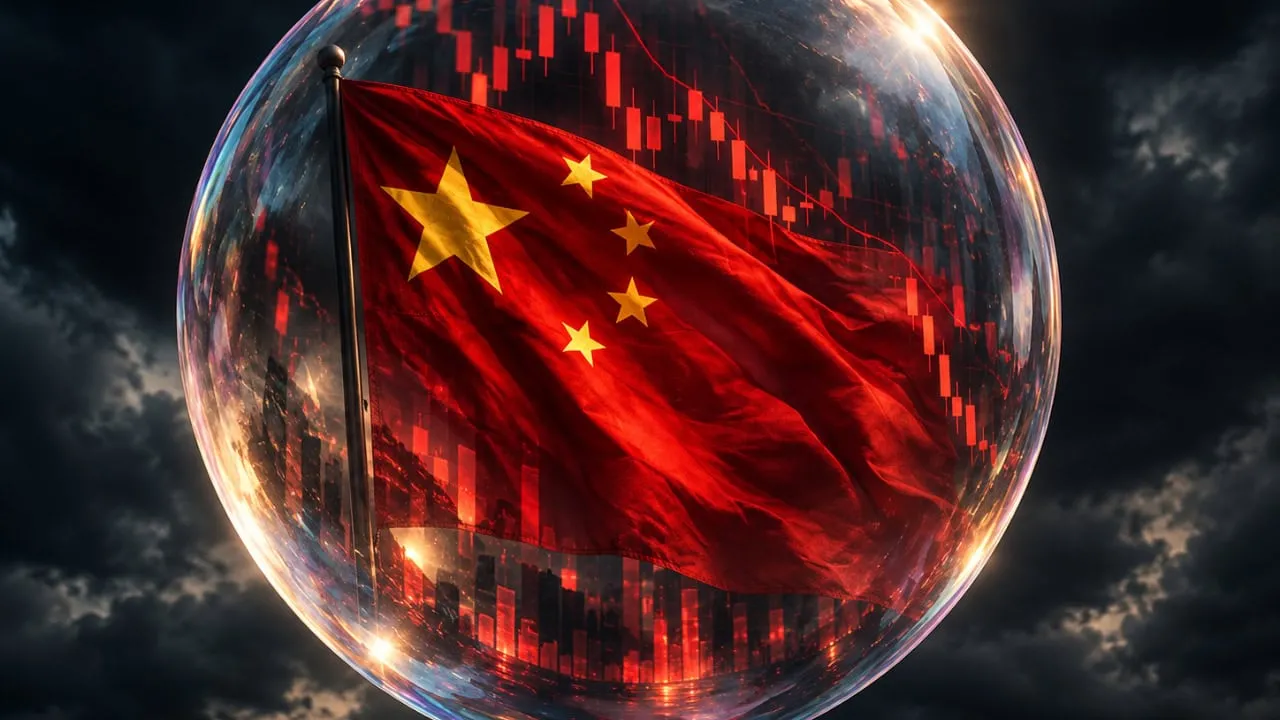
China's AI and semiconductor market experienced a sharp collapse, erasing roughly $480 billion in market value, a shift that could affect Pakistan more than many realize. Traders' concerns were confirmed as the speculative surge in Chinese AI and chip stocks fell dramatically.
The STAR50 index of AI and semiconductor leaders dropped about 40% in less than four months, while the CSI300 blue-chip index is down roughly 20% from its June peaks. By contrast, the Nasdaq slipped only around 6% from a record set three weeks earlier. At the height of the rally, Chinese AI stocks accounted for 42% of the nation's total market capitalisation, according to Goldman Sachs.
Several prominent Chinese AI firms saw steep declines. Robot maker Unitree, which was oversubscribed 8,000 times by retail investors in August, has seen its shares halve since trading began. Chipmakers MetaX Integrated Circuits and Moore Threads Technology also fell by half since July after debut gains of 700% and 400% respectively.
Optical component companies Zhongji Innolight and Eoptolink Technology each slipped about 60% from their highs, and Washington is moving to bar both from supplying U.S. data centres. Chipmaker CXMT declined more than 25% in the past month.
First, Pakistani businesses could benefit from lower prices on Chinese AI products. Fintechs, SaaS startups and e-commerce firms in Pakistan increasingly rely on Chinese AI models and chips, which are cheaper than Western alternatives. A prolonged slump may push Chinese AI firms to cut prices further in markets such as Pakistan.
Second, consolidation among Chinese AI companies may change product availability. Pakistani firms that depend on Alibaba Cloud, Huawei Cloud or Chinese open-source models should monitor which providers survive, as some may exit the market or merge with larger entities.
The downturn also has political implications. Pakistan recently became a founding member of China's World AI Cooperation Organization (WAICO), tying part of its tech future to the Chinese AI ecosystem. A weaker Chinese AI sector could slow joint projects and investment flows under the alliance.
Finally, Pakistani consumers might find cheaper Chinese AI gadgets, robots and smart devices in local stores, but reduced software support could accompany firms that collapse. Buyers should consider long-term vendor stability when making purchases.